Photo credit: EbersonImages/Shutterstock.com
Home defense advice is full of confident statements that fall apart the second you apply real-world conditions. Your house isn’t a square range. You may be half asleep, barefoot, and trying to protect your kids while your brain is still catching up. That’s why home-defense myths are dangerous. They make people build plans around assumptions instead of reality. The goal here isn’t to argue online. It’s to keep you from making a decision that feels smart now and gets you hurt later.
Myth 1: “A shotgun doesn’t require aim”
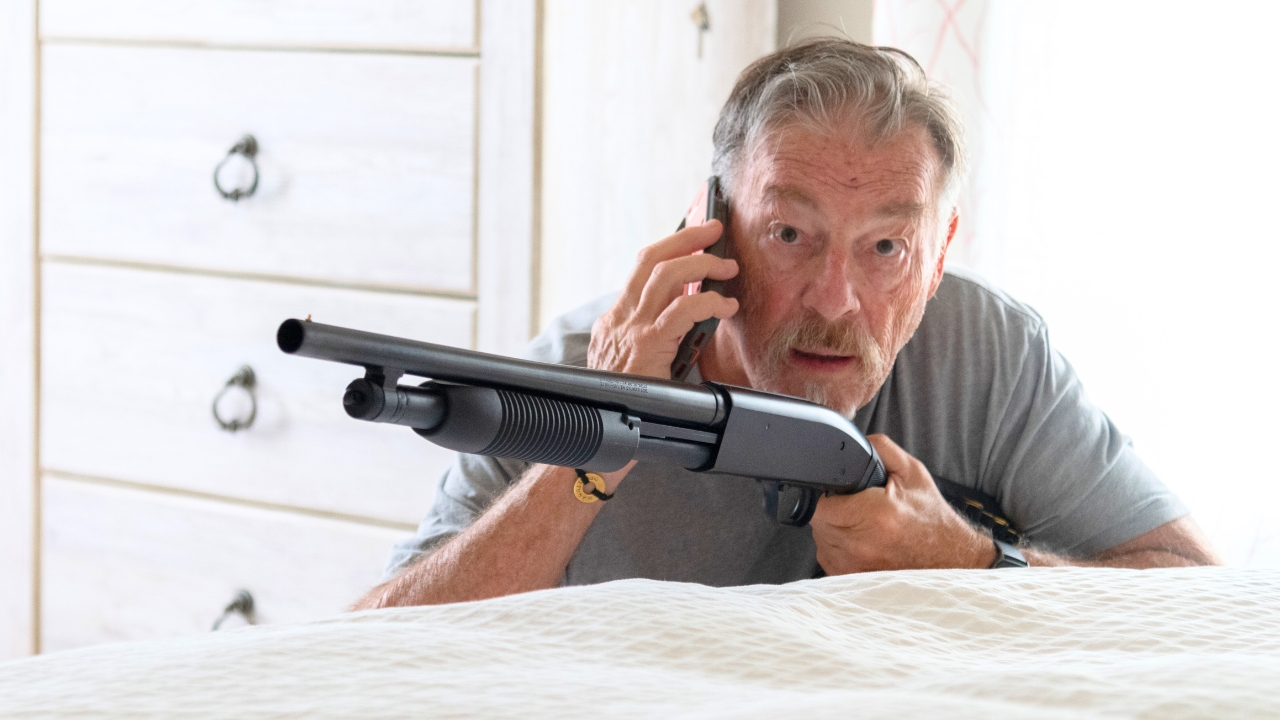
A shotgun is not a magic broom that clears a room by pointing in the general direction. At typical home distances, the pattern is often tighter than people expect, especially with defensive buckshot. You can miss. You can also hit something you didn’t intend if you fire without seeing a clear target. In the dark, under stress, you still need sight alignment and a controlled trigger press. A shotgun can be excellent for home defense if you can run it well, but “no aim needed” gets people lazy. You should pattern your shotgun with your chosen load, learn how it behaves at 5–15 yards, and practice mounting it fast without sweeping family members in a hallway.
Myth 2: “A shotgun’s sound will scare them off”
Depending on a sound as a plan is a gamble. Sometimes intruders run. Sometimes they don’t. Sometimes they’re high, desperate, or committed. Also, the idea that you should rack a shotgun to “send a message” assumes you were storing it in a condition that required it, and it assumes you want to give away your position and timing. If you’re using a shotgun, decide how you store it based on safety and your household situation, not on a sound effect. Your plan should work even if the intruder doesn’t care, even if they can’t hear well, and even if they’re already inside the room.
Myth 3: “Handguns are bad for home defense”

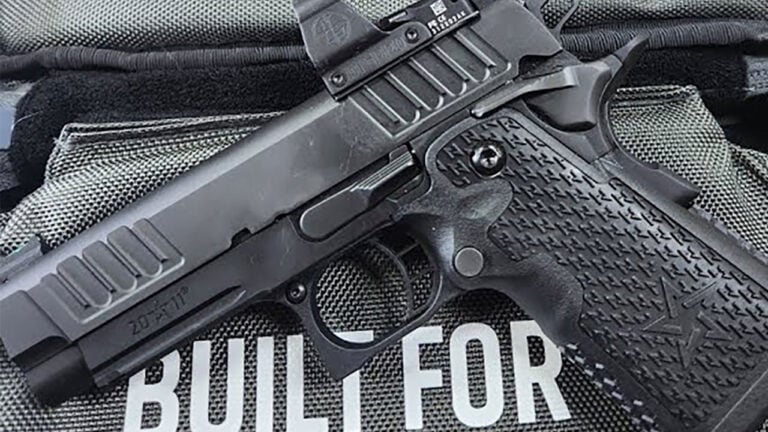
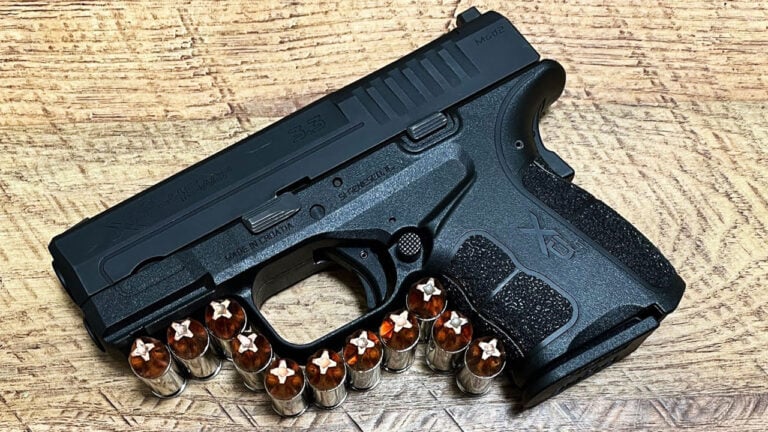
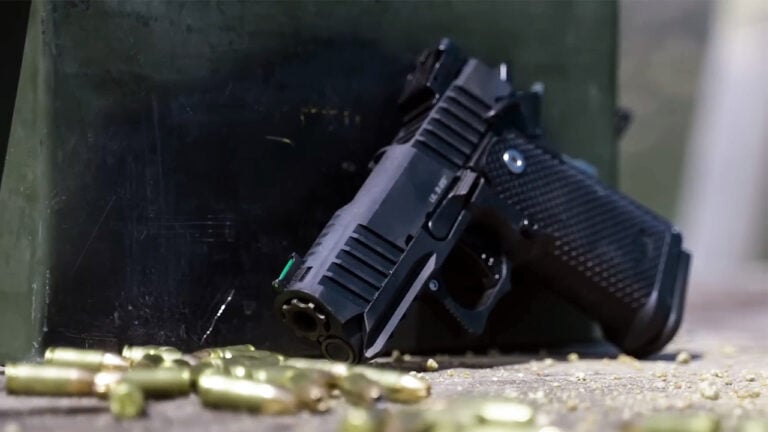
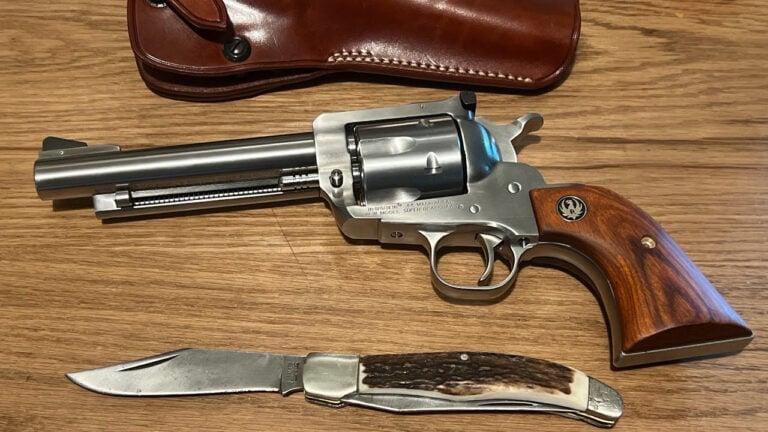
Handguns are harder to shoot well than long guns for most people, but they’re not automatically “bad.” They’re easier to carry one-handed, easier to maneuver in tight spaces, and easier to keep on you if you’re moving kids or grabbing a phone. A handgun can also be the only realistic option if you need to open doors, control a flashlight, or physically move someone. The real question is competency. If you have a handgun you can shoot accurately and reliably under stress, it can be a strong home-defense choice. If you can’t, then a long gun might be the better tool. The myth is treating one category as universally right or wrong.
Myth 4: “More rounds always means better safety”
High capacity is helpful, but it can create false confidence. People buy more rounds instead of buying practice. They also choose guns that don’t fit their hands well because they chase capacity over control. If your grip is weak, your trigger control is sloppy, and your hits don’t land, capacity doesn’t fix that. A solid home-defense setup is the gun you can run reliably, with magazines that function, and a realistic plan for what you’ll do if the first few rounds don’t solve the problem. Capacity matters, but hits matter more, and the ability to make good decisions under stress matters most.
Myth 5: “A pistol caliber carbine is always safer than a rifle”
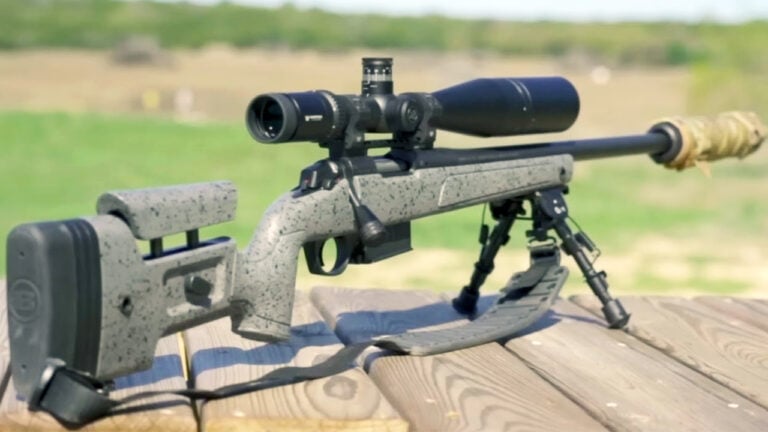
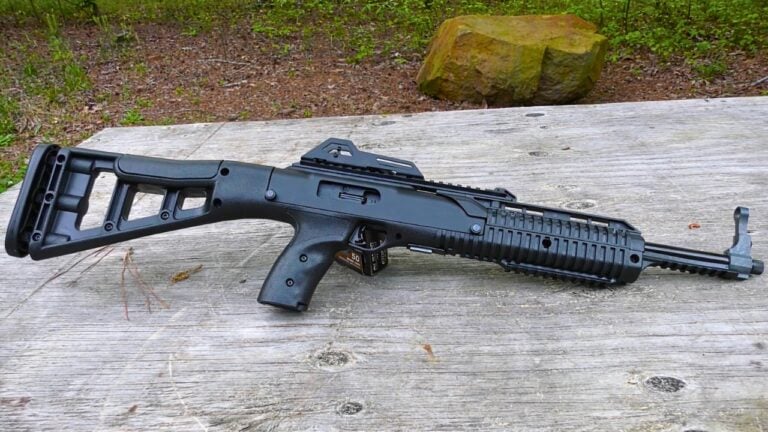
People claim PCCs are “safer” because they’re pistol caliber, but wall penetration depends on the specific load, the construction of your home, and the angles involved. Some rifle loads fragment quickly. Some pistol loads keep trucking. You can’t assume a caliber label tells you what happens after drywall. If you’re choosing a PCC, choose it because you run it well and it’s reliable, not because you heard it’s automatically safer. Test your chosen defensive ammo if possible, and think about lanes of fire in your house. Your plan should include what’s behind the target, not only what’s in front of it.
Myth 6: “Home defense is mostly about the gun”
The gun is the tool, but the fight is about identification, decision-making, and communication. A lot of bad outcomes start with people firing at sounds, moving through the house without a plan, or failing to account for family members. If you don’t have a simple plan, you’ll improvise under stress, and improvisation is where mistakes happen. Your plan should include where you go, how you call 911, what you say, how you identify threats, and how you avoid mistaken identity. The gun supports that plan. It doesn’t replace it.
Myth 7: “A light on the gun is only for tactics guys”
If you can’t identify what you’re aiming at, you’re not ready to press the trigger. A weapon light can help solve that, but it also introduces training needs. You need to learn how to use light without flagging anything you’re trying to identify, and you need to practice activation under stress. A handheld light can work too, and in some households it’s the better option. The myth isn’t “light good” or “light bad.” The myth is ignoring the identification problem entirely. If you can’t see, you’re guessing, and guessing is how tragedies happen.
Myth 8: “If you have a big caliber, you don’t need to worry about shot placement”
This is how people end up missing and making the situation worse. Shot placement matters more than caliber for stopping power in the real world. Big recoil can also reduce accuracy for many shooters. If the gun beats you up, you’ll flinch, you’ll miss, and you’ll slow down. Pick a setup you can control. Then shoot it enough that you can keep rounds in the high-value zone quickly. That’s what ends fights, not internet arguments about “stopping power.”
Myth 9: “You’ll rise to the occasion”
Under stress, most people drop to their level of training. That’s not a motivational quote. It’s how humans work. If you’ve never practiced with your chosen gun in low light, from awkward positions, or while your heart rate is up, you’re not magically going to do it perfectly at 2 a.m. Do some realistic reps. Dry fire is valuable. Live fire is important. A class can help. The point is building competence so your body knows what to do when your brain is overloaded.
Myth 10: “If you’re legal, you’re protected”
Legal ownership doesn’t protect you from bad decisions, and it doesn’t protect you from the consequences of firing without proper identification or firing in a way that endangers others. Even a justified shooting can become complicated if you handled it poorly, said the wrong thing, or made choices that look reckless on paper. That doesn’t mean you should be scared to defend your family. It means you should be disciplined. Have a plan, keep your gear solid, and understand the responsibilities that come with using a gun in your home. That’s how you protect yourself before, during, and after the moment that matters.
Like The Avid Outdoorsman’s content? Subscribe to our newsletter so you never miss an article.
Here’s more from us: