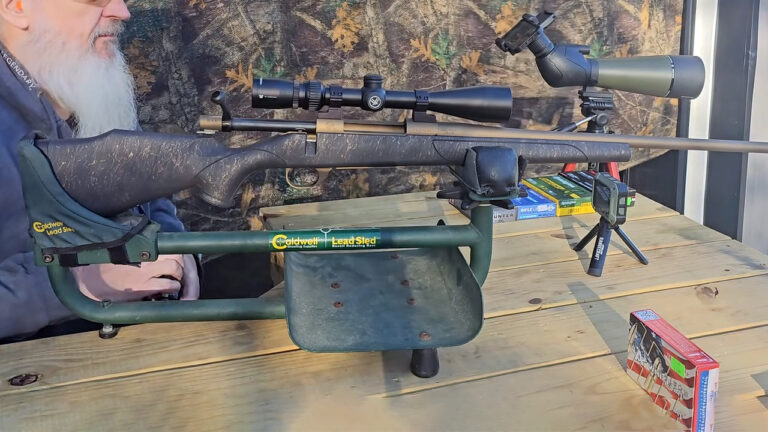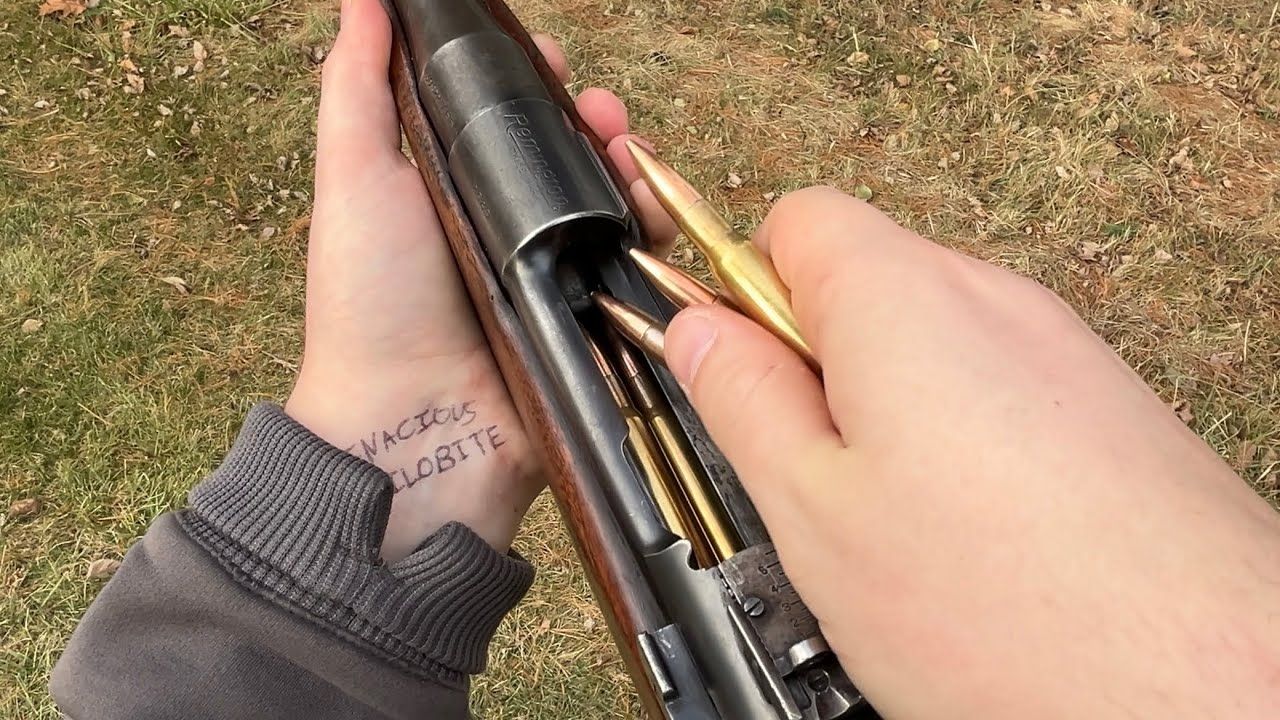
Photo credit: Tenacious Trilobite/YouTube
Walk into any gun counter and you’ll see them—the cartridges that look perfect on paper. Slick marketing, impressive velocity numbers, and ballistic charts that make you feel like you’re buying confidence in a box. But once you hit the field, those promises start to crumble. Maybe the bullet fragments too early, maybe it won’t expand at all, or maybe the cartridge performs like a totally different round depending on the rifle. These are the cartridges that reel you in at the store but leave you frustrated when the real-world results don’t match the glossy packaging. They look the part but rarely play it.
.17 WSM

The .17 Winchester Super Magnum was hyped as the rimfire that could stretch the limits of small game hunting. It offered blistering speed and flat trajectories, but that velocity came with fragile bullets that often exploded on impact instead of penetrating.
In the field, it turned out to be more flash than function. Even slight wind throws it off course, and accuracy drops sharply past 150 yards. It’s fine for paper and small varmints, but calling it a game-changer was premature. You’ll spend more time chasing misses than celebrating hits.
.30 Remington AR

The .30 Remington AR was supposed to bring .308 performance to the AR-15 platform, but it never quite delivered. The concept was solid, but the execution fell short—limited magazine capacity, proprietary parts, and inconsistent factory loads doomed it from the start.
In the field, it shot more like a warm .300 Blackout than a .308. Ballistics dropped off fast, and bullet selection was limited. The idea looked appealing on the shelf, but anyone who tried hunting with one quickly learned it didn’t have the legs or the energy retention to back up the hype.
.25 WSSM

The .25 Winchester Super Short Magnum promised modern magnum performance in a short action package. On paper, it looked like the ideal deer and antelope round. In reality, the cartridge burned out barrels faster than most shooters could believe and produced inconsistent velocities with certain loads.
Hunters found the recoil sharp for its size and accuracy hard to maintain over time. Brass availability became an issue almost immediately. What started as a forward-thinking design ended up an orphaned cartridge, abandoned by manufacturers and shooters alike once the novelty wore off.
.300 Remington Ultra Magnum

The .300 RUM was marketed as the long-range hammer of the gods—a cartridge that could flatten anything in North America. While it delivers power, it also punishes the shooter. Recoil is intense, muzzle blast is brutal, and barrel life is laughably short if you shoot it often.
In the field, it’s overkill for most game and unforgiving of shooter error. Miss your range estimate by 50 yards, and you’ll see the difference. It’s impressive on paper but miserable to live with. Many hunters fired a few boxes, learned their lesson, and went back to the .300 Win Mag.
6.5 PRC

The 6.5 PRC showed up promising to be the “perfect” balance between flat trajectory and manageable recoil. While it’s accurate and capable, the ammo hype outpaced the real-world results. Barrel life isn’t great, factory ammo prices are steep, and velocity differences between rifles can be dramatic.
In the field, it can perform brilliantly—or scatter shots depending on the load and temperature. It’s not unreliable, but it’s finicky. For a cartridge that was supposed to make things simpler, it created more variables than it solved.
.350 Legend

The .350 Legend sold as a straight-wall miracle for Midwestern hunters—but it’s a cartridge of compromises. It’s soft on recoil, but that comes at the cost of limited range and marginal energy on deer-sized game. Expansion can be hit-or-miss depending on bullet construction.
Hunters found it decent out to 150 yards, but beyond that, drop and energy loss get ugly fast. It’s accurate enough, but it’s not the ballistic wonder its marketing suggested. For most, it’s an entry-level round that does okay, not the revolution it was billed as.
.224 Valkyrie

The .224 Valkyrie looked like the AR-15’s answer to long-range shooting. Early ballistic charts promised 1,300-yard performance, but those numbers didn’t hold up under real testing. Factory ammo had massive inconsistencies, and accuracy often fell apart past 600 yards.
In the field, it’s too unpredictable for serious work. Some rifles shoot it great, others scatter it. It’s not a bad idea—it just never matured. Most hunters who tried it went back to proven rounds like .223 or .22-250 after too many disappointing groups.
.450 Bushmaster

The .450 Bushmaster earned attention for its power and big-bore appeal, but its accuracy and trajectory quickly remind shooters of its limitations. It hits hard up close but drops like a rock beyond 150 yards. Recoil is harsh for its effective range.
While it drops deer cleanly inside its lane, that lane is narrow. It’s a fun cartridge to shoot once or twice, but lugging it into the woods means accepting a small margin for error. The hype promised big-bore dominance, but in the field, it behaves more like a hard-kicking compromise.
.17 HMR

The .17 HMR is fun, accurate, and deceptively fast—but it also fools a lot of new hunters into thinking it’s more capable than it is. Light bullets and fragile construction make it devastating on small varmints but completely unreliable on anything bigger.
The wind drift is awful, and penetration on medium game is laughable. It’s a rimfire round that’s great for target shooting and pest control, but the moment it’s used outside its intended role, it disappoints. It’s not dangerous—just over-sold to shooters who want more than it can safely deliver.
.30 Carbine

The .30 Carbine looks powerful enough on paper, but its real-world performance has been underwhelming since World War II. It’s too weak for deer-sized game and too much for small varmints. Modern loads don’t change that equation much.
Hunters who try it often walk away frustrated by poor expansion and limited range. It’s fun for plinking, nostalgic even, but it’s never been an effective hunting cartridge. The numbers fool a lot of first-time buyers, but the first range trip usually clears that up.
.22 Nosler

The .22 Nosler was supposed to push AR-15 performance into .22-250 territory. While it does offer more speed, it brings new problems—short barrel life, inconsistent feeding, and limited factory ammo support.
On the bench, it’s accurate. In the field, it’s inconsistent. Many shooters report unpredictable terminal performance, especially on coyotes or hogs. It’s another cartridge that looks like progress until you actually use it. Most who tried it ended up going back to the .223 or stepping up to a .22-250 bolt gun.
.300 AAC Blackout

The .300 Blackout has an impressive resume on paper—suppressed, subsonic, versatile—but it’s often oversold as a hunting round. At subsonic speeds, energy is too low for reliable expansion. Supersonic loads work better, but drop off quickly past 150 yards.
Hunters expecting .308-like performance learn fast that it’s closer to a hot .30 Carbine. It’s fantastic in its niche but underwhelming anywhere else. The cartridge doesn’t fail—it just gets used for things it was never meant to do. It’s the ultimate example of marketing outpacing field reality.
Like The Avid Outdoorsman’s content? Be sure to follow us.
Here’s more from us:
The worst deer rifles money can buy
Sidearms That Belong in the Safe — Not Your Belt
*This article was developed with AI-powered tools and has been carefully reviewed by our editors.