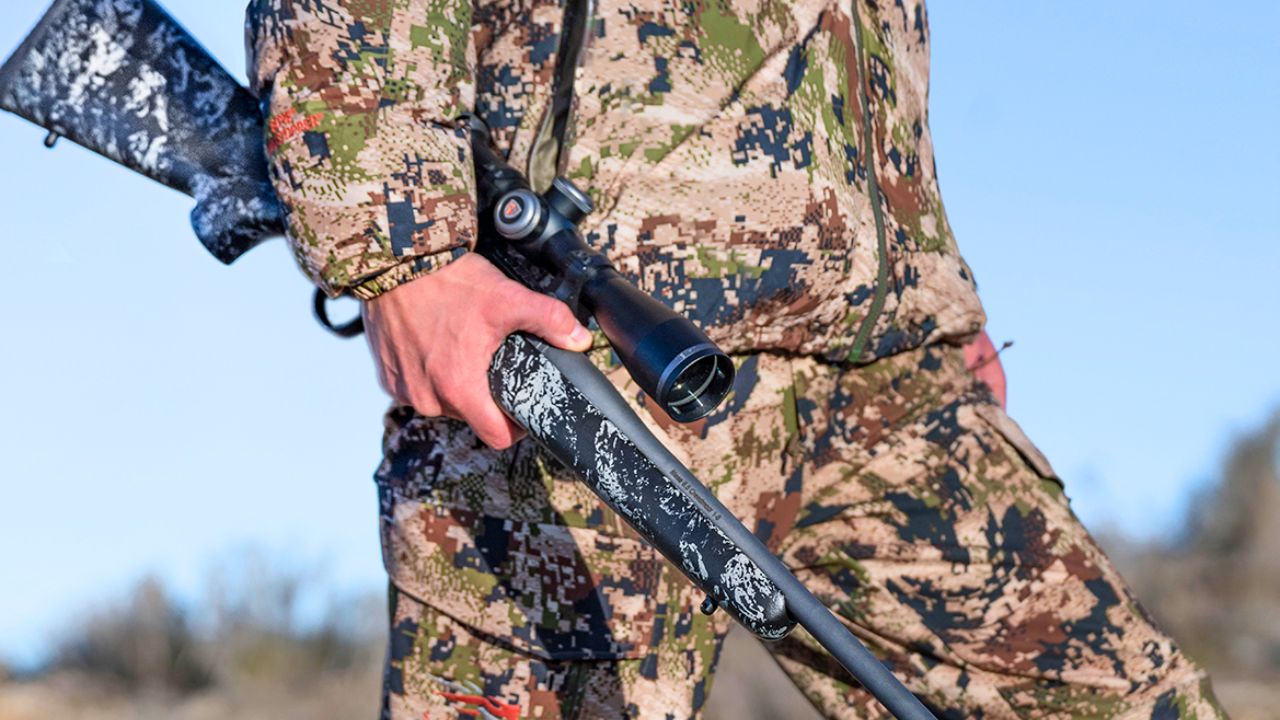
Photo credit: Christensen Arms
If you’ve ever sighted in at the range or shot a long string from prone, you’ve seen heat ruin precision firsthand. When a barrel heats unevenly, the metal expands, shifts stress points, and changes harmonics. What started as a sub-MOA tack driver becomes a scattergun. Some rifles handle it gracefully; others don’t last through a single box before groups start wandering.
Thin contours, poor stress relief, and cheap materials are the main culprits. You can cool between strings or chase mirage all afternoon — but some barrels are doomed to walk shots no matter what. These are the rifles that lose accuracy fast once the heat builds.
Ruger American Predator

The Ruger American Predator is light and handy, but that thin-contour barrel doesn’t hold accuracy through extended strings. After ten or twelve shots, groups begin to open and shift, especially when shooting from a hot chamber in summer conditions. The factory barrels aren’t cryo-treated or stress-relieved to a high degree, so heat expands them inconsistently.
Most shooters notice the wandering point of impact once the barrel warms past comfortable touch. For hunters firing one or two shots, it’s a non-issue. But if you’re working load development or shooting steel for fun, you’ll find that light profile turns accuracy to mush after repeated fire. It’s a great carry rifle, but not one built for sustained precision.
Remington Model 783

The Remington 783’s heavy-caliber options promise precision, but the budget-level barrel steel and finish don’t hold up to heat well. After a series of quick shots, the barrel starts walking as the bore temperature climbs. Many shooters report their groups drifting right or high as the barrel swells unevenly under sustained fire.
The chamber area retains heat longer than it should, which exaggerates mirage and throws off follow-up accuracy. It’s an issue of quality control — the steel isn’t properly stress-relieved, and the contour doesn’t manage expansion evenly. For hunting, you’ll never notice it. But when you stretch it past five rounds, the heat warp becomes obvious.
Tikka T3 Lite

The Tikka T3 Lite’s thin sporter barrel makes it wonderfully portable but poor for long shot strings. Its accuracy reputation is solid, but that depends on keeping things cool. Fire eight or ten rounds quickly, and you’ll watch your tight group crawl across paper. The lighter contour heats fast and sheds heat unevenly, especially near the chamber.
The harmonics change so dramatically that even seasoned shooters can’t predict where the next round will land once things get warm. It’s not a defect — it’s physics. The T3 Lite was never meant for sustained shooting. You carry it for its weight, but you pay for it in consistency after the first magazine.
Savage Axis II

The Savage Axis II offers excellent accuracy for the money, but that pencil-thin barrel isn’t a fan of long firing sessions. The first few rounds are fine — then heat distortion sets in. Because Savage doesn’t heavily stress-relieve Axis barrels, they tend to walk vertically as temperatures climb.
Once that metal expands, every additional shot compounds the drift. It’s the kind of barrel you learn to shoot in moderation — take a few, cool it off, repeat. That’s fine for hunting but frustrating for load testers or target shooters. The Axis II proves that “lightweight” and “heat-resistant” rarely go hand in hand.
Winchester XPR

The Winchester XPR performs well cold, but its factory barrel lacks the thermal consistency you’d expect from a modern rifle. After repeated shots, groups begin to string diagonally, usually drifting up and right as the barrel heats. The problem stems from uneven expansion and bedding tension that changes with temperature.
The XPR’s action bedding and barrel channel don’t provide much clearance, which adds stress when the barrel swells. That heat movement throws off harmonics, and accuracy falls apart until it cools back down. It’s fine for hunting situations, but those long zeroing sessions can leave you scratching your head wondering why groups opened for no reason.
Browning AB3

The Browning AB3 looks like a precision rifle, but its factory barrels tend to shift impact after a short series of shots. The slim barrel contour heats fast, and you can actually feel the forend get warm near the chamber. That translates directly into wandering groups and unpredictable impacts.
It’s more noticeable in magnum calibers like .300 Win Mag or .270. After just a few rounds, the barrel’s harmonics change so much that your carefully tuned load doesn’t print the same. You’ll often see a vertical spread open dramatically, even from a solid rest. It’s a handsome, smooth rifle — but one best fired cold.
Remington Model Seven

The Remington Model Seven was designed for mountain hunts, not long-range strings. Its short, pencil-thin barrel heats fast and unevenly, especially when running larger cartridges like 7mm-08 or .308. The short length concentrates heat near the chamber, making the whole system expand unpredictably.
After several quick shots, accuracy drops sharply. You’ll notice impacts start to wander an inch or two even at 100 yards. It’s not poor machining — it’s simply a lightweight hunting design. It carries like a dream, but if you push it hard on the bench, that slim barrel lets you know when it’s had enough.
Savage 110 Ultralite

The Savage 110 Ultralite’s carbon-wrapped barrel was designed for weight reduction, but it’s not immune to heat warping. The carbon helps distribute heat faster, yet the underlying steel liner still expands. Under sustained fire, those layers don’t expand at the same rate, leading to harmonic inconsistencies and wandering groups.
Shoot five rounds quickly, and you’ll see impact shift. It’s subtle at first but grows as heat builds. For a hunting rifle that’s fine — you’re not dumping mags. But anyone expecting PRS-level heat stability will be disappointed. The 110 Ultralite proves that light barrels and long strings don’t mix, even with modern materials.
Christensen Mesa FFT

Christensen’s Mesa FFT is incredibly light, but its carbon-wrapped barrel can show shift under repeated heat cycles. The outer carbon shell cools fast, while the steel core inside retains heat longer. That imbalance creates stress along the barrel, especially during fast shooting or extended zeroing sessions.
Once it gets hot, you’ll notice shots start to wander slightly — often opening up into two distinct impact clusters. For hunters, it’s not a deal-breaker. For precision shooters, it’s frustrating. The Mesa FFT excels in the field, but push it past five or six rounds quickly, and the precision promise starts to fade.
Ruger Hawkeye Compact

The Ruger Hawkeye Compact was built for tough weather and portability, not high-volume fire. Its short, lightweight barrel heats up fast, and you can feel it walking groups by the fifth or sixth round. The problem is the balance between contour and heat retention — the barrel is simply too thin to stay stable under continuous use.
The rifle holds zero well for hunting, but during range work, it’ll wander an inch or more as temperature rises. It’s a gun that shoots best cold, cooled between groups. In the field, that’s fine. On the bench, it’s a reminder that not every barrel is meant to take punishment.
Weatherby Vanguard Synthetic

The Weatherby Vanguard Synthetic holds its own for the first few shots, but that light sporter barrel starts to drift once it warms up. It’s more noticeable with hot loads or long zeroing sessions. The forend design doesn’t leave much clearance for expansion, so even a small amount of warping changes how it free-floats.
The groups start tight, then stretch vertically as the barrel temperature rises. For field use, you’ll never notice. But if you shoot long strings or heavy calibers, that heat warp turns precision into frustration. It’s a solid rifle for hunting but one that needs time between volleys to stay consistent.
Like The Avid Outdoorsman’s content? Be sure to follow us.
Here’s more from us:
The worst deer rifles money can buy
Sidearms That Belong in the Safe — Not Your Belt
*This article was developed with AI-powered tools and has been carefully reviewed by our editors.