Photo credit: Hegshot87/YouTube
A low-left group with a carry pistol is one of the most common “what is going on” moments you’ll ever have. And most of the time, it isn’t the gun being off. It’s the gun showing you exactly what your hands are doing—especially if you’re right-handed. A short sight radius, a light frame, and a trigger you’re still learning can turn a small timing error into a repeatable low-left pattern.
Carry guns also get shot differently than range guns. You grip them harder, you rush the break, and you start trying to “help” the recoil before it even happens. Some models are more forgiving. Others are honest to the point of being rude. These are carry-friendly handguns that tend to expose low-left hits until your grip and trigger press get truly consistent.
Glock 43

The Glock 43 carries like it’s barely there, but it can show low-left fast if you’re slapping the trigger or tightening your fingers at the break. The gun is thin, the grip is short, and the frame doesn’t soak up much movement. That makes it easy to steer the muzzle without realizing you’re doing it.
You’ll also notice that the 43 rewards a clean, straight-back press more than bigger Glocks. If your support hand isn’t doing most of the gripping, your firing hand ends up working too hard, and the muzzle drifts down and left as the shot breaks. When you slow down and keep the trigger press steady, the 43 will usually print where it should. When you rush it, it tells on you.
Glock 43X

The 43X feels like the “fixed” version of the 43 because the grip is longer and easier to control. It still has that slim profile, though, and that slimness can make you over-grip with your firing hand. That’s a common recipe for low-left hits, especially when you’re trying to shoot fast.
The other factor is how easy it is to get complacent. The 43X carries so well that you may shoot it less like a training pistol and more like a convenience pistol. Then you show up at the range, start pressing for speed, and the trigger work gets sloppy. The 43X will shoot straight if you do your part, but it won’t hide a bad press the way a heavier compact will.
Glock 26

The Glock 26 is a thick little brick that conceals well and runs hard, but the short grip can mess with your trigger control. If your pinky is floating or your grip is inconsistent, the gun can pivot in your hand during the press. That pivot shows up on paper as low-left more often than people want to admit.
The 26 also tempts you into squeezing the entire grip as you press through the trigger wall. The gun is controllable, but it’s compact enough that small hand tension changes matter. When you lock the support hand in and keep the firing hand relaxed except for the trigger finger, the 26 prints fine. When you “grab” the gun at the moment of truth, the group walks down and left.
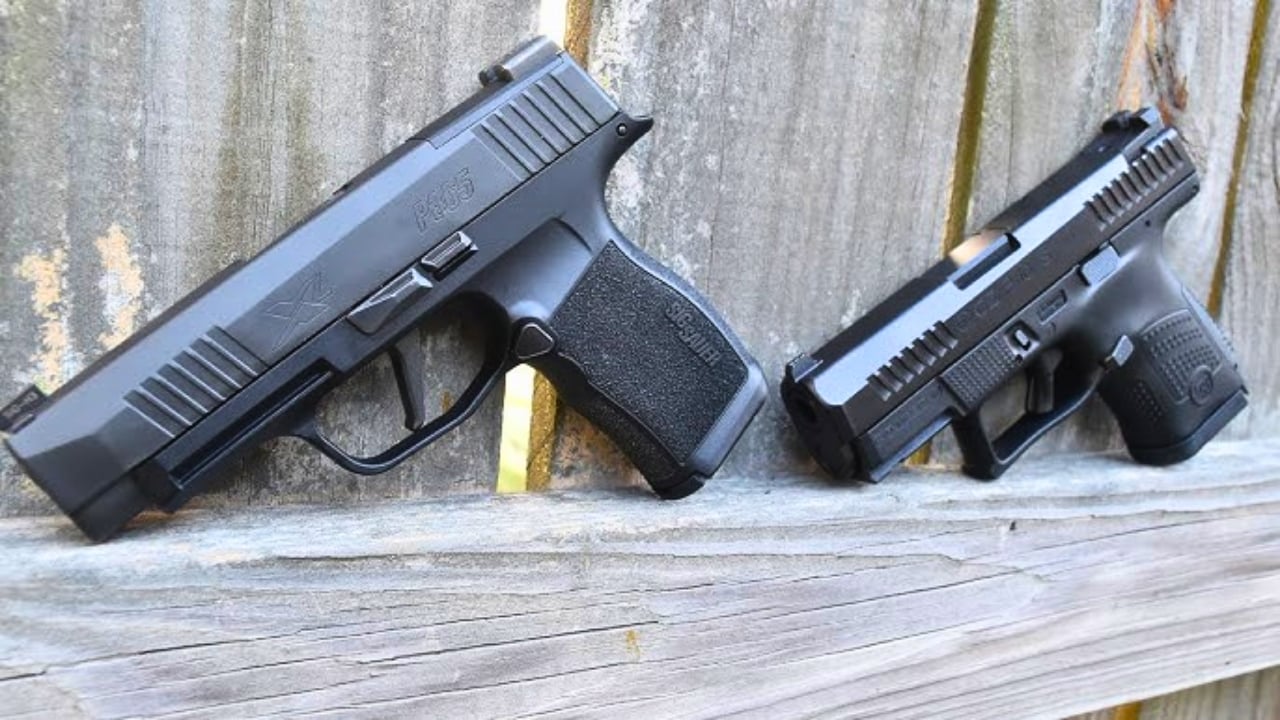
SIG Sauer P365

The P365 is popular because it carries easily while still feeling like a serious pistol. The tradeoff is that it’s small enough to amplify timing errors. If you’re anticipating recoil or punching through the trigger, you’ll often see a low-left trend even when the sights look perfect.
The grip is also short front-to-back, which can make you curl the trigger finger too deep or press at an angle. That sideways pressure is subtle, but it moves the muzzle. The P365 will shoot accurately, and many do, but you have to keep the trigger finger doing one job—straight back—while the support hand owns the grip. When those roles blur, the target tells the story.
SIG Sauer P365 XL

The XL gives you more grip and a longer slide, which usually helps people shoot straighter. But it can still print low-left if you’re used to heavier compacts and you start running the gun like it’s bigger than it is. The XL is easy to carry, easy to point, and easy to rush.
A common issue is trying to force speed before the trigger press is clean. The XL’s controllability makes you feel confident, and confidence can turn into impatience. If your grip pressure shifts during the press—especially if your firing hand tightens as you break the shot—you’ll see the same low-left signature. The XL rewards discipline. Smooth press, steady sight picture, and a support-hand grip that stays consistent shot to shot.
Springfield Armory Hellcat

The Hellcat carries extremely well for its capacity, and it also has that small-gun snap that can make you brace for the shot. When you brace, you drive the muzzle down. Add a little sideways trigger pressure, and you end up low-left without ever “seeing” the mistake.
The Hellcat can also feel busy in the hand if your grip isn’t locked in. With a smaller frame, your trigger finger and grip fingers are closer together, and they like to work as a team when they shouldn’t. The fix is boring: support hand clamps, firing hand stays steady, trigger finger presses straight back. When you do that, the Hellcat shoots fine. When you don’t, it prints the classic carry-gun low-left pattern.
Smith & Wesson Shield Plus

The Shield Plus is one of the easiest slim pistols to live with, but it still has slim-gun physics. If your grip is a little weak or your trigger press is a little rushed, the muzzle dips. The Shield’s lighter weight makes that dip show up clearly, especially at typical carry distances where you expect tight groups.
Many shooters also run the Shield with a high, aggressive grip, which is good. The mistake is letting the firing hand do too much. If you squeeze harder as the shot breaks, you steer the gun. The Shield Plus is accurate, but it’s honest. Treat it like a training pistol, not a “carry-only” pistol, and it stops acting mysterious. Your low-left groups tend to disappear when your press stays calm and repeatable.
Ruger LCP Max

The LCP Max carries like a wallet and shoots like a tiny pistol with tiny margins. Low-left hits are common with guns this small because the grip is short, the sights are compact, and the trigger work happens in a space where every little movement counts. If you’re right-handed, it’s easy to drag shots down and left without noticing.
The LCP Max also encourages a death grip because it’s so light. That death grip usually comes from the firing hand, and firing-hand tension is the enemy of clean trigger control. You can shoot the Max well, but it takes a deliberate press and a grip that doesn’t change at the break. When you try to run it like a larger carry gun, the target becomes a record of your impatience.
Ruger Max-9

The Max-9 is an affordable, thin carry pistol that checks a lot of boxes. It also has the same issue many slim guns have: it’s easy to “muscle” it and pull shots low-left when you’re trying to shoot quickly. The gun is light, the grip is narrow, and that combo can make you over-control it.
Another factor is consistency. Slim pistols often punish inconsistent finger placement. If your trigger finger lands slightly differently each draw, your press angle changes, and your group shifts. With the Max-9, a clean press matters more than people expect from a budget carry gun. When you slow down and press straight back, it behaves. When you hurry and squeeze the whole grip at the break, it prints the classic low-left cluster.
Kahr CM9

The CM9 carries beautifully, and its long, smooth trigger pull is both a strength and a trap. That long pull can keep you honest, but it also gives you more time to move the gun while you’re pressing. If your finger is adding sideways pressure during that stroke, the muzzle drifts low-left before the shot breaks.
The CM9 also tends to get gripped hard because it’s small. Combine a tight firing-hand grip with a long trigger press and you’ve got a recipe for steering. The fix is to let the support hand do most of the squeezing and keep the firing hand steady. When you do, the Kahr can shoot surprisingly well for its size. When you don’t, it prints low-left so consistently it feels like a sighting issue.
Beretta APX Carry

The APX Carry is built for concealment, and concealment-sized pistols often highlight trigger mistakes. If you’re right-handed, a heavy or longer-feeling trigger press can turn into a downward dip at the last moment. That dip isn’t dramatic, but the target makes it obvious.
The APX Carry’s small grip can also make you clamp with your firing hand while pressing, especially when you’re trying to keep the gun stable. That clamping action often drags shots down and left. The gun can be accurate enough for carry work, but it demands a clean press. When you treat it like a tiny duty gun and rush your cadence, it gets sloppy fast. When you slow your press and keep your grip pressure consistent, it settles down.
Taurus G3C

The G3C is a common “value carry” pick, and a lot of people run them fine. The low-left pattern shows up when you combine a compact frame with a trigger press that isn’t perfectly straight. If you’re used to a different trigger feel, it’s easy to start pushing or snatching at the break.
The other issue is grip size. Many shooters end up with a grip that’s slightly compromised because the gun is compact and their hands are not. That compromise makes it easier to tighten the firing hand as you press, which drags shots low-left. The G3C will usually shoot where it’s pointed if you press cleanly, but it won’t cover for a messy press. Spend time building a consistent grip and the problem often disappears without touching the sights.
Walther PPS M2

The PPS M2 carries flat and points naturally for a lot of shooters. Even so, slim pistols can trick you into thinking you have a perfect grip when you don’t. If your support hand isn’t locked in, your firing hand ends up doing extra work, and that extra work shows up as low-left.
The PPS also tends to get shot with urgency because it feels sleek and fast out of the holster. Urgency leads to a rushed trigger press, and a rushed press leads to muzzle dip. The good news is the PPS can be very accurate. When you slow down and press straight back, it prints clean groups. When you chase speed before your fundamentals are settled, it tends to mark the same low-left spot over and over, which can feel like the gun is “off.”
CZ P-10 S

The P-10 S carries like a compact but shoots like a smaller gun than it looks. That can make you over-control it. If you’re used to a heavier compact pistol, you may find yourself driving the gun down as the shot breaks, especially during faster strings. That often shows up low-left for right-handed shooters.
Trigger control matters here because the gun encourages confident shooting. Confident shooting becomes sloppy shooting if you’re not careful. The P-10 S will usually hold a tight group if your press is straight, but it will also reflect every little grip squeeze at the break. Keep the support hand firm, keep the firing hand steady, and let the trigger finger do its job without help from the rest of your hand. The groups usually climb back to center.
Smith & Wesson 642 Airweight

A lightweight J-frame carries like a dream and shoots like a reality check. The long, heavy double-action pull makes low-left hits common for right-handed shooters because you’re working hard through the stroke, and it’s easy to steer the muzzle as you do it. The gun isn’t “shooting low-left.” Your hands are dragging it there during the pull.
The light weight doesn’t help. Recoil and muzzle flip make you brace, and bracing makes you dip the gun. Add that to a tough trigger press and you get the same result on paper. The 642 can be very accurate in practiced hands, but it demands a steady grip and a trigger press that doesn’t change the gun’s alignment. When you slow down and roll the trigger smoothly, the hits move back toward where the sights are actually sitting.
Like The Avid Outdoorsman’s content? Be sure to follow us.
Here’s more from us: