Photo credit: The Avid Outdoorsman
The driver said he was not part of the chase. He was not running from police, hiding from anyone, or involved in whatever had started the pursuit. According to the Reddit post, he was simply the person unlucky enough to be hit when the suspect crashed into his car.
That would already be a bad day. A police chase ending in a crash can leave a person shaken, injured, angry, and stuck dealing with insurance and repairs. But the driver said the confusion did not stop with the wreck.
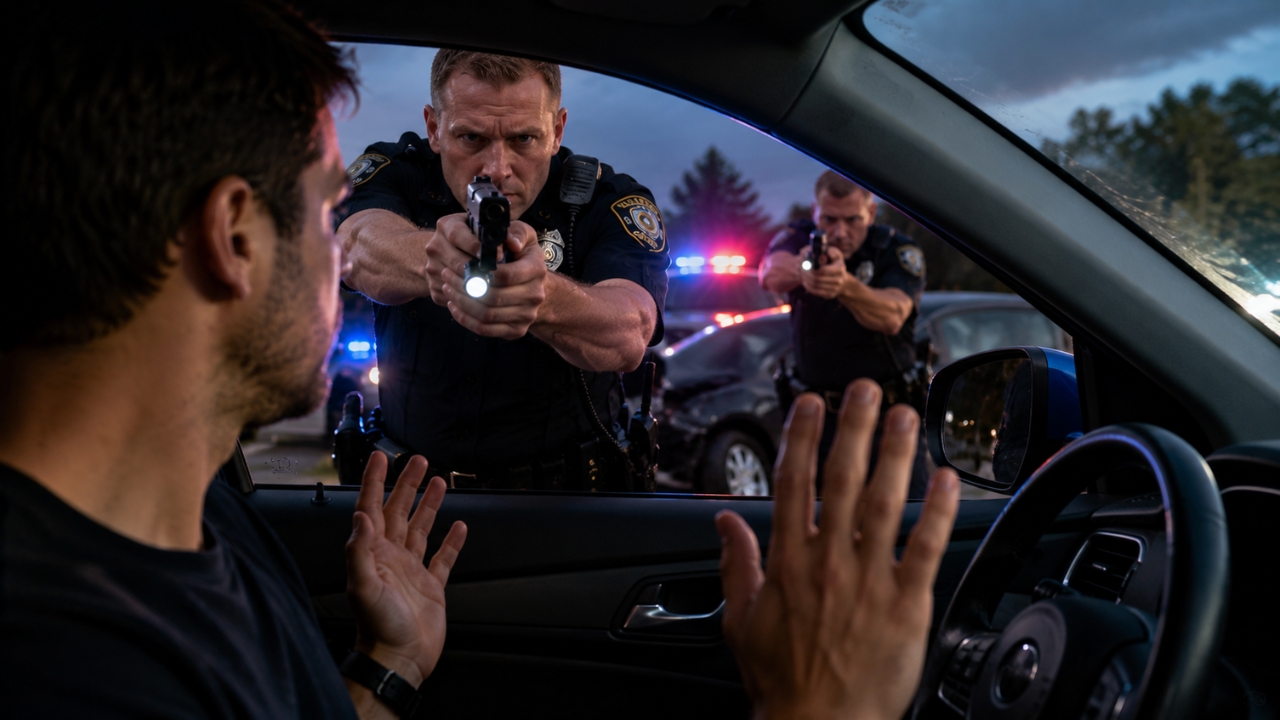
Police allegedly pointed a gun at him afterward.
The original Reddit post can be found here: https://www.reddit.com/r/legaladvice/comments/1logv7a/police_mistakenly_pulled_gun_on_me/
From the driver’s side, the situation must have been surreal. One moment, his car was struck by someone fleeing police. The next, officers were treating him like he might be the suspect. He said they eventually realized he was actually the victim, but that did not erase the fear of having a gun pointed at him after a crash he did not cause.
That is the kind of mistake that can happen quickly during a chaotic scene. Officers may arrive with adrenaline high, a fleeing suspect nearby, damaged vehicles, people moving around, and incomplete information. They may not immediately know who was driving which vehicle or whether anyone is armed. But for the innocent driver, none of that makes the experience feel small.
The fear is not only that an officer pointed a gun. It is that the officer was wrong about who he was. In a high-stress moment, a wrong assumption can become dangerous fast. If the driver had moved too quickly, reached for his phone, tried to get out of the car, or panicked from the crash, the encounter could have escalated before anyone sorted out the facts.
The driver wanted to know what his options were. That likely meant more than simply complaining about being scared. He had been involved in a crash caused by a fleeing suspect, then allegedly had police aim a weapon at him before recognizing he was not the person they were after. Now he had to deal with the wreck, any possible injuries, insurance questions, and the emotional impact of the police response.
The crash itself created one set of problems. Who pays for the vehicle damage? Does the fleeing suspect’s insurance cover anything, if they even have insurance? Does the city or police department have any liability because the crash happened during a pursuit? Those questions can get messy quickly.
The gun-pointing incident created a separate concern. Was it reasonable under the circumstances? Did officers have enough reason to think he was the suspect? Did they keep the gun pointed longer than necessary? Was there body camera footage showing how the mistake happened and how quickly it was corrected?
The driver did not describe a clean path forward. He was left trying to sort out a situation where he had been hit by a suspect, then briefly treated like one.
Commenters generally told the driver to separate the crash claim from the police encounter. Several said the vehicle damage and injury side should be handled through insurance first, with police reports and crash records gathered as soon as possible. If the fleeing driver was uninsured or unavailable, the driver’s own coverage might matter.
Others suggested requesting all records tied to the incident. That included the crash report, pursuit report, body camera footage, dash camera footage, and any dispatch audio that could show what officers knew when they arrived. Commenters said those records would be important if he wanted to understand why police mistook him for the suspect.
Some commenters were sympathetic but cautious about legal claims. They said officers responding to an active chase and crash may have more room to act aggressively until they identify who is who. That does not make it pleasant or fair, but it could make a lawsuit difficult unless the response was clearly unreasonable.
A few people still recommended filing a complaint if the driver believed officers kept treating him like a suspect after the facts were clear. A complaint might not lead to money or discipline, but it could force the department to review the incident.
The post ended with the driver caught in the aftermath of someone else’s flight from police. He was the one hit. He was the one facing damage and confusion. And for a few frightening moments, he was also the one looking down the wrong end of a police gun before officers realized they had the wrong man.
Like The Avid Outdoorsman’s content? Subscribe to our newsletter so you never miss an article.
Here’s more from us: