Photo credit: The Avid Outdoorsman
At first, it looked exactly like the thing a turkey hunter wants to see.
A tom coming over the ridge.
That is the kind of moment that makes your whole body tighten up. You’ve been sitting there listening, waiting, scanning the edge, trying to catch the first bit of movement before the bird catches you. Then you see the shape coming up, and your brain starts putting the pieces together fast.
Turkey. Tom. Shot opportunity.
In a Reddit thread, one hunter said he was hunting when he saw what looked like a tom coming over a ridge. He raised his gun to his shoulder and waited for it to get closer.
Then the “turkey” fully came into view.
It was not a tom.
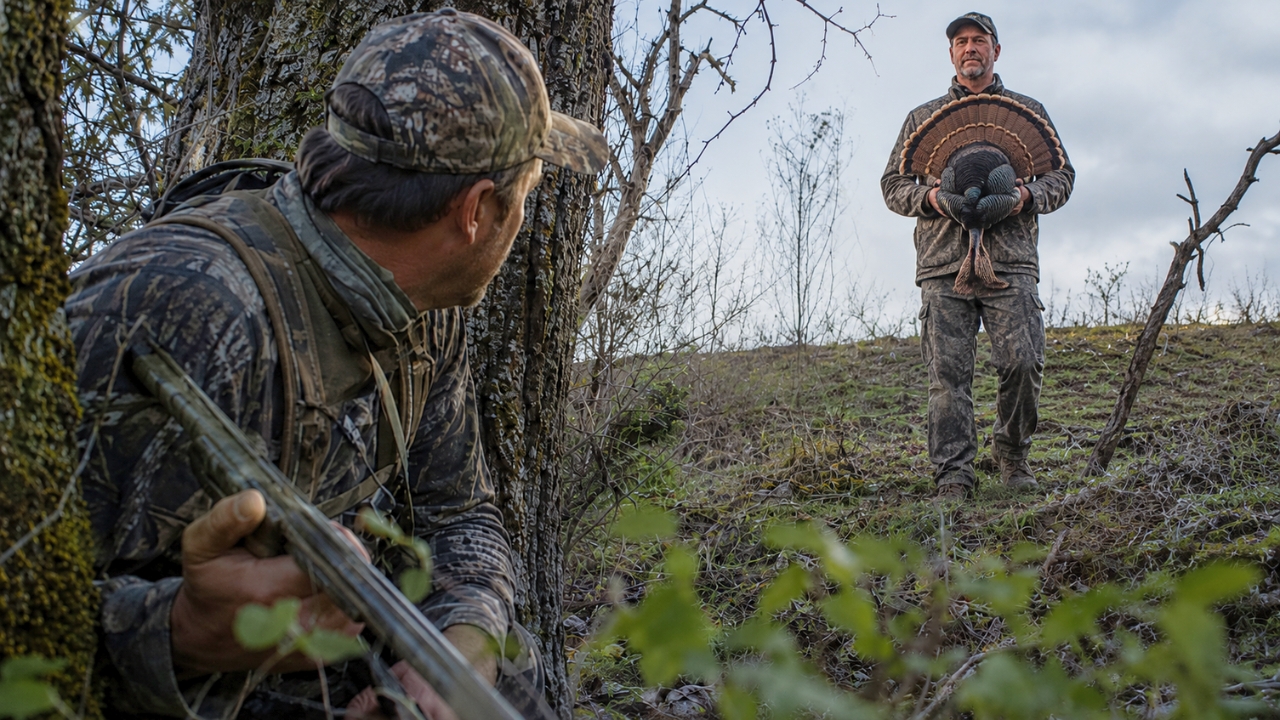
It was a man holding a tom decoy against his chest.
That is the kind of thing that makes your stomach drop, because for a second, the hunter’s mind had been exactly where most turkey hunters’ minds go when they see a bird-shaped form cresting a ridge. He was already shouldered. He was already preparing for a shot. Then he realized he was not looking at a bird at all. He was looking at another hunter using one of the most dangerous setups you can imagine on public land.
This is why reaping and fanning turkeys makes a lot of hunters nervous.
The tactic is meant to use a fan or tom decoy to get close to a real bird. The hunter hides behind the decoy and moves toward the turkey, trying to trigger a reaction. In the right private-land situation, with known hunters and tight control over who is in the area, some people may still use it. But on public land, where you do not know who is sitting behind the next oak tree or tucked below the ridge, it can turn into a nightmare fast.
Because to another hunter, a person hiding behind a tom decoy can look like a turkey.
That is not a small problem. Turkey hunting already depends on deception. Hunters are dressed head to toe in camo. They are making turkey sounds. They are sitting still in brush. They may have decoys out. They are trying to fool a bird with sharp eyes. When you add a person carrying a realistic tom decoy against his body and moving through the woods, you are also fooling other hunters who might be watching that same ridge or field edge.
And that is exactly what happened here.
The hunter saw the shape, thought it was a tom, and shouldered his gun. He did not fire, and that is the part that matters most. He waited until he could clearly see what it was. That one bit of restraint kept the story from turning into something awful.
But imagine being the guy with the decoy.
He may have thought he was being clever. Maybe he was working a bird. Maybe he believed nobody else was nearby. Maybe he assumed he could keep himself safe by staying alert. But while he was focused on turkeys, another hunter was looking at him over a gun barrel because he had chosen to make himself look like the exact animal people were out there to shoot.
That is just asking for trouble.
One commenter in the thread called it one of the stupidest things someone could do on public land. Another said this is why fanning and reaping turkeys are illegal in his state. That reaction was not overblown. The danger is obvious once you picture it. A hunter holding a tom decoy to his chest is not simply carrying gear. He is blending his body with the target species in a place where other people may be hunting.
That is a bad combination.
The scariest part of the story is how normal the first few seconds felt. Nothing weird had to happen. No yelling. No trespassing argument. No strange figure in the dark. Just a hunter seeing what looked like a turkey and doing what turkey hunters do: getting ready.
It only became terrifying when the shape resolved into a person.
That is the kind of moment that makes safety rules feel less like lectures and more like lifelines. Do not shoot at movement. Do not shoot at a shape. Do not shoot at a color, a fan, or a sound. Know exactly what you are aiming at before your finger ever moves toward the trigger.
The hunter did that, and because he did, nobody got hurt.
But the story still leaves a bad taste because the other man’s choice made that restraint the only thing standing between a close call and a tragedy. Public-land turkey hunting already has enough risk without people walking around dressed up behind the profile of a tom.
A bird is not worth that. No gobbler is.
Commenters reacted hard to the decoy detail, and most of them landed in the same place: doing that on public land is reckless.
Several hunters said reaping or fanning may be one of the riskiest tactics in turkey hunting when other hunters might be nearby. The whole point is to look like a turkey. That is fine if you are fooling the bird. It is not fine if you are also fooling a person with a shotgun.
One commenter said the story was exactly why fanning and reaping are illegal in his state. Another called the move flat-out stupid on public land. That was the general mood. Even hunters who understood the tactic did not like the idea of someone carrying a tom decoy against his chest where strangers may be set up.
Others focused on the shooter’s restraint. The hunter saw what looked like a tom, raised his gun, but did not fire until he had fully identified the target. That is the part everyone should notice. The safety rule worked. He waited. He confirmed. He did not shoot at a shape.
A few commenters talked about how turkey hunting creates a special kind of danger because hunters are intentionally imitating the animal. Calling, decoys, camo, and movement all blur the picture if someone gets careless. That means every hunter has to assume another person could be out there making the same sounds or using similar setups.
There was also some wider discussion about public-land pressure. When multiple hunters may be working the same area, the margin for dumb decisions gets smaller. A tactic that might be manageable on tightly controlled private land can become a terrible idea when nobody knows who else walked in before daylight.
The strongest point was simple: never make yourself look like the animal people are hunting unless you are absolutely sure no one else can see you. And on public land, you are almost never that sure.