Photo credit: dr.D/Shutterstock.com
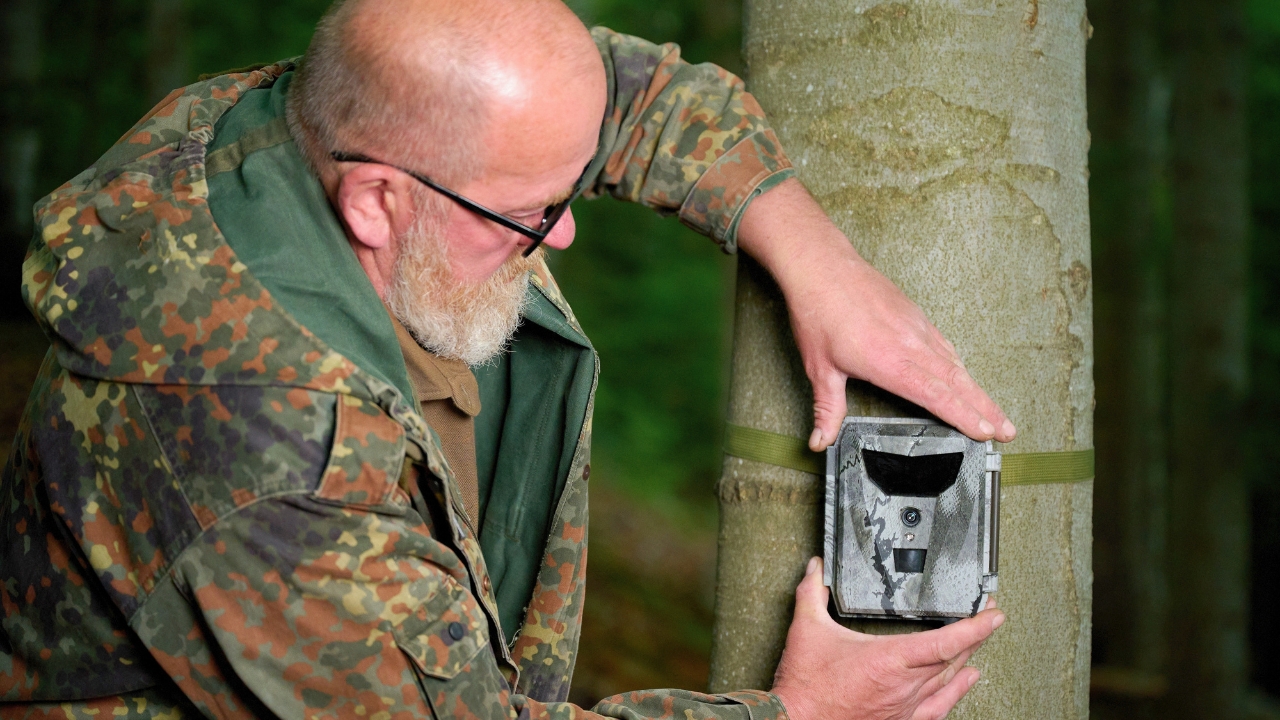
A hunter in Reddit’s r/Hunting described the kind of discovery that can change the feel of a whole area in about ten seconds. He said he found a trail camera near his stand that was not his, and the second he noticed it, the question hit him that always follows something like that: was this just another hunter passing through, or was somebody else already watching the same spot he thought he had to himself? He posted because he wanted to know whether he should leave the camera alone, take it down, or treat it as a sign that the area was no longer what he thought it was. You can read the original thread here: https://www.reddit.com/r/Hunting/comments/1fd3lrb/should_i_keep_the_trail_cam/. (reddit.com)
That was really the heart of the problem. The camera itself was not only an object hanging in the woods. It was information. Somebody had carried it in, chosen that exact place, strapped it to a tree, aimed it, and planned to come back. The hunter did not sound outraged right away. He sounded uneasy. There is a difference. He was not posting after catching a guy red-handed in his stand or after an obvious shouting match at the truck. He was dealing with the quieter, more annoying kind of hunting conflict where nothing has officially happened yet, but the moment you see the wrong piece of gear in the wrong place, the whole setup starts feeling shared whether you wanted it to or not.
That kind of find is especially aggravating because it raises more questions than it answers. If another hunter put the camera there, how long had he been watching that area? Did he know about the stand? Had he been checking the same movement, trail, crossing, or bedding edge? Was he using the camera to monitor game, or was he monitoring people too? Once that uncertainty gets into a hunter’s head, it changes the whole mood of the sit. A place that felt like the product of your own scouting suddenly starts feeling like a place somebody else has also laid claim to, even if neither of you has actually seen the other in person yet.
The comments reflected that shift almost immediately. A lot of hunters did not treat the camera like some harmless surprise. They treated it like a very clear sign that somebody else had the same area circled. More than one reply basically told him that if there is an unknown camera near your stand, you should assume another hunter is already involved there somehow. Some people went a step further and said the camera might not only be watching deer. It might also be watching access, parked trucks, or the timing of who goes in and out. That thought alone is enough to make a hunter feel like he just stepped into somebody else’s plan without knowing it.
At the same time, not everyone in the thread treated the situation like an automatic war. A few commenters leaned toward caution and said the smartest move might be to leave it alone at first and learn more before escalating. The reasoning there was practical. On public or shared ground, other hunters sometimes overlap in ways that are annoying but not necessarily hostile. If the area is legal for everyone to use, then one extra camera does not automatically mean someone is stalking your stand. It may just mean another person also found a promising corridor. That side of the thread was basically saying: do not turn uncertainty into a feud faster than you have to.
Still, a lot of commenters were much more suspicious than that. Some advised hanging a hidden camera to watch the mystery camera and see who came back for it. Others said that if the stand was on private ground and the camera owner had no permission to be there, the answer was much simpler. In that case, take the camera down and deal with the person later. That split in the comments says a lot about why the original post felt so tense. Everything depends on what kind of land this was, what rights other hunters had there, and whether the unknown camera represented overlap or trespass. The hunter himself seemed to be stuck right in the middle of that uncertainty.
There is also something especially irritating about the camera being “near the stand,” not somewhere random in the broader woods. If it had been well off in another drainage or on a different trail entirely, the discovery might have felt easier to shrug off. But once it is close enough to your stand to make you stop and think about it, the meaning changes. Hunters put cameras where they think movement matters. If another hunter’s camera is near your setup, it starts to feel like there is a direct overlap in what both of you think is worth watching. That is why the find bothered him enough to post in the first place. It was not just another gadget in the woods. It was a sign that someone else’s scouting map and his own may have crossed in a very specific place.
Some of the replies also carried that harder-edged public-land realism that shows up anytime hunters talk about scouting overlap. A few essentially told him that if the land is open to everyone, he needs to be ready for exactly this kind of situation. Cameras, stands, access trails, and even favorite trees all overlap eventually when enough people are working the same piece of ground. But even that practical view did not really make the discovery feel better. It only changed the lesson. Instead of “someone is trespassing,” the lesson becomes “someone else has been thinking about this place the same way you have.” For a hunter who believed he had found his own quiet edge, that can be aggravating in a different but equally real way.
The short section of commenters who were more strategic than emotional probably gave the most useful advice. They suggested not making a rushed move out of anger, especially if the ground was legal for others to use. Learn what you can first. Watch the access. Check for signs of how often the camera is visited. Pay attention to whether the area starts getting pressured more heavily. In other words, treat the camera as a clue, not just an insult. That does not make the feeling go away, but it does recognize what the hunter was really dealing with: not proof of a confrontation, but proof that someone else had entered the same picture.
What makes the whole thing linger is how much it changes the mental side of the hunt. Once he found that camera, he could not really go back to feeling like the stand area was only his own project. Whether the other hunter was harmless, respectful, competitive, or shady almost became secondary. The first real change had already happened. The place had gone from private confidence to shared uncertainty. And for a lot of hunters, that shift alone is enough to make a familiar stand feel different before the next sit even starts.