Photo credit: The Avid Outdoorsman
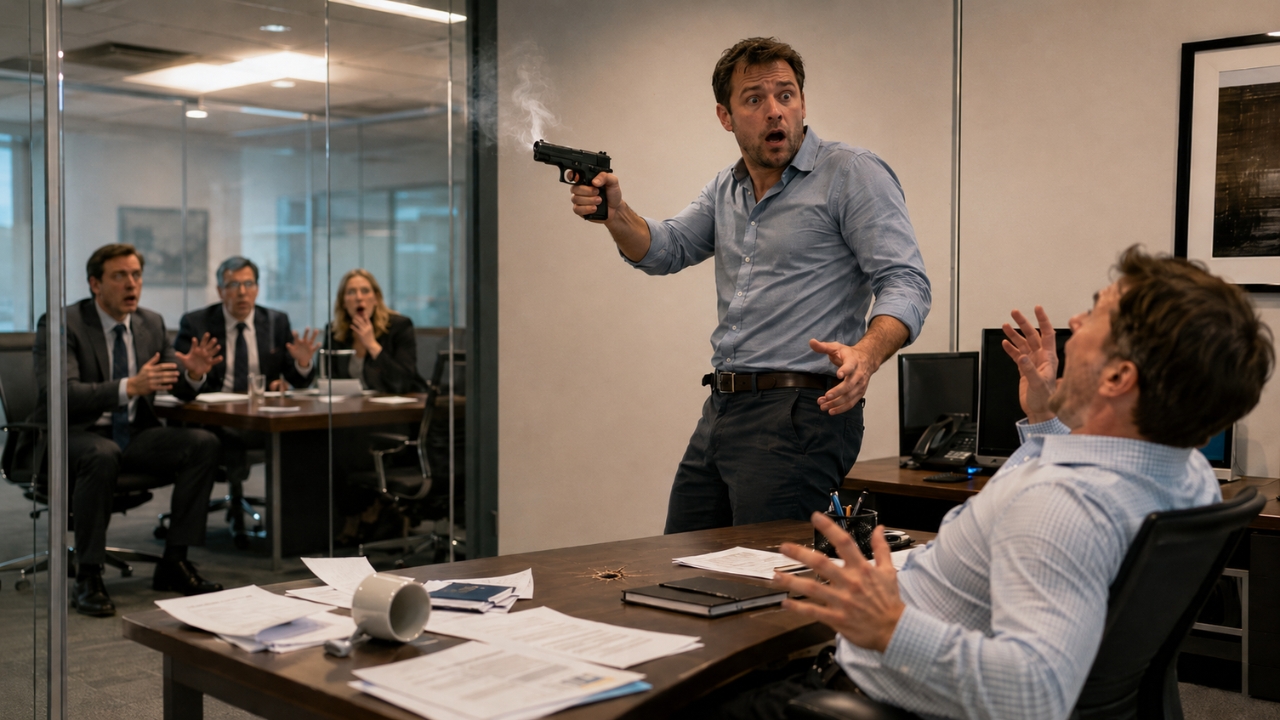
A Reddit user in r/CCW described the kind of workplace gun incident that changes policy overnight and leaves everyone around it wondering how many bad decisions had to stack up before the loudest one finally happened. In the thread, he was answering a question about whether people carry at work, and he explained that his office used to be fairly relaxed about the issue. Then someone at the company had what he called a “desk pop” while showing off a gun to a coworker. The part that made the whole story even uglier was where it happened: the company lawyers were in the next room. In the original Reddit thread, that one comment turned into a miniature office-horror story all by itself: https://www.reddit.com/r/CCW/comments/1rpv7yu/do_you_carry_at_work/. (reddit.com)
The way he told it was short, but it carried enough detail to sketch out exactly why the fallout was so immediate. This was not an employee defending himself against a threat, not a gun discovered in a bag during some emergency, and not even a policy problem that stayed theoretical. It was someone actively showing off a firearm to a coworker in an office setting and then negligently firing it. That is the kind of event that takes every vague company concern about workplace carry and turns it into a concrete disaster. Once the gun goes off at a desk, the entire conversation changes from “should employees be trusted?” to “how did somebody think this was remotely acceptable in the first place?”
The office setting is what gives the story most of its bite. A desk is not a range bench. A coworker is not a training partner. A gun being shown off at work already tells you the person handling it was treating the environment like something it absolutely was not. Add the negligent discharge and the lawyers nearby, and the scene starts to feel almost absurd in how preventable it was. Nobody forced the gun out. Nobody needed to see it. Nobody had any legitimate reason to be manipulating it there. The incident only happened because someone decided the workplace was a fine place to mix ego, curiosity, and a loaded firearm.
The outcome, at least from the commenter’s perspective, was immediate and unforgiving. He said that after the desk pop, the company policy became essentially zero tolerance: “you will be immediately fired no questions asked if anyone even smells a gun anywhere near the building.” That line is what tells you how hard the pendulum swung. The company did not tighten rules a little. It did not add training, tighten reporting, or create a more structured carry policy. It slammed the door completely. One negligent discharge by one employee was enough to make the entire workplace treat any whiff of a firearm as an увольнение-level offense.
That kind of reaction makes sense once you picture who was nearby. The lawyers in the next room are not just a funny detail. They are the perfect symbol of how bad the scene must have looked from the company’s side. If you are a business and someone negligently fires a gun in the office while showing it off, with legal staff practically within earshot, there is almost no chance the response is going to be measured or forgiving. At that point the issue is not only safety. It is liability, reputation, employee trust, and the realization that somebody in the building was casual enough with a gun to create this problem right beside everyone else doing their jobs.
The rest of the thread around that comment helps explain the environment it landed in. People were debating whether they carry at work, whether it is worth risking a job for, whether company policies matter if personal safety is the bigger concern, and whether being found out is a rookie mistake or just an unavoidable risk. Inside that broader debate, the “desk pop” comment landed like a reminder of what employers are actually afraid of. Not the thoughtful, deeply concealed carrier who never touches the gun and goes home uneventfully every day. They are afraid of the one person who turns a gun at work into a performance.
That difference matters because it shaped how people reacted. Some commenters on work-carry threads tend to talk tough about company policies, private-property rules, and how concealed means concealed. But a story like this exposes the other side of it. A lot of anti-gun workplace rules do not survive because companies have carefully modeled the risks of the most responsible carriers. They survive because somewhere, sometime, someone pulled a gun out to show off at a desk and fired it. Once that happens, every argument about mature, discreet, disciplined carry gets drowned out by the one employee who made the worst possible case against it.
The story also says something about how quickly bad judgment becomes everyone else’s problem in an office. Coworkers did not sign up to be around a gun demo. The lawyers next door did not agree to sit beside a negligent-discharge zone. HR, management, and everyone who heard the shot or dealt with the fallout were all dragged into it instantly. That is the difference between stupidity in private and stupidity at work. In private, you may blow a hole in your wall, your furniture, or your pride. In an office, one stupid moment ripples through policy, trust, employment, and legal fear all at once.
There is not much mystery in the outcome, and that is part of what makes the whole thing hit harder. Nobody reading it needs a detailed incident report to understand where it went. The moment an employee has a desk pop while showing off to a coworker, the future of workplace carry in that company is basically decided. The company is not going to remember every quiet day where someone responsibly kept a pistol concealed and untouched. It is going to remember the loud day when someone could not resist making the gun part of the conversation.
And that is where the story sits. A company that had once been fairly lax about guns at work ended up with a zero-tolerance policy because one person decided to show off a firearm at a desk and fired it with the lawyers in the next room. After that, the debate over whether people should carry at work was no longer theoretical in that building. The loudest possible example had already answered it for them.