Photo credit: Mian Ayaz Vlogs/Youtube
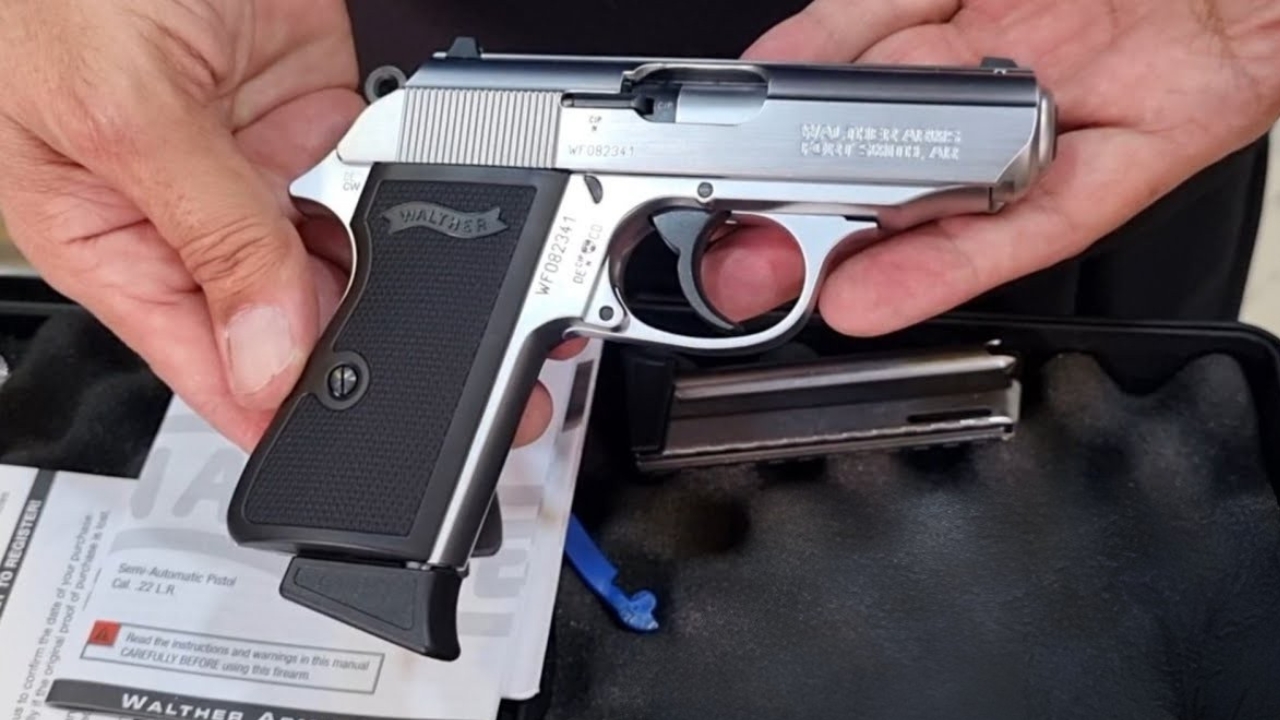
The Walther PPK is not a modern polymer carry pistol, and it should not be judged like one. It is an old-school blowback pistol with a fixed barrel, a heavy recoil spring, a slim grip, and a design that goes back to a completely different era of concealed carry. It is famous, it is classy, and it still has a place for people who like metal-framed pocket pistols.
But the PPK can be picky. That is probably the fairest way to say it. It is not usually the kind of pistol that happily eats every hollow point, every cheap practice load, and every tired magazine without complaint. The most common problems tend to involve feeding, ejection, extraction, stiff slide operation, magazine fit, ammo sensitivity, and the way the pistol’s small blowback design interacts with the shooter’s hand.
Failure to Feed
Failure to feed is one of the most common Walther PPK complaints. The slide moves forward, but the round does not chamber cleanly. The bullet may hang on the feed ramp, nose up too sharply, or stop partway into the chamber. This shows up more often with certain hollow points than with round-nose FMJ because the PPK was designed in an era when ball ammunition was the normal expectation.
That does not mean every PPK refuses hollow points. Some run modern defensive loads just fine. But this is absolutely a pistol where ammo testing matters. Older owner discussions around PPK and PPK/S feeding issues often come back to trying quality FMJ first, cleaning the chamber thoroughly, and testing different ammunition before assuming the gun itself is broken. If the pistol runs FMJ but chokes on one hollow point, that load may simply not be a match for that specific gun.
Hollow Point Sensitivity
Hollow point sensitivity deserves its own section because it is one of the classic PPK headaches. Some PPK pistols feed round-nose ammunition smoothly but struggle with wide-mouth hollow points, short overall-length defensive loads, or bullets with a flatter profile. The round may catch low on the feed ramp or fail to make the smooth turn into the chamber.
That is not unusual for older pistol designs. Modern carry pistols are generally built with hollow point feeding in mind. The PPK comes from a different time. If a PPK is going to be carried, it needs to be tested with the exact defensive load planned for carry, not just a box of range ammo. A load that feeds beautifully in a Glock, Shield, or P365 may still hang up in a PPK. The gun gets a vote, and sometimes it votes no.
Failure to Eject
Failure to eject is another common PPK complaint. The fired case comes out of the chamber but does not clear the pistol. It may stovepipe, get caught by the slide, or bounce around in the ejection port. This can make the pistol feel unreliable even when it is technically extracting the case.
A blowback pistol relies on the balance between cartridge pressure, slide mass, recoil spring strength, and shooter grip. If the ammo is weak, the recoil spring is stiff, the gun is dirty, or the shooter does not give the pistol a firm enough platform, ejection can get inconsistent. Some PPK/S owners have reported repeated failures to feed or eject during range sessions, which lines up with the reputation these pistols have for being more ammo-sensitive than modern service pistols.
Weak or Erratic Ejection
Some PPK pistols do not fully jam, but they still throw brass weakly or inconsistently. One magazine may run fine, then the next may have brass dribbling out or flying in odd directions. That kind of weak ejection can be a warning sign that the pistol is barely cycling with that load.
This can come from ammunition, extractor condition, ejector condition, recoil spring tension, chamber cleanliness, or simple break-in on a newer gun. A recent owner report about a new-production PPK in .32 ACP described repeated ejection issues after testing multiple ammunition types, even though feeding and extraction were reportedly fine. That is only one owner’s experience, but it shows the kind of ejection complaint people still run into with modern-production PPK-family pistols.
Failure to Extract
Failure to extract is less common than simple ejection trouble, but it is more serious when it happens. The fired case stays in the chamber instead of being pulled out by the extractor. The slide may stop, or the gun may try to feed the next round with empty brass still sitting in the chamber.
The usual suspects are a dirty chamber, rough brass, extractor wear, a chipped extractor claw, or ammunition that is not cycling the slide with enough force. Since the PPK is a blowback pistol, dirty chambers and weak ammo can show up quickly. If the pistol only struggles with one load, start with the ammunition. If it leaves brass in the chamber across several loads, the extractor and chamber need to be checked before the pistol is trusted.
Magazine-Related Problems
Magazines matter a lot with the Walther PPK. A weak spring, damaged feed lips, rough follower, dirty magazine body, or magazine that is not seating correctly can cause feeding problems, slide-lock problems, or failures to chamber the first round. Because the PPK is small and tightly packaged, the magazine does not have much room to be sloppy.
New-production owners have reported feeding and magazine-release complaints, including magazines that become harder to remove after the slide is racked or the pistol is press-checked. Older troubleshooting discussions also point to magazine springs, feed lips, and magazine fit when diagnosing PPK feeding problems. If a PPK runs with one magazine and chokes with another, the problem magazine should be marked and pulled from carry use.
Stiff Slide Operation
The PPK’s slide can feel stiff, especially to shooters used to modern locked-breech 9mm pistols. That is part of the blowback design. The recoil spring has to do more work because the barrel does not lock and unlock the same way a modern recoil-operated pistol does. For some shooters, especially those with weaker hands, the slide can be hard to rack cleanly.
This can create user-induced problems. Riding the slide forward, failing to pull it fully rearward, or trying to ease it closed can cause feeding or return-to-battery issues. The PPK generally needs the slide to be run with authority. If a shooter struggles to rack it, the pistol may not be the best carry choice for them, even if it looks and feels great in the hand.
Failure to Return Fully to Battery
A PPK can also stop just short of fully returning to battery. The round starts into the chamber, the slide moves forward, but it does not completely close. Sometimes a bump on the back of the slide finishes the job. Other times the round has to be cleared.
This can come from a dirty chamber, rough ammo, stiff new springs, weak slide momentum, or a round profile the gun does not like. It can also happen if the shooter rides the slide forward while loading. With a stiff blowback pistol, the slide needs full spring force to chamber the round. If the pistol repeatedly stops short during live fire, the chamber, recoil spring, magazine, ammo, and extractor should all be inspected.
Slide Bite
Slide bite is not a feeding malfunction, but it is common enough with the PPK that it belongs in the conversation. The back of the slide can cut or scrape the web of the shooter’s hand if their grip rides too high. Some shooters can fire a PPK comfortably. Others get chewed up almost immediately.
This matters because pain changes grip. Once the pistol starts biting the shooter, they may loosen their hold, shift their hand, or anticipate recoil. That can make ejection and cycling problems worse. A pistol that technically functions fine but punishes the shooter every magazine is still a problem in real use. The PPK is small, sleek, and old-school, but that old-school shape does not fit every hand.
Ammo Sensitivity
Ammo sensitivity is probably the biggest overall theme with the Walther PPK. Some pistols run great with specific loads and act fussy with others. Bullet shape, recoil impulse, case quality, overall length, and primer consistency can all affect function. That is especially true in .380 ACP, where there is not a huge surplus of power to work with.
A PPK should be tested with several types of ammo before being trusted. That means FMJ for practice and the exact hollow point or defensive load you plan to carry. If the pistol runs one load perfectly, that is useful information. If it chokes on another, that is useful too. The PPK is not the gun where you assume anything will work because the box says .380 ACP or .32 ACP. You test it, mark the magazines, and trust only the combination that actually runs.
Like The Avid Outdoorsman’s content? Be sure to follow us.
Here’s more from us: