Photo credit: Cole Miller/Unsplash.com
A newer public-land hunter said he thought he had found a quiet spot in Northern Michigan after spending the summer and early fall scouting. Instead, he ended up back at his truck with another hunter waiting on him, angry enough to make him question whether public land hunting was always like this.
The hunter shared the situation in a post on r/Hunting titled “Public Land Hostility – Normal?”. He said he had scouted the area ahead of archery season, marked the spot on OnX, and did not see trail cameras, blinds, or other signs that someone else had been using the area heavily. That made him think he had found a decent place to sit.
When he returned a few weeks later, he walked in before morning and got set up. Not long after, he heard another vehicle coming down the access road. The vehicle stopped, sat there, and idled for roughly 10 minutes.
That was enough to make him uneasy. He climbed down from the tree and walked back toward his truck to see what was going on. When he got there, he found a man waiting near his vehicle.
Before the poster could even really greet him, the man launched into a heated rant. According to the hunter, the man said he had been hunting that spot for 33 years and told him he needed to get out. The man also said his nephew and dad hunted nearby and were on their way to clear the poster and his gear out of what he called their family’s spot.
That left the poster wondering if he had missed some unspoken rule. He said he was under the impression that public land was first come, first served. If he had seen signs of another hunter, he said, he would have moved on. But in this case, the man still had his pop-up blind in the truck, which made it sound like the poster had simply beaten him there that morning.
The whole encounter left him rattled. He said the lesson he took from it was to walk much deeper into the woods next time and try to get farther away from easy access. But he still wanted to know whether this kind of hostility was normal on public land.
Reddit was not exactly gentle with the man who claimed the area as his family’s spot.
The most common response was that public land does not belong to one hunter just because he has used it for a long time. A lot of hunters understood why someone might feel attached to a spot after decades of hunting it, but they did not think that gave anyone the right to threaten another hunter who got there first.
Several commenters said the etiquette is pretty simple: if someone is already set up where you planned to hunt, you move along. It may be annoying. It may ruin your morning. But public land is shared ground, and other hunters are allowed to be there.
One commenter put it plainly, saying public land is first come, first served and that nobody can claim a spot as their own. Another said the man may have hunted there for 33 years, but that still did not make it private.
That was the part many hunters seemed especially bothered by. The angry man was not simply disappointed. He allegedly waited near the poster’s truck and used the fact that family members were supposedly coming as pressure to make him leave. To many commenters, that crossed the line from bad etiquette into intimidation.
The poster did not say he stayed and fought it out. He sounded more surprised than combative, especially because he described himself as fairly new to public-land hunting. He was trying to figure out whether this was a normal part of the experience or a sign that he had run into the wrong kind of hunter.
Reddit’s answer was mostly clear: running into territorial hunters can happen, but that does not make it normal or acceptable.
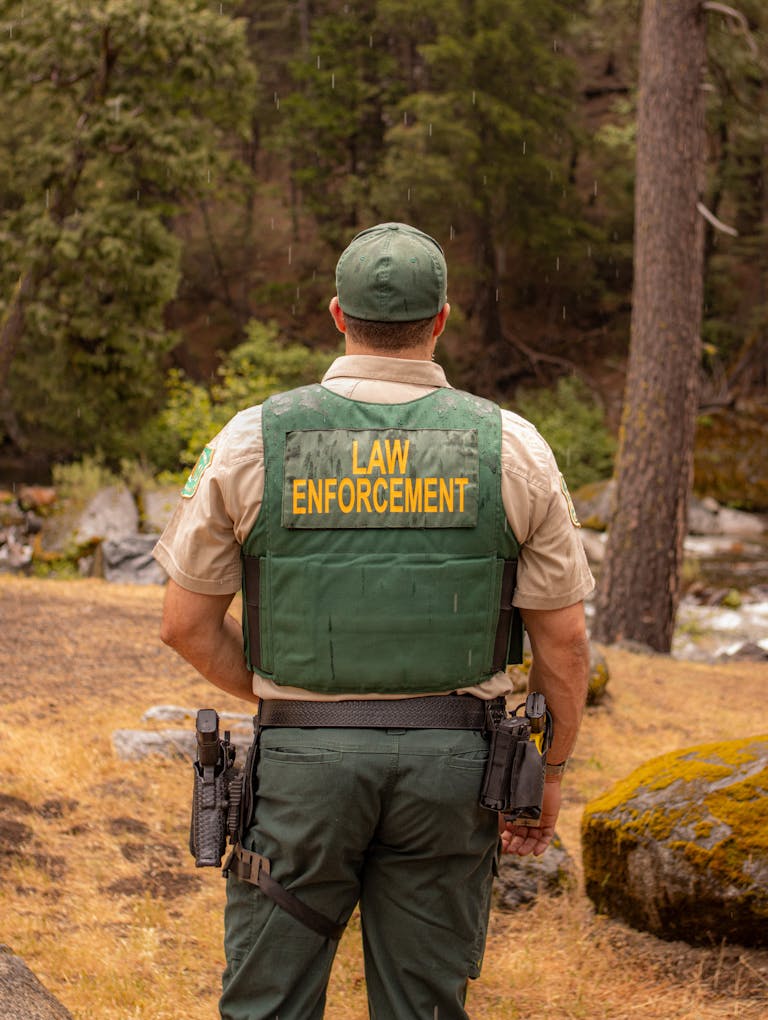
A lot of commenters told the poster the incident sounded like hunter harassment and said he should consider reporting it to a game warden or the DNR.
Their reasoning was that the man was not simply talking about where he liked to hunt. He allegedly used threats, or at least the suggestion of threats, to pressure another hunter off public land. Some commenters said that in many states, interfering with a lawful hunter can bring real consequences.
Others told him to get a license plate number next time, document the interaction, and call the authorities instead of trying to settle it in the woods. That advice came up repeatedly because almost everyone in that setting may be armed, and even a “minor” confrontation can turn serious fast.
A few commenters said they would have called the game warden right then. Others said they would have called the sheriff if the situation felt threatening enough, then let law enforcement notify the conservation officer.
The safety angle mattered here. This was not a disagreement at a boat ramp or a parking lot after a hunt. The poster was in the woods before or around first light, with another person angry over hunting access and claiming backup was on the way. That kind of setup makes even confident hunters think twice.
Several people told him not to escalate in person, even if he was legally in the right. They said being right does not protect your truck from damage, your gear from being stolen, or your morning from turning into something much worse. Their advice was to get out safely, document what happened, and let the warden handle the rest.
Not everyone thought the poster should have moved.
A number of commenters said he was there first and had every right to hunt. They argued that leaving only teaches aggressive hunters that bullying works. To them, public land stays fair only when people refuse to let one family or group scare everyone else off.
That side of the conversation had a harder edge. Some people said they would have gone right back to the stand. Others said they would have told the man to call the game warden if he had a problem with it. A few said they had dealt with the same kind of public-land entitlement and believed backing down only made it worse for the next hunter.
But even among people who believed he had the right to stay, there was a lot of caution. Public land conflicts do not happen in a vacuum. Your truck is often parked far from where you are sitting. Your gear may be left unattended. The other person may know the area better than you do. And during hunting season, tempers can run hotter than they should.
That made the advice split in an interesting way. Legally and ethically, most commenters thought the poster was in the right. Practically, many still thought he was smart to avoid a direct fight.
There is a big difference between surrendering a spot forever and deciding one deer hunt is not worth getting cornered by an angry stranger and his relatives.
One of the more useful parts of the discussion came from hunters who had seen similar conflicts handled well.
One commenter said he had hunted the same public spot for years and once found two ladder stands set up about 50 yards from his usual location. Instead of blowing up, he tracked down the other hunters and explained the situation. They realized they were crowding him, apologized, and moved their stands farther away. The story ended with everyone getting along, and the next year the other hunters chose a spot much farther from his.
That example stood out because it showed the difference between attachment and ownership. A hunter can have a favorite public-land spot. He can even feel frustrated when someone else finds it. But that does not give him the right to threaten, bully, or claim the land as his own.
Other commenters said they had long-running public-land routines where everyone quietly respects each other’s usual areas. That kind of informal etiquette can work when people are reasonable. If you know someone is already in one draw, you slip into another. If someone beats you to a spot, you hunt somewhere else that day.
The problem comes when someone starts treating informal courtesy like a deed. Once “I usually hunt here” becomes “you better leave,” the whole thing breaks down.
That seemed to be the line Reddit drew. Respecting other hunters is part of public land. Owning a spot because your family has hunted it for decades is not.
Commenters overwhelmingly told the hunter he was not wrong for thinking public land should be first come, first served.
Many said the other man’s behavior was not normal and that he should report the incident if it happens again. Several specifically mentioned contacting a game warden, conservation officer, or DNR, especially if the man threatened to remove his gear or brought family members to intimidate him.
Others focused on documentation. They suggested taking a photo of the license plate, discreetly recording any future interaction if state law allows it, and keeping notes about what happened. Some said a small camera or GoPro could be useful for public-land hunters who keep running into aggressive people.
A few commenters urged him to pick his battles. They agreed he had every right to hunt there, but they warned that angry armed strangers are not worth proving a point to. To them, the safest move was to leave, report it, and find another spot rather than risk a confrontation miles from help.
There were also hunters who told him not to let one bad encounter ruin public land. They said Northern Michigan public ground can get crowded, and some people do act like they own areas they have hunted for years. But plenty of hunters still follow basic etiquette, move along when someone is already there, and understand that public land belongs to everyone.
For the poster, the morning started as a first-come, first-served hunt in a spot he had scouted. It ended with a stranger claiming decades of history gave his family the right to push him out. Reddit’s answer was blunt: a favorite spot is not private land, and threatening another hunter over it is a good way to bring the game warden into the story.