Photo credit: Maciej Bledowski/Shutterstock.com
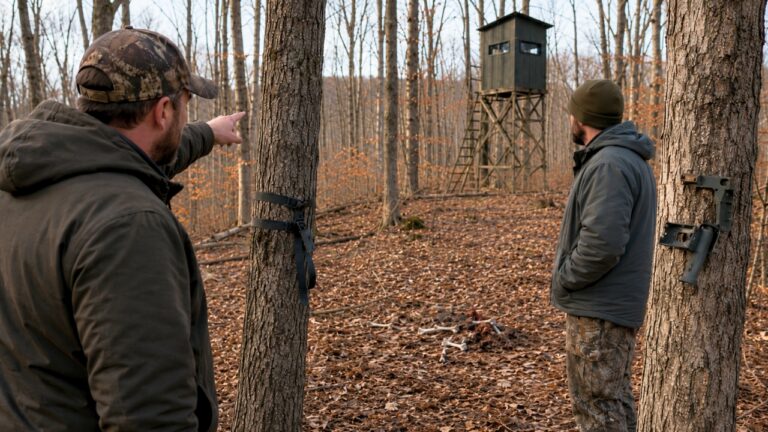
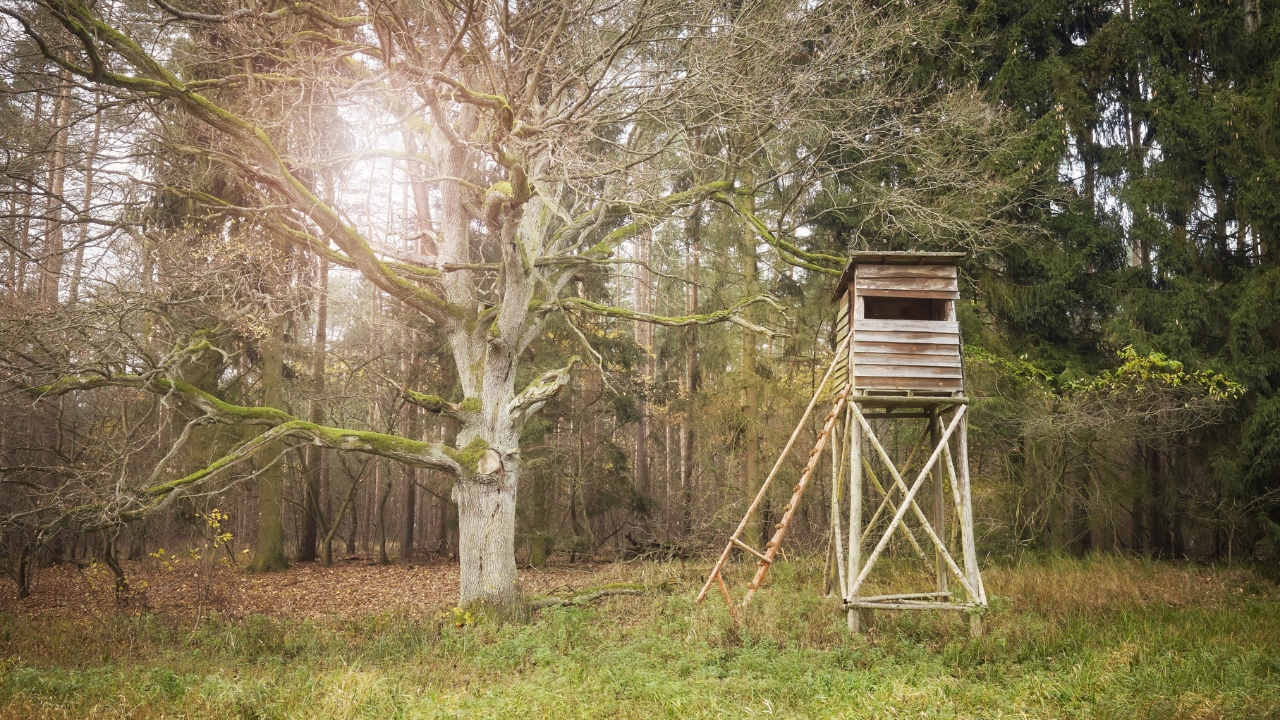
A landowner said his family discovered a deer stand built on their private property, and the placement made the whole situation more than a simple boundary mistake.
The property was already posted. Contact information was already up. The landowner said the entire perimeter of the property, including the side that touched the neighboring land, was clearly marked. The boundary was not complicated, either. According to him, the neighbor’s property ended at the wood line, which made the line easy to identify.
Still, someone built a stand on his side.
In a Reddit post, he said the stand was not only unauthorized. It was built above established stands his family already used, which made those existing stands unsafe as long as the new one remained there.
That part changed the whole problem. A trespasser hanging a stand on private property is bad enough. A trespasser hanging a stand in a way that creates a safety issue for the people who actually have the right to hunt there is worse. Now the family could not simply ignore it until later. The new setup affected where they could safely sit, shoot, and move.
The landowner said they knew who was responsible. That removed some of the mystery but added a different kind of pressure. If you do not know who put the stand up, you can call it an unknown trespasser problem. If you do know, especially if that person is a neighbor or someone connected to the neighbor’s property, anything you do may turn into a long-term feud.
He wanted to take a legally responsible approach. That was the whole reason he brought it to Reddit. He did not ask how to get revenge or how to make the other person mad. He asked what steps they needed to take.
The simplest answer would have been to tear the stand down. A lot of people would do exactly that. It is on private land, built without permission, and creating a safety problem. But the landowner seemed aware that removing someone else’s stand, even from your own property, can still create an argument if the other person claims theft or damage.
At the same time, leaving it up was not a great option. He later said there was a clear path right to the person’s house, but until the issue was resolved, his family could not use their own stands. That meant the trespasser’s setup was effectively blocking the lawful hunters from using their own property.
That is where these situations get under your skin. The person who crossed the line gets to keep doing what they want unless the landowner takes action, but the landowner has to think through every step because doing it wrong can create more trouble. The trespasser can be careless. The owner has to be careful.
Commenters pushed him in several directions. Some told him to remove the stand and consider it a lesson for whoever put it there. Others said to call law enforcement or a game warden and make a report for trespassing. A few told him to gather trail camera evidence first so there was no question about who was using it.
That mattered because a path leading to someone’s house does not prove that person hung the stand or hunted from it. It may make the answer obvious to the landowner, but if he wanted police or a warden involved, pictures of the person on the property with a firearm would carry a lot more weight.
The landowner was also dealing with the practical side of keeping his property usable. He already had cameras out, and another commenter talked about cell cameras sending burst photos to a phone within seconds of motion. That kind of setup can make a major difference with trespassers because even if they steal or damage the camera later, the image may already be saved.
A few people recommended the neighborly approach first. Knock on the door, ask whether they realize the stand is on posted private property, tell them it needs to come down, and give them a short deadline. That approach does not feel nearly as satisfying when someone has clearly crossed the line, but it may keep a bad neighbor relationship from turning poisonous.
Others were not interested in being friendly. They argued that anybody who builds a stand on posted private land knows exactly what he is doing and does not deserve a courtesy call. To them, the stand was proof enough that the person had already chosen to ignore the owner’s rights.
The landowner was stuck between those two instincts. He wanted the stand gone. He wanted to be able to use his own established stands safely again. He knew who he believed was responsible. But he also wanted to handle it in a way that would not backfire legally.
That is the frustrating part of property-line hunting conflicts. It is not only about one stand. It is about whether someone else thinks they can use your land, crowd your setups, and make your own property unsafe while you are left figuring out the “proper” way to stop them.
Commenters were divided between immediate removal and careful documentation.
Some said if the stand was on his property without permission, he should take it down. A few called it a free stand. Others suggested removing it, leaving a note on the tree saying the stand was not welcome, and telling the person they could come collect it.
Other commenters warned against getting too cute with revenge. One person pushed back on the idea of dumping it in the neighbor’s yard, pointing out that doing that could be trespassing too, and if the landowner had the wrong person, he would look like the problem.
Several people recommended trail cameras before any confrontation. The advice was to get photos or video of the person using the stand, especially with a firearm, and then call the game warden or law enforcement.
Some commenters urged him to talk to the neighbor first. One said to ask if they realized the stand was on his property and give them a reasonable chance to remove it. Another said keeping peace with neighbors matters because the fallout can last long after a ticket or police report.
Others said people who build stands on posted private land are rarely just confused. Their view was that the landowner should post signs clearly, document everything, remove the stand, and prosecute if the person came back.
The practical middle ground was to take photos, confirm the boundary, use cameras for proof, make a police or game warden report if needed, and avoid doing anything that could make the landowner look reckless when he was the one being wronged.