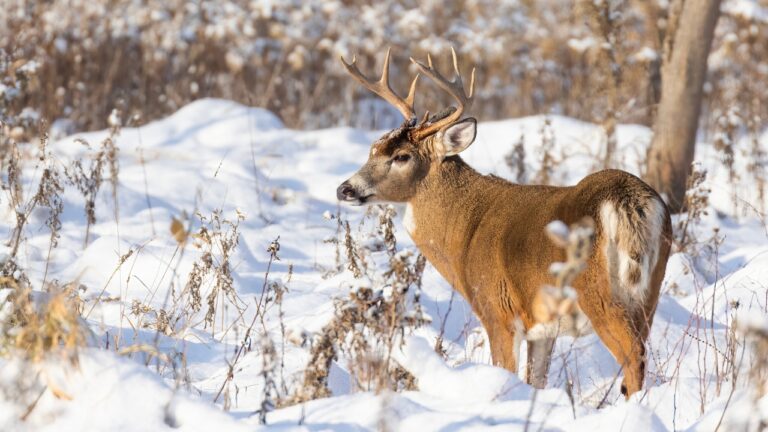
Photo credit: Okyela/Shutterstock.com
The first real cold sit of late season can feel like a fresh start, but it often exposes every weakness in your plan. When temperatures finally plunge and deer pile into food, you either capitalize or educate the very animals you are trying to tag. To finish strong, you need to recognize the subtle mistakes that creep in after that first frosty hunt and tighten your approach before deer pattern you instead.
Late in the year, whitetails are worn down, wary, and focused on survival, which means your margin for error is razor thin. By understanding how cold, pressure, and changing food sources reshape their world, you can avoid the common errors that ruin good spots and instead turn those bitter evenings into your best opportunity of the season.
Misreading how late-season deer actually behave
After your first cold sit, it is easy to assume deer will keep moving the same way every frigid evening, but late-season whitetails are not the same animals you saw in October. They have been hunted for months, they have watched friends disappear, and they now prioritize security and calories over curiosity. As temperatures drop, their world shrinks to a tight loop between bedding and the safest available groceries, and if you treat them like early season or rut deer, you quickly educate them instead of patterning them.
Several seasoned observers describe late season as An Interesting Challenge because cold, snow, and shifting food push deer into very specific feeding areas and watering zones. You see fewer random sightings and more concentrated movement, often right at the edge of legal light. If you keep expecting rut-style cruising or midday wanderings, you end up burning sits on dead time instead of keying in on that short, predictable window when deer rise from bedding and slip toward food in the last minutes of daylight.
Overpressuring spots after one good cold front
Once you finally see deer pour into a field or plot on that first icy evening, the temptation is to dive back in on every similar forecast. That kind of enthusiasm quickly turns into pressure, and late-season deer do not forgive repeated mistakes. Crunchy snow, skyline silhouettes, and sloppy exits teach mature bucks exactly where you sit, and they respond by shifting to secondary food, moving after dark, or simply staging farther back in cover where you never see them.
Experienced late-season hunters warn that Crunchy ground and exposed bedding cover make every approach and exit risky, especially in the mornings when deer are already close to or in their beds. Others emphasize that late-season success often hinges on patience, with advice like the Bonus reminder not to rush in and burn a spot before conditions are perfect. If you treat a good cold front as a green light to hunt the same stand three evenings in a row, you usually turn a promising pattern into a ghost town by the end of the week.
Ignoring access and exit when the woods are loud and bare
After that first cold sit, you quickly learn how unforgiving frozen leaves, ice, and bare timber can be. What passed for “quiet enough” in October now sounds like an alarm bell with every step. If you keep using the same access routes you relied on earlier in the season, you often walk across open fields, skyline ridges, or even the edge of bedding, broadcasting your presence to every deer within earshot before you ever climb into the stand.
Late-season specialists stress that Access Is Key because deer have boiled their lives down to food and bedding, and any human intrusion along that line is a red flag. They recommend using terrain, wind, and even standing crops to slip in from the back side, and they urge you to limit unnecessary movement so you are not educating deer on every approach. Others point out that late-season air is dense and sound carries, so even small noises travel farther, which is why some hunters favor box blinds on food plots where they can enter quietly and let sound sink into low-lying areas, a tactic highlighted in a Dec discussion of late-season “hail mary” setups.
Letting the cold beat you before the deer arrive
One of the most common late-season failures happens long before a buck steps out: you get so cold that you start moving, fidgeting, or climbing down early. That first bitter sit often exposes gaps in your layering, boot choice, or hand protection, and if you do not fix those issues, every subsequent hunt becomes a test of endurance instead of a focused ambush. Once you start shivering, blowing into your hands, or stomping your feet, you are broadcasting movement and noise at the exact time deer are filtering into range.
Cold-weather veterans remind you that You cannot hunt effectively if you are frigid and uncomfortable, and they lay out specific ways to stay functional through December and January, from windproof outer layers to managing moisture. Others focus on staying both warm and stealthy, noting in The Challenge of Late Season Hunting that late whitetail sits demand insulation that remains quiet and effective even when damp. If you treat clothing as an afterthought, the cold will push you into constant micro-movements that deer pick off easily in leafless timber.
Calling and noise mistakes when deer are on edge
After that first cold front, you might be tempted to lean on calls to pull deer those last few yards, especially when you see them staging just out of range. The problem is that late-season whitetails have heard every aggressive grunt and rattling sequence in the book, and they are far less tolerant of anything that sounds even slightly off. Overcalling, calling at the wrong deer, or making noise with gear and clothing can turn a cautious buck around in an instant.
Calling experts warn that in Oct, many hunters forget that deer have incredible hearing, and they list several Calling Deer mistakes that become even more costly late in the year. They emphasize that subtle, situational sounds are more believable than loud, repetitive sequences, especially when animals are already jumpy. Another late-season perspective notes that Deer are social animals, and while aggressive calling can backfire, soft contact grunts or doe sounds can reassure them when conditions are right. If you keep hammering on a call every time you see movement, you risk teaching deer that your stand equals danger.
Clinging to rut tactics instead of shifting to food and timing
Once you have one productive cold sit, it is easy to assume that more time in the same tree will eventually put a cruising buck under you. That mindset keeps you hunting travel corridors and rut funnels long after the party is over. In late season, bucks are no longer roaming for does, they are recovering, and if you keep banking on random movement, you waste the best patterning opportunity of the year: predictable, food-driven behavior tied to specific weather.
Forecasts that highlight Hints of the pre-rut make sense in October, but by the time you are grinding through late December, the focus has shifted almost entirely to calories. One late-season breakdown explains that a buck may not move far, but he has to get on his feet at some point during daylight, and a friend who is an Oklahoma rancher uses that fact to intercept deer as they rise from secure bedding and slip toward feed. Another set of tips for after the rut stresses that if you rush into a spot before conditions line up, the hunt can be over before it begins, which is why the Don’t Rush In advice is so critical. Late season rewards hunters who time their sits around cold snaps, snow cover, and high-value food, not those who cling to rut fantasies.
Overlooking gear realities when your body is worn down
By the time you reach that first bitter sit, your body has already logged months of climbing, drawing, and hiking, and fatigue quietly changes what you can do with your equipment. If you insist on shooting the same heavy draw weight you bragged about in October, you may find that bulky layers and stiff muscles make it hard to come to full draw smoothly in the cold. The result is shaky form, rushed shots, or even a failure to get the bow back at all when a buck finally steps out.
Late-season bowhunting analysis frames this as DRAW WEIGHT, PRIDE, PRACTICALITY, and it points out that many archers treat poundage as a point of pride instead of a test of control. In the cold, with extra clothing and limited mobility, that pride can cost you the only opportunity you see all month. A separate cautionary tale from a muzzleloader hunter describes how First of all, he had not sighted in his muzzleloader that year, and his inattention to detail cost him meat in the freezer while chasing does in daylight. Late season is not the time to assume your gear and body are performing like they did in mild weather; it is the time to verify, adjust, and prioritize reliable execution over ego.
Burning bedding and food by walking in at the wrong time
After a productive cold sit, you might feel pressure to “make something happen” by pushing closer to bedding or slipping into food earlier, but late-season deer are hypersensitive to intrusion. Walking across a feeding area in the dark to reach a back stand, or cutting too close to a known bedding pocket at daybreak, can blow the entire pattern for days. Once deer associate a field or thicket with danger, they simply shift to a quieter neighbor or wait until full dark to move.
Some late-season strategists argue that perhaps one of the most important lessons, often learned the hard way, is Perhaps the importance of not going into the bedding area at all. Instead, they recommend setting up on the fringes where you can intercept deer as they stage before entering open food. Others note that late-season morning hunting equals pressure because deer are already near or in their beds at daybreak, and the combination of crunchy ground and zero leaf cover makes it extremely difficult to slip in undetected, a point underscored in the Late Season Morning Hunting Equals Pressure warning. If you keep barging into core areas after that first cold front, you quickly turn a promising pattern into nocturnal movement.
Failing to adapt your scouting once the woods lock up
That first cold sit often reveals where deer are feeding right now, but late-season patterns can shift quickly as food is consumed, snow piles up, or hunting pressure changes. If you rely only on what you saw from the stand and ignore fresh intel, you risk hunting yesterday’s movement while deer quietly adjust to new conditions. The key is to keep tabs on which fields, plots, or browse pockets are actually being used without stomping through them every day.
Modern scouting tools make this easier. One post-rut breakdown notes that Once you know who is around, trail cameras give you eyes in the woods so you can see when deer shift to a different corner of a field or start using a new entry trail. Another late-season perspective reminds you that while a grunting and snort-wheeze fest might not be ideal now, deer still interact socially, and if you understand that While they are focused on food, they still prefer certain travel routes and staging areas when conditions are right. By combining low-impact camera intel with careful glassing from a distance, you can adjust stand locations and timing after each cold front instead of stubbornly repeating the same setup that worked once.
Like The Avid Outdoorsman’s content? Be sure to follow us.
Here’s more from us: