Photo credit: Dan Galvani Sommavilla/Pexels
A concealed carrier said he pulled into a laundromat parking lot at night and immediately noticed something that felt off.
As he was slowly driving into the lot, a man walked behind his vehicle. At first, the driver did not think much of it. He parked in a space, and almost right away, the stranger walked up to his driver’s side door.
In a Reddit post, the poster said the man was wearing a white T-shirt and jeans even though it was below 20 degrees outside. That detail stuck out to him. Cold weather does not automatically mean danger, but a person dressed that lightly on a bitter night, walking up to a stranger’s vehicle in a laundromat lot, was enough to make the situation feel wrong.
Still, the driver rolled down his window to see what the man wanted.
The stranger then told him something close to, “I’m just looking to mess someone up tonight,” while looking right at him. At the same time, the man reached into his right front pocket.
That was the moment the driver decided he was not going to sit there and see what happened next.
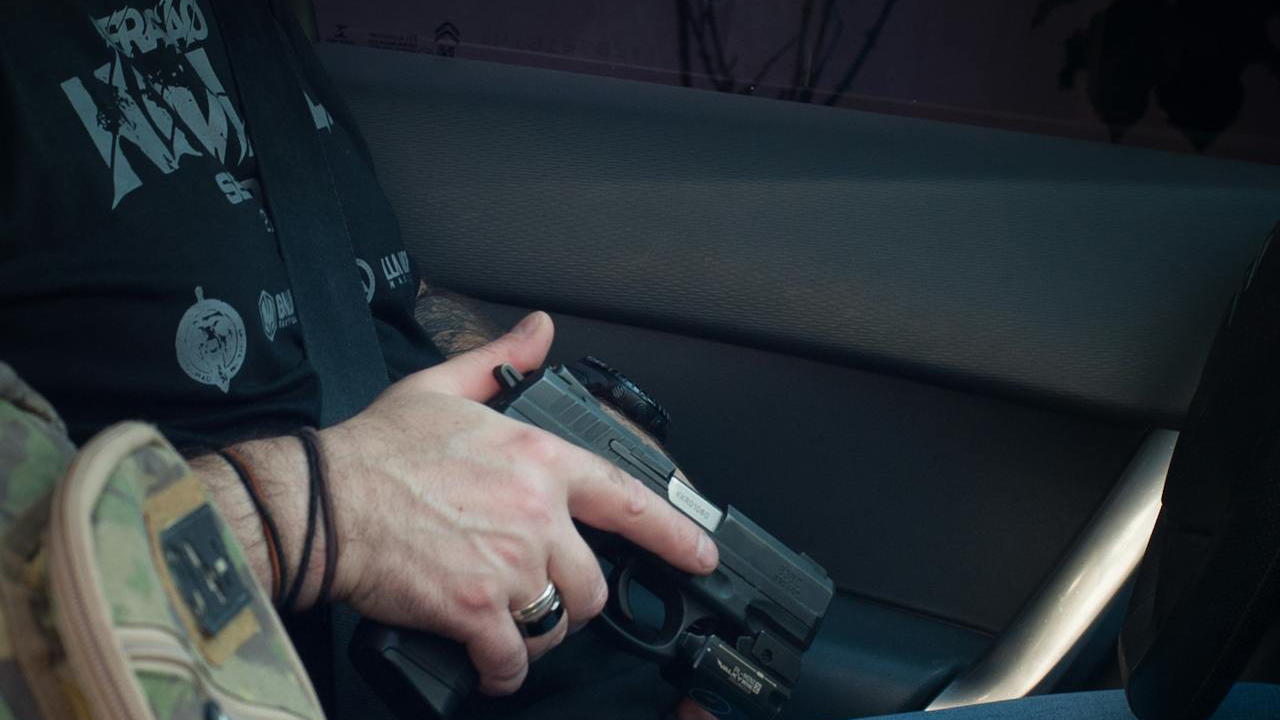
He put the car in reverse and drew his firearm. But as he started backing up, the man ran behind the car and stood directly in the path of the vehicle. He kept repeating that he was going to mess somebody up.
Now the driver had an erratic stranger at his door, a blocked exit behind him, and a man reaching into his pocket after saying he was looking to hurt someone. He said the stranger kept reaching toward that pocket, and he believed the man could have been grabbing for a gun or knife.
The driver told him to get away and warned that he was armed. When the man moved, the driver left the parking lot and called 911.
That part matters because the driver did not stay and argue. He did not chase the man. He did not fire. He got out of the spot, drove away, and called police. He later said he was still shaking from the whole thing and wanted feedback on whether he had handled it right.
The responding officer called him and asked what happened. The poster said he was honest. He told the officer he drew his gun not because he was trying to brandish it, but because the man was talking about hurting someone and reaching into his pocket.
The officer later met him in a nearby parking lot after speaking with the other man. According to the poster, the officer seemed to understand the situation and said the man appeared to be on something.
The poster also added that when he drew the firearm, he kept it pointed toward the ground in what he described as a non-threatening manner, mostly out of view, while staying ready in case the man pulled a weapon. He said he feared for his safety because of the man’s behavior and repeated pocket movement.
Afterward, he was still uneasy. That is a normal reaction after a close call, especially one involving a gun. Even when nobody gets hurt, the mind replays the whole thing: Should I have driven off sooner? Should I have rolled the window down? Should I have drawn? Should I have said I was armed? What if he had not moved? What if he had pulled something?
In the comments, he seemed to land on one big lesson himself. He said he did not know why he had even attempted to engage the man. He was tired and assumed the stranger might be harmless or asking for change to wash clothes. Next time, he said, he would simply drive away and avoid the situation before it had room to develop.
That was the part a lot of people focused on. The best answer may have been to leave the moment the man approached the car uninvited. Once the stranger was already at the window, the driver’s options got worse. Once the stranger was behind the vehicle, the driver was dealing with both a possible threat and a blocked path out.
There were a few uncomfortable pieces in the decision-making. Drawing while trying to reverse is not clean. Warning someone that you are armed can sometimes make them back off, but it can also challenge someone who is unstable or under the influence. Rolling the window down gives a stranger access to your space. Parking nose-in can make escape slower than backing in or pulling through.
But the main outcome was that the driver got away, no shots were fired, and police were notified quickly. The man did not get into the vehicle. The driver did not let the situation become a fight. And even though he questioned himself afterward, he did not pretend the encounter was nothing.
A lot of commenters told him the best defensive move would have been leaving before the conversation ever started. Several said they would not roll down a window for a stranger in a dark laundromat parking lot, especially after already noticing odd behavior.
One commenter said the moment he saw someone approaching the rear of his vehicle and coming to the door uninvited, he would have been gone. Others said the poster did the right thing by driving away and calling police, but that he gave the situation too much time to develop.
Several people warned him about using the word “brandish” when talking to police. Their point was that he should describe what happened plainly: a man threatened violence, reached into his pocket, blocked his exit, and made him fear for his safety. They felt the word “brandish” could make a defensive draw sound like misconduct.
Others talked about parking habits. A few said they back into spaces whenever possible so they can leave forward if something feels wrong. One commenter said pulling in nose-first puts a person at a disadvantage because reversing under stress is slower and messier.
Some commenters said he should not have told the stranger he was armed, arguing that a concealed gun is not something to announce unless there is no other choice. Others thought the warning may have helped end the encounter, since the man moved and the driver got away.
The strongest advice was to avoid letting strangers close distance in confined places, keep windows up and doors locked, leave early when something feels off, and call police once clear. Carrying a gun did not make the parking lot safer. It made every choice leading up to the draw matter more.