Photo credit: Anatoliy Gleb/Shutterstock.com
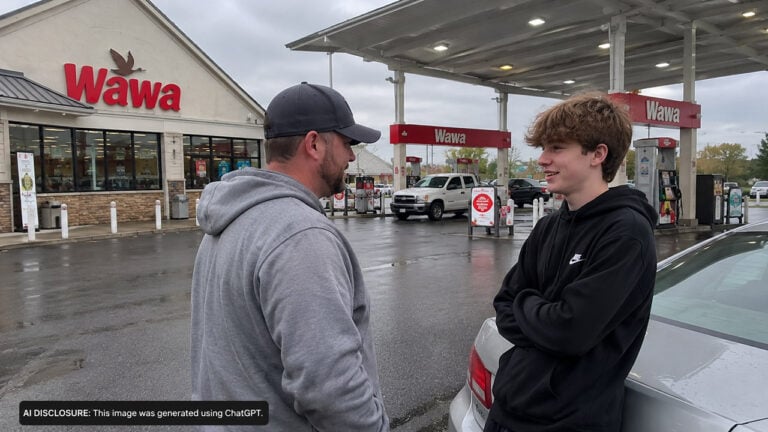
A Reddit user said the encounter started while he was fueling up at a gas station when an aggressive man near the 7-Eleven asked him for change. He wrote that he kept walking instead of engaging, and that was when the man started swearing at him loudly, calling him names and yelling threats as he headed back toward his truck.
The part that bothered him most was not that the guy asked for money. It was that the whole thing turned into one of those messy in-between moments where nothing had fully happened yet, but it no longer felt harmless either. In the post, he said he heard the man’s voice getting closer and believed the guy followed him for at least a short distance while he kept moving toward his truck.
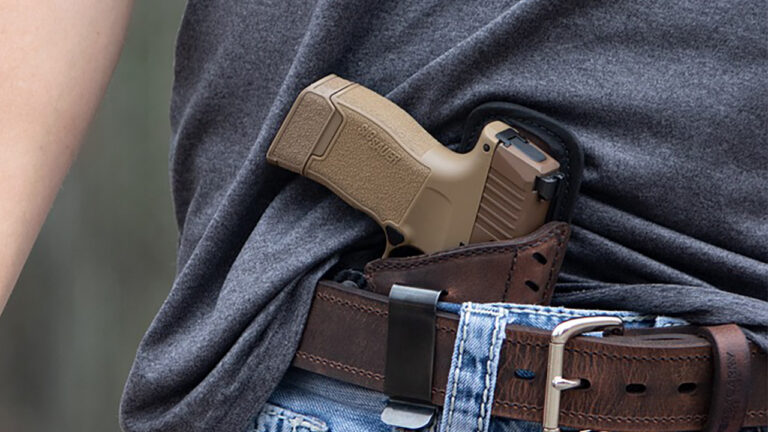
He said he had been trying to follow what he thought was the safest rule for this kind of situation: do not stop, do not confront, and do not give somebody like that the attention they are trying to pull from you. But because he was carrying, he said that choice suddenly felt more complicated. In his mind, if he turned around or acknowledged the man, then any later use of force could look like he had helped escalate an encounter he had knowingly entered while armed. That was really the heart of his post. He was not bragging about what he did. He was trying to figure out whether he had handled the balance between avoidance and awareness the right way.
Then he added a clarification that made the story even more interesting. He said he may have slightly overstated the “following” part in the original version. In his edit, he explained that the man was more generally stumbling in his direction for a short while than making a full aggressive charge. He also said that when he wrote he “hurried” back to the truck, he did not mean he ran or looked panicked. He meant that he kept walking directly toward it without lingering, and he did not think he looked like an easy target.
Still, the uncertainty clearly stayed with him. He wrote that his back had been facing the man most of the time, and that was what made him uneasy after the fact. He wanted to know how somebody can maintain awareness and plan for either a lethal or non-lethal response when the common advice is to keep walking and not acknowledge a potentially unstable person. That question drew a strong response from the comment section, because a lot of people thought his biggest mistake was giving up visual awareness for the sake of not seeming confrontational.
One of the top replies told him plainly that if someone does not accept “I don’t have any money to give away,” they are no longer just asking for change and may be sizing him up. Another commenter said turning around is not escalation by itself, and several others argued that keeping your back to a threatening person is what actually increases the danger. More than one person told him that calmly facing somebody, watching their hands and posture, and telling them to leave him alone would not have crossed the line into provoking a confrontation.
A few replies went even farther and said ignoring somebody like that can accidentally communicate fear or weakness to the wrong person. One commenter said pretending not to hear the man destroyed the poster’s situational awareness and may have made him seem like an easier mark. Another described a similar training lesson where failing to turn and acknowledge an aggressive person emboldened the attacker. The general tone of the comments was that there is a difference between not taking the bait and pretending a potential threat is not there.
The original poster pushed back a little, saying he was trying to keep his ego in check and avoid helping the guy get exactly the reaction he wanted. He said that was what made the situation so tricky. From his point of view, the man was not closing distance in a clearly aggressive way so much as wandering in his general direction while yelling insults, which made it hard to know exactly when the moment tipped from ugly nuisance into something more serious.
That is probably why the story landed. It was not a dramatic robbery or a clean self-defense scenario with obvious right and wrong moves. It was a smaller, uglier, more realistic moment: a gas station, an aggressive stranger, a man trying to avoid a confrontation, and the sick feeling afterward that maybe he had not left himself enough room to react if the situation had turned in the next few seconds. The thread ended up becoming less about one angry man in a parking lot and more about that narrow line between de-escalation and losing track of a threat behind you.
Original Reddit post on r/CCW.
What do you think — was he smart to keep walking and refuse to engage, or did that decision leave him too blind to what mattered most?