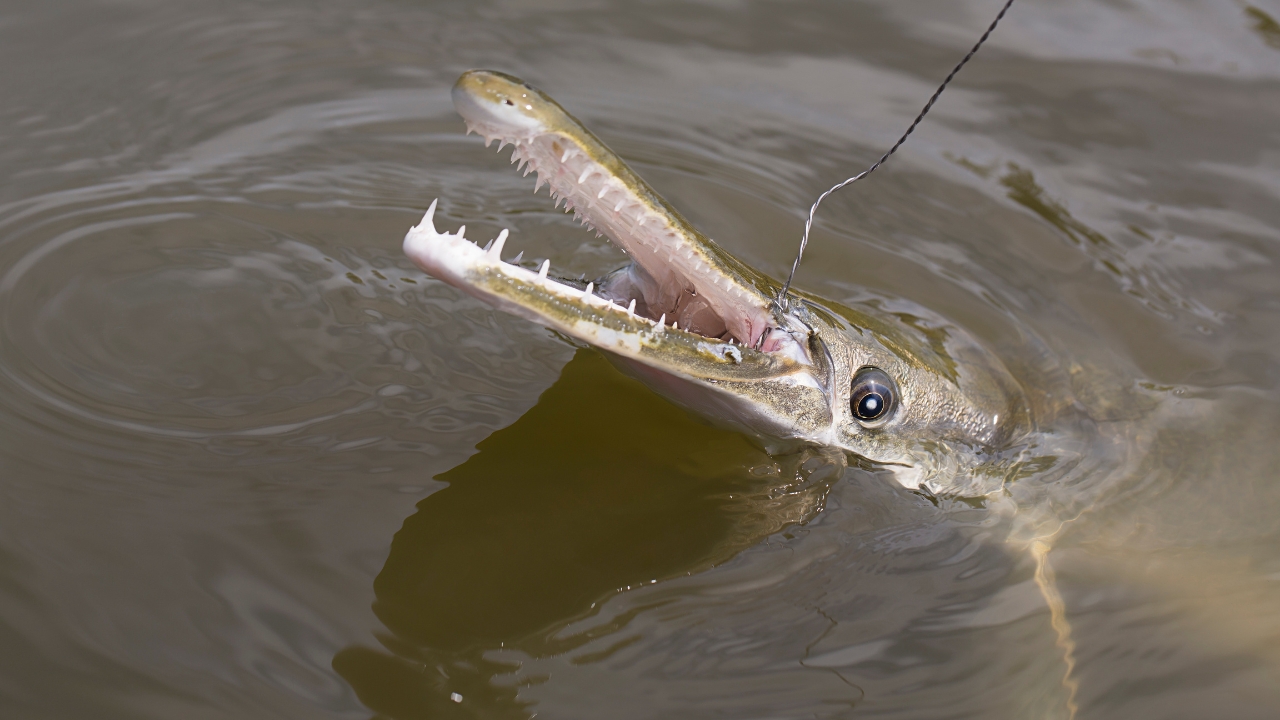
Photo credit: Jennifer White Maxwell/Shutterstock.com
A fisherman on Reddit shared a photo of the biggest alligator gar he had ever caught, and the fish looked like something from another time. Long body, armored-looking scales, wide head, and a mouth full of teeth. It was the kind of catch that makes people stop scrolling because even if they do not fish for gar, they know they are looking at something serious. He said it was his personal best and urged people to release these fish because many of them are much older than most anglers realize.
Alligator gar have a way of pulling strong reactions out of fishermen. Some guys see one and think “trash fish” because that is what they were taught growing up. Others see a native predator that has been around longer than most freshwater fish people chase. That divide showed up fast in the comments. Some people admired the fish. Some asked about keeping it. Others were firm that big gar like that should go back in the water, especially when they may be decades old and important to the system.
That age point is what made the post different from a regular big-fish brag. A big alligator gar is not like a fast-growing stocker trout or a small bass from a farm pond. These fish can take a long time to reach serious size. When somebody kills one of the big ones, they may be removing a fish that survived years of floods, droughts, pressure, bowfishing, bad reputation, and changing river conditions. That does not mean nobody can ever legally keep one where allowed, but it does mean the decision is bigger than “I caught it, so it’s mine.”
Gar also carry a lot of old bias. For years, plenty of people blamed them for hurting game fish populations, eating everything worth catching, or being useless except as a nuisance. That thinking has changed in a lot of fishing circles, but it has not disappeared. You still hear people talk about them like they are something that should be tossed on the bank. The problem is that alligator gar are native in their range, and a mature predator has a role in the water. Treating every toothy fish like it is the enemy is lazy management, not good outdoorsmanship.
The fisherman’s catch pushed that debate into the open. A fish that big does not look disposable. It looks old. It looks earned. It looks like something that should make a person pause before deciding what happens next. The original poster seemed to understand that, which is why he used the catch to tell people to release them. Plenty of commenters agreed, especially those who have watched gar populations get hammered in certain places by people who either did not understand them or simply wanted the photo and the kill.
There is also a practical side to handling a fish like that. Alligator gar are not easy on gear, hands, boats, or patience. Their scales are tough, their heads are hard, and their teeth are no joke. Landing one takes heavy tackle, strong line, room to work, and enough sense not to put your fingers anywhere near that mouth. Getting one unhooked and back in the water safely takes even more control. A fish like that can hurt itself or the angler if everybody starts fumbling around for pictures.
Good catch-and-release on a giant gar is not just tossing it back and hoping for the best. Keep it supported. Do not drag it across rocks if you can avoid it. Have pliers and cutters ready. Get the photo quickly. Revive it if needed. Let it go strong. The longer a big fish is out of the water, the more that “released” photo can turn into a slow death nobody sees. That matters even more with fish that may have taken many years to reach that size.
The comments were not all soft and sentimental, either. Some fishermen made the fair point that legal harvest is legal harvest, and if a state allows someone to keep a gar, that is their choice. That is true as far as the law goes. But there is a difference between what a person can do and what is best for a fishery. Outdoorsmen make judgment calls all the time. Passing on a questionable shot at a deer, letting a big bass go, not shooting a snake just because it exists, and releasing an old predator all come from the same place: respect for the resource.
The Redditor got his photo, his personal best, and a fish worth remembering. Then he used the moment to tell people to put big gar back. That is the kind of thing more anglers need to hear, especially with fish that spent years being misunderstood. A giant alligator gar is not junk with teeth. It is one of the toughest freshwater fish in North America, and catching one should feel less like a reason to kill it and more like a reason to make sure it keeps swimming.