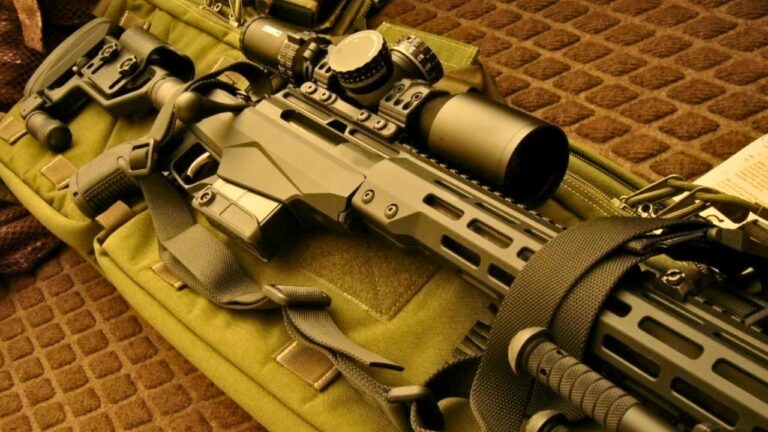
Photo credit: Antonio Guillem/Shutterstock.com
A verbal argument can feel harmless at first. Nobody has thrown a punch. Nobody has shown a weapon. It’s just words, right? Maybe a guy mouths off in a parking lot. Maybe someone gets aggressive at a gas pump. Maybe a stranger starts yelling at a boat ramp, trailhead, or store entrance. For most people, walking into that argument is already a bad idea. For someone carrying a gun, it can be a whole different level of stupid.
Responsible carriers need to understand that being armed changes the weight of every conflict. The gun may never come out. It may never even be mentioned. But if the argument turns physical, if witnesses get involved, if police are called, or if the situation later gets reviewed, your decision to step into it matters. You don’t get to act like the pistol on your belt has nothing to do with your judgment.
Being armed should make you slower to engage
A responsible carrier should be harder to pull into an argument, not easier. If carrying makes you feel more confident about confronting people, that’s a problem. The gun should not make you feel like you can stand there longer, speak rougher, or push harder because you have a last-resort option.
The better mindset is restraint. You should be quicker to leave, quicker to lower your voice, quicker to let insults go, and quicker to decide that a stranger’s attitude is not worth your future. That does not mean being weak. It means understanding that your decisions carry more weight when you’re armed. A man who can walk away from a dumb argument while carrying is showing more control than the guy who stays because his pride got poked.
Verbal arguments can turn physical fast
Most serious confrontations do not begin at full speed. They build. Someone says something. Someone steps closer. Someone points a finger. Someone blocks a path. Someone bumps a shoulder. Suddenly the argument that was “just words” is inside arm’s reach, and now everything has changed.
That is why distance matters so much. If you’re carrying and a verbal argument starts, your first thought should be space. Step back. Move around a vehicle. Keep your hands free. Don’t let someone crowd you while you keep trading sentences. A lot of bad outcomes happen because people stayed in talking range too long after it was obvious the conversation was no longer useful.
Don’t enter someone else’s argument unless there is a real reason
There’s a difference between helping and inserting yourself into trouble. If someone is being loud, rude, or obnoxious, that alone does not mean you need to step in. A concealed carrier who jumps into every public argument is asking for a situation he can’t control.
If someone is in immediate danger, that’s different. But even then, you need to think clearly. What do you actually know? Who is the aggressor? Are you walking into the middle of a domestic dispute, road rage incident, theft, intoxicated argument, or something else? The person who looks like the victim at first glance may not be the whole story. Before stepping in, understand that you may be adding a firearm to a situation you barely understand.
Your words matter later
In the moment, a sharp comeback may feel harmless. Later, it can sound terrible. Witnesses remember phrases like “try me,” “you picked the wrong guy,” “back up before something happens,” or “I’m not scared of you.” Cameras may catch your tone without catching the whole lead-up. Police reports may include the ugliest sentence you said, not the insult that came before it.
Responsible carriers should speak like their words may be repeated later, because they might be. Use plain, clear language. “I don’t want trouble.” “Stay back.” “I’m leaving.” “Call the police.” Those sentences show you were trying to end the situation. Tough talk shows the opposite. If you ever have to explain your actions, your own words should help you, not bury you.
Never mention the gun to win the argument
One of the worst mistakes an armed person can make is hinting at the gun during a verbal argument. That can be direct or indirect. “You don’t know who you’re messing with.” “I’ve got something for you.” Touching your waistband. Turning your hip. Lifting your shirt. Patting the holster. All of that can be read as a threat.
If the situation is still verbal, keep the gun out of it completely. Don’t refer to it. Don’t gesture toward it. Don’t use it as a warning. A firearm is not a debate tool. It is not there to scare someone into respecting you. If a threat is serious enough to justify defensive action, that is one thing. If you’re just trying to make another man back down, you are creating legal and moral problems for yourself.
Watch for the moment the argument stops being useful
Some conversations have a point. Maybe someone misunderstood where the line was. Maybe there was a parking mistake. Maybe a bump or near-miss needs a quick apology. But once a person is repeating himself, stepping closer, refusing to calm down, or trying to bait you, the conversation is over.
A responsible carrier should recognize that point early. You don’t need to win the last sentence. You don’t need to correct every insult. You don’t need to make sure he understands your side. When the talk is no longer solving anything, leave if you can. The longer you stay, the more you are choosing to remain in a situation that may be getting worse.
Alcohol changes everything
If the other person appears drunk or impaired, stop expecting reason. Slurred speech, stumbling, wild mood swings, glassy eyes, aggressive posturing, or repeated close approaches are all signs that normal conversation may not work. Arguing with an impaired stranger while armed is a terrible place to be.
Create distance and leave. If you need help, call law enforcement. Don’t try to shame him, teach him manners, or prove you’re not intimidated. Impaired people can be unpredictable, and they may not process warnings the way a sober person would. Your job is to keep the situation from becoming physical, not to win a debate with someone who may not even remember it clearly later.
Your family should change your priorities
If your wife, kids, parents, or friends are with you, the argument is already more serious. You’re not just managing your own pride. You’re managing their safety, fear, and ability to get away. A lot of men make the mistake of stepping forward when their family needs them to step back and get everyone out.
If someone starts a verbal argument while your family is nearby, your first move should usually be separation. Get them in the vehicle. Move them away from the person. Put yourself between them and the problem only long enough to create an exit, not to keep the argument alive. Your family does not need to watch you prove a point to a stranger.
Know the law before emotion takes over
Carry laws, self-defense laws, brandishing rules, duty-to-retreat requirements, stand-your-ground laws, and defensive display rules vary by state. If you carry, you need to know the laws where you live and anywhere you travel. A verbal argument can cross legal lines faster than people realize, especially if threats, gestures, or physical movement get involved.
Don’t rely on internet comments or gun-counter wisdom. Take a reputable class, read current state resources, and understand how your choices may be judged after the fact. The time to learn the law is not when you’re angry in a parking lot. It’s before you ever carry there.
Leaving is usually the strongest move
A lot of people hate this because leaving feels like losing. It’s not. Leaving is often the only move that guarantees the argument does not become your problem. If a stranger wants to yell as you walk away, let him. If he wants to think he won, let him. You’re going home with your record, your family, your gun still holstered, and your life unchanged.
That is the win. Responsible carriers understand that the best defensive tool is often not the pistol. It’s the decision to avoid a fight before it has a chance to become one. Walking away early gives you more control, not less. It keeps the situation from reaching the point where your options get ugly.
Don’t confuse confidence with control
A lot of armed people think they’re calm because they’re not scared. That’s not the same thing as control. Real control is being able to let someone insult you without reacting. It’s being able to walk away while your pride is screaming. It’s being able to tell your buddy, “Leave it alone,” when part of you wants to step in.
Confidence can make people stay too long. Control gets them out. If you carry, control matters more. You don’t need to look tough, sound tough, or make sure some stranger knows you’re not afraid. You need to make decisions that will still look sane later.
The gun should be the least interesting part of the situation
If you carry responsibly, most tense verbal moments should end with nobody ever knowing you were armed. You noticed the problem. You created space. You used calm words. You left. The gun stayed concealed, untouched, and irrelevant. That is not anticlimactic. That is exactly how it should be.
The moment you step into a verbal argument while armed, you carry a bigger responsibility than the other person may realize. So act like it. Avoid pointless conflicts. Keep your hands calm. Keep your words clean. Create distance. Leave early. And remember that carrying a gun should make you more disciplined than the loudest person in the room, not more willing to stand there with him.
Like The Avid Outdoorsman’s content? Be sure to follow us.
Here’s more from us: