Photo credit: Muddy River Tactical/Youtube
A pistol setup is easy to overlook when everything is calm. The gun feels fine at the counter. The holster seems fine around the house. The belt feels good enough. The spare mag rides somewhere in a pocket. Maybe the light, optic, grip, and ammo all sounded right when you bought them. But carry gear does not prove itself when you’re standing still. It proves itself when you’re moving, bending, driving, sweating, working around a truck, or trying to keep your head straight in a tense moment.
That’s why your pistol setup matters long before you ever need it. A bad setup can make you adjust constantly, print badly, lose access under clothing, fumble your draw, carry uncomfortably, or make unsafe handling more likely. A good setup stays secure, stays consistent, and lets you focus on what is happening around you instead of fighting your own gear. If you carry, the details matter because stress will expose everything you ignored.
The holster is not the place to cheap out
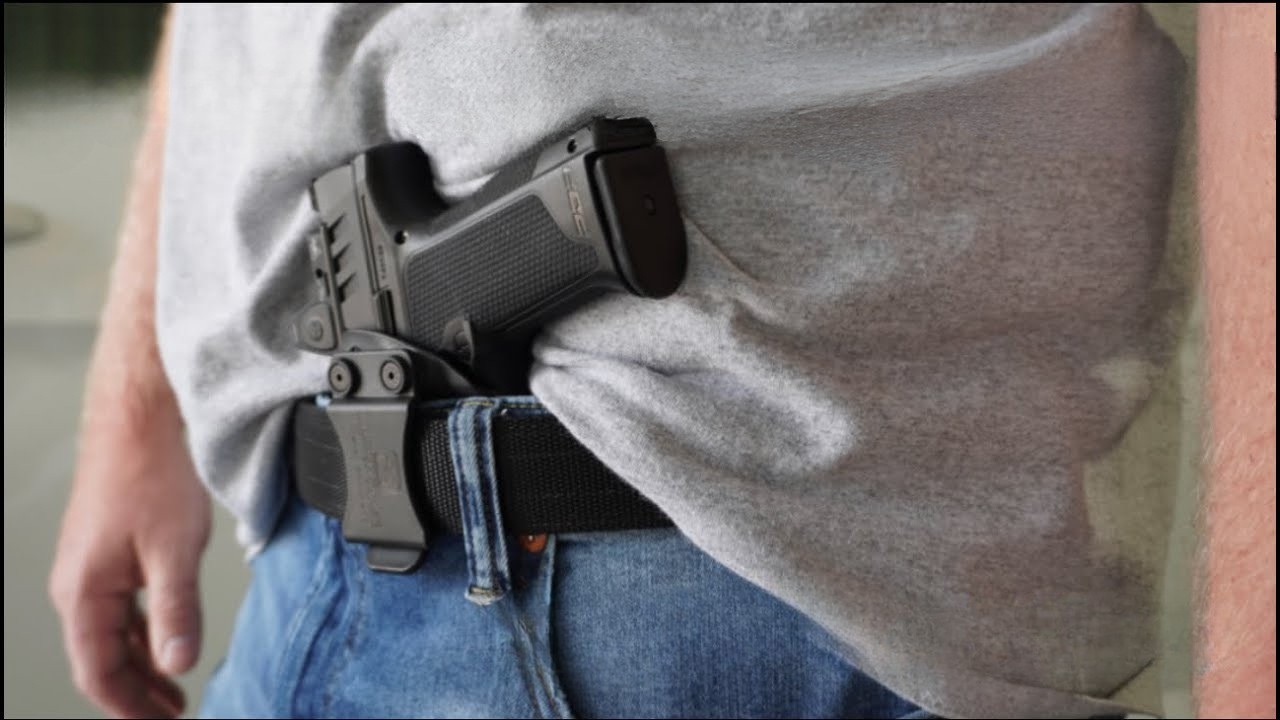
The holster is one of the most important parts of the whole setup. A good holster should hold the pistol securely, fully cover the trigger guard, stay attached to the belt, and allow a consistent draw. It should not collapse, flop around, shift every time you sit down, or let the gun move loosely while you walk.
A cheap holster may feel acceptable until real movement enters the picture. Getting in and out of a truck, climbing steps, loading gear, bending over, or moving quickly can show you very fast whether the holster actually works. If you have to keep touching it, adjusting it, or checking it, that’s a warning sign. Carry gear should not need constant babysitting.
A weak belt ruins a decent holster
A lot of people blame the holster when the real problem is the belt. A regular soft belt may not support the weight of a pistol well, especially with a loaded magazine, spare mag, light, or heavier compact pistol. The holster starts sagging, leaning out, shifting position, or pulling your pants awkwardly. That makes the gun harder to conceal and harder to access consistently.
A proper carry belt gives the holster a stable platform. It does not have to be fancy, but it needs enough structure to hold the pistol where you put it. If your belt folds, twists, or lets the gun bounce around, the rest of the setup suffers. The belt is boring, but it is the foundation. A good holster on a bad belt still carries like a bad setup.
Your draw should be the same every time
Consistency matters. If your pistol rides in a different spot every day, under different layers, with a holster that shifts around, you are making things harder on yourself. In a tense moment, you don’t want to search for the gun. Your hand should know where it is, how the cover garment clears, and what angle the grip sits at.
That does not happen by accident. It comes from setting up the pistol the same way and practicing safely with an unloaded gun or under professional instruction. If you carry appendix one day, behind the hip the next, in a bag the next, and loose in a console after that, you are adding confusion. Flexibility is fine, but your main carry method should be predictable.
Comfort matters because uncomfortable gear gets left behind
Some people act like comfort is soft. It isn’t. If your pistol setup digs into you, rubs, pinches, prints badly, or makes normal movement miserable, you probably won’t carry it consistently. You’ll leave it in the truck, take it off when you get home, or switch to a less secure method because you’re tired of dealing with it.
A carry setup should be safe first, but it also needs to be livable. That may mean changing holster position, ride height, cant, belt, grip texture, pistol size, or clothing. A setup that works only while standing in the bedroom mirror is not enough. You need to know how it feels while sitting, driving, walking, working, and doing the normal things your day actually includes.
Concealment is more than hiding the gun
Concealment is not only about whether someone can see the pistol. It is also about whether you are constantly giving it away by touching it, adjusting it, pulling your shirt down, or moving stiffly because you’re aware of it. People may not notice a slight print, but they may notice nervous behavior.
A good setup lets you forget about the pistol without being careless. The gun stays covered, secure, and accessible. Your shirt does not snag constantly. The grip does not poke out every time you bend. You are not checking it every thirty seconds. That kind of concealment comes from testing the setup honestly, not pretending it works because it looked fine once.
Vehicle carry exposes problems fast
A pistol setup that feels good standing up may feel terrible in a truck. Seatbelts, center consoles, jackets, seat bolsters, and cramped cab space all change access. If you spend a lot of time driving, you need to know how your carry method works from a seated position.
That does not mean handling the gun casually in the vehicle. It means safely thinking through access, comfort, retention, and what happens when you get in and out. Does the holster shift when you sit? Does the seatbelt trap your cover garment? Does the grip jam into the seat? Can you exit the truck without the holster moving? Vehicles are part of real life, and your setup needs to work there too.
Retention matters in close quarters
Most people think about drawing the pistol. Fewer think about keeping control of it. If someone gets close, knocks into you, grabs your clothing, or you end up moving through a crowd, retention matters. A loose holster, exposed grip, or sloppy carry position can create problems you do not want.
That is especially important for people who spend time at boat ramps, trailheads, gas stations, public land parking lots, or crowded outdoor events. You do not need to act paranoid, but you do need a setup that keeps the gun secure during normal movement and unexpected contact. A pistol that can be easily knocked loose or accessed by someone else is not properly carried.
Lights, optics, and add-ons need to make sense
A weapon light, red dot, grip sleeve, extended magazine, or upgraded sights can all have a place. But every addition changes the setup. A light requires a compatible holster. An optic changes concealment and draw feel. Extended magazines may print more. Grip sleeves can shift. Aftermarket parts can affect reliability if they are poorly chosen.
Add-ons should solve real problems, not create new ones. If you carry a pistol for defense, reliability and safe handling come first. Test the gun with the gear you actually carry. Confirm the holster fits correctly. Make sure your carry ammo feeds reliably. Don’t assume a pistol setup is better just because it has more attached to it. Simple and proven beats complicated and untested.
Your clothing is part of the setup
Carry gear does not exist by itself. Your clothes matter. A shirt that is too tight, a jacket that snags, pants with weak belt loops, or a belt that doesn’t fit the loops can all affect how the pistol carries. Seasonal changes matter too. A setup that works under a hoodie in winter may not work under a light shirt in July.
Think about your actual wardrobe. If you dress around the gun a little, carrying becomes easier. That does not mean dressing weird or obvious. It means choosing shirts, belts, pants, and layers that let the setup work safely. If your clothes constantly fight the holster, you may need different clothes, different gear, or a different carry position.
Practice should include clearing cover garments
A lot of people practice shooting but not the part that comes before shooting. If you carry concealed, clearing the cover garment is a real part of the process. A shirt, jacket, vest, or rain shell can get in the way under stress. If you’ve never practiced safely clearing it, you may not know how your setup actually works.
Dry practice can help when done safely, with the gun unloaded, ammunition removed from the area, and strict attention to muzzle direction. Professional instruction is even better. The point is not speed for its own sake. The point is knowing that your clothing, holster, and pistol work together in a controlled and repeatable way.
A setup should be tested before it is trusted
A carry pistol setup should earn your confidence. That means shooting the pistol with your chosen carry ammo, testing magazines, wearing the holster through normal daily movement, checking retention, practicing safe draws where appropriate, and confirming that everything stays where it should.
Do not wait until a bad moment to discover your shirt blocks the grip, your holster comes out with the gun, your belt sags, your magazine doesn’t feed, or your optic battery is dead. Those are problems to find on a quiet day, not when someone is closing distance in a parking lot. Test the boring stuff before the stressful stuff ever happens.
Your setup should support judgment, not replace it
Good gear does not make bad decisions safe. A solid holster, reliable pistol, sturdy belt, and tested ammo all matter, but they don’t replace awareness, restraint, and good judgment. The best setup in the world cannot fix a person who keeps walking into arguments or refuses to leave when things start turning tense.
The point of a good pistol setup is to remove distractions and reduce preventable problems. It should help you carry safely and consistently while you focus on avoiding trouble in the first place. If the gear makes you feel invincible, that’s the wrong mindset. If it makes you feel responsible and prepared, you’re closer to where you need to be.
Your pistol setup matters before you ever need it because tense moments don’t give you time to fix weak points. The holster, belt, clothing, retention, ammo, practice, and daily comfort all work together. Get those details right early, and you’re less likely to be fighting your own gear when your attention should be on everything else.
Like The Avid Outdoorsman’s content? Be sure to follow us.
Here’s more from us: