Photo credit: Miljan Zivkovic/Shutterstock.com
A parking lot is one of the easiest places for a concealed carrier to get sloppy. People are distracted, walking between vehicles, loading bags, checking phones, buckling kids, digging for keys, and trying to get back on the road. It feels ordinary, which is exactly why bad habits show up there. Most problems do not start with some dramatic warning sign. They start because someone stopped paying attention.
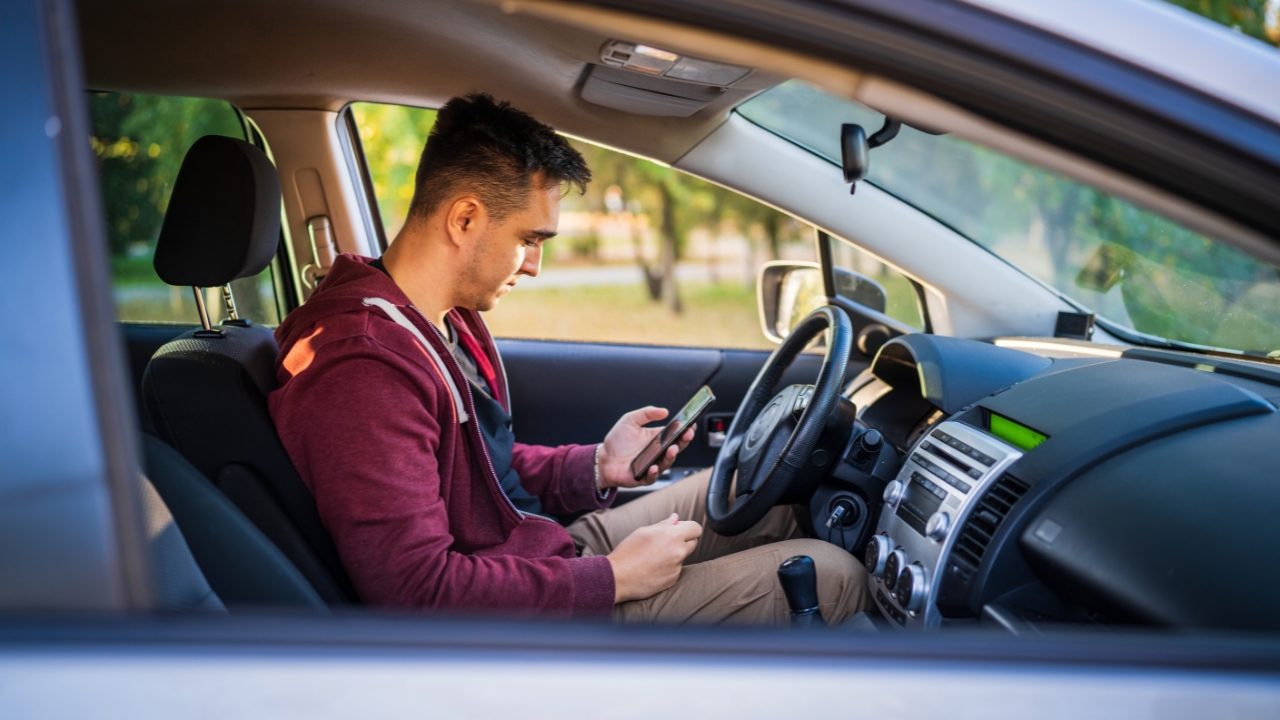
The parking lot habit that makes concealed carriers look careless is sitting in the vehicle too long with their head buried in their phone. It sounds simple, but it creates a pile of problems. You lose awareness. You don’t see who parked beside you. You don’t notice someone walking up. You may have your seatbelt off, your door unlocked, your hands full, and your attention completely gone. If you carry, that kind of distraction makes you look careless because it is careless.
Parking lots deserve more attention than people give them
Parking lots are transitional spaces. You’re moving from one place to another, and so is everyone else. That means people are distracted by nature. Drivers are backing out. Strangers are walking close. Vehicles create blind spots. Someone can move from fifty feet away to your door pretty quickly if you’re not paying attention.
A concealed carrier does not need to act jumpy or paranoid. That’s not the point. The point is to stay present. Before you get out, look around. Before you load gear, look around. Before you sit in the truck scrolling, ask yourself if this is really the place to zone out. Awareness is not complicated, but it does require you to stop acting like the world pauses when you look down.
The phone is the biggest distraction
Phones make people blind to what is happening around them. You see it everywhere: people sitting in cars after shopping, scrolling with the doors unlocked and the engine off. They don’t notice the car that pulled in beside them. They don’t notice the person cutting between rows. They don’t notice someone standing near the rear bumper until he is already at the window.
If you carry, that habit is especially bad. You’ve chosen to take personal safety seriously in one way while ignoring one of the easiest safety habits there is. Check your phone somewhere safer. Send the text before you park or after you leave. If you need directions, get them quickly and move. The longer you sit distracted, the more vulnerable you make yourself.
Lingering in the truck creates problems
A parked vehicle can feel like a safe little bubble, but it is not always one. Once you’re parked, especially with the engine off, seatbelt off, and attention down, you may be boxed in. Another car can pull close. Someone can approach from your blind side. Your door may be harder to open than you expect. Your movement is limited.
This is one reason concealed carriers should avoid unnecessary lingering. Park, scan, get out, lock up, and go. Or get in, lock up, leave, and handle your phone later. Sitting there half-ready and half-distracted is a weak middle ground. You’re not fully moving, and you’re not fully alert. That’s where careless habits live.
Loading gear should not mean tuning everything out
Outdoor guys are especially guilty of this. They get back to the truck after fishing, hunting, shooting, hiking, or shopping for gear, and suddenly the tailgate becomes a workbench. Rods, packs, coolers, ammo boxes, jackets, boots, and tools all come out at once. Their back is turned. The truck is open. The carry gun may be buried under clothing or blocked by how they’re bent over.
If you’re loading gear in a public lot, do it with some order. Keep valuables close. Don’t spread everything across the pavement. Pause and look around between steps. If someone is with you, have one person watch while the other loads. You don’t need to act dramatic. Just don’t become so focused on a tangled rod tip or a cooler strap that you forget you’re standing in an open parking lot.
Vehicle doors change your options
A lot of people don’t think about doors until they’re in the way. An open truck door can block your movement. A closed door may slow your exit. A half-open door can trap you awkwardly if someone approaches from the wrong angle. If you’re buckling kids, loading groceries, or digging behind the seat, your position may be worse than you realize.
Concealed carriers need to think about positioning. Don’t stand boxed between your door and another vehicle longer than necessary. Don’t leave yourself bent into the back seat with no awareness of what’s behind you. If something feels off, stop what you’re doing, close distance to your family or vehicle, and move. Your first tool is still awareness and movement, not the pistol.
Don’t adjust your gun in public
Another parking lot habit that looks careless is constantly touching, checking, or adjusting your concealed pistol. People may not know exactly what you’re carrying, but they notice nervous hands. Pulling at your shirt, pressing on the holster, or shifting the gun around near your waistband can draw attention fast.
If your setup needs constant adjustment, fix the setup. A good holster and belt should keep the gun secure without public fiddling. If you truly need to adjust something, do it somewhere private and safe. The parking lot is not the place to announce that you’re carrying by patting your belt every thirty seconds.
Keep your hands free when you can
A person with both hands full is slower to react to everything. That does not mean you can never carry bags, coolers, or gear. It means you should think about how much you’re loading yourself down in places where you need to stay aware. If both hands are full and your attention is on not dropping something, you’re behind.
Make trips if needed. Use a cart. Put the phone away. Keep keys accessible before you reach the vehicle. If you have kids with you, get them situated with intention instead of trying to juggle every bag at once. Concealed carry does not change the basic truth that free hands and a clear head make you more capable.
Don’t let a verbal exchange trap you
Parking lots are full of small conflicts. Someone parks too close. Someone cuts through too fast. Someone almost hits your cart. Someone says something rude. For a concealed carrier, the safest response is usually to keep moving and not engage. The moment you stop to trade words, you give the situation room to grow.
This is where careless carriers expose themselves. They talk like they’re unarmed until things get heated, then suddenly remember they’re carrying. That’s backwards. Being armed should affect your behavior before the first word comes out of your mouth. Let the insult go. Move your cart. Get in the truck. Leave. You don’t need to win a parking lot argument.
Park with the exit in mind
You don’t need to obsess over perfect parking spots, but it helps to think about exits. A spot near lighting, visible traffic, and a simple way out is better than a dark corner boxed in by vehicles. Backing in can make leaving easier in some places if you can do it safely and without creating a bigger problem. Avoid spots that force you to walk through tight blind areas if better options are available.
This kind of thinking is not paranoia. It is basic planning. People plan for weather, traffic, and fuel without making it weird. Planning how to leave a parking lot safely is the same idea. A concealed carrier should be thinking about avoiding trouble, not just reacting once trouble gets close.
If something feels off, leave early
A lot of people talk themselves out of their own instincts. They notice someone hanging around the lot, circling near vehicles, watching people load gear, or approaching in a way that does not feel right. Then they keep doing what they were doing because they don’t want to seem rude or overreact.
You don’t have to confront someone to take action. You can get back in the vehicle and leave. You can move to another spot. You can wait near other people. You can call someone. You can keep distance and say, “I can’t help you,” without letting a stranger close in. Leaving early is not weakness. It is often the cleanest way to avoid needing a harder decision.
Carrying does not fix poor awareness
A pistol is not a magic answer to being distracted. If someone gets close while your head is down, your hands are full, and you’re wedged between vehicles, the gun may not help the way people imagine. The better answer is not letting the situation get that far.
Good concealed carry starts long before a draw would ever be considered. It starts with where you park, when you look up, how you move, how much you carry in your hands, and whether you choose to engage with strangers. Awareness prevents problems that equipment alone cannot solve.
The best carriers look boring
The most responsible concealed carriers usually don’t look like they’re doing much. They’re not scanning like a movie character. They’re not touching their gun. They’re not challenging strangers. They’re not sitting in the truck lost in their phone for ten minutes. They’re simply present, calm, and moving with purpose.
That’s the goal. Park, look around, handle your business, and leave. Don’t linger distracted. Don’t advertise your gun with nervous adjustments. Don’t turn little parking lot conflicts into pride contests. The habit that makes concealed carriers look careless is forgetting that awareness still matters after the gun goes on. A responsible carrier should be harder to surprise, not easier.
Like The Avid Outdoorsman’s content? Be sure to follow us.
Here’s more from us: