
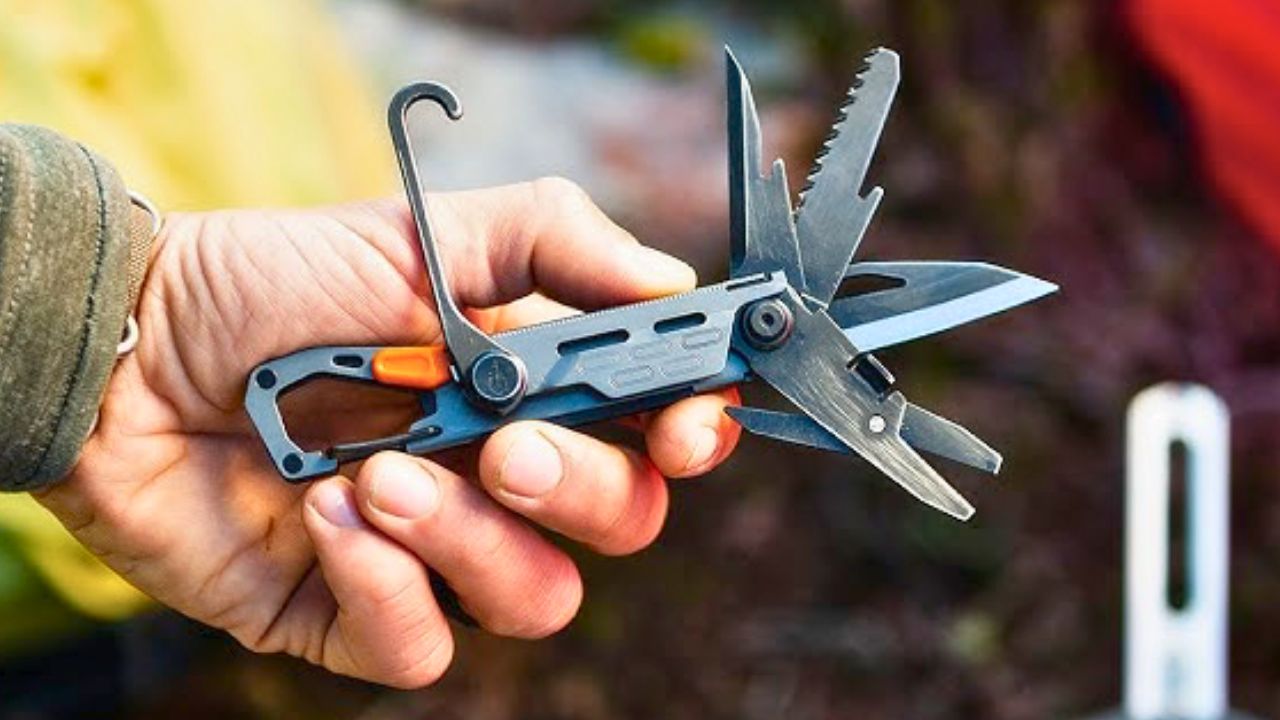
Photo credit: Gerber Gear/YouTube
Multi-tools promise to replace a drawer full of gear, but when one fails in your hand, the convenience evaporates instantly. As more buyers gravitate toward compact, multi-functional tools, you are seeing sharper divides between models that quietly survive years of abuse and those that loosen, snap, or simply stop switching on. The real story is not a sudden spike in failures, which is unverified based on available sources, but a widening gap in quality, design, and user habits that decides whether your multi-tool becomes a trusted daily companion or an expensive regret.
Why multi-tools feel more critical than ever
You rely on multi-tools today in more places than you might realize, from glove boxes and bike kits to jobsite pouches and kitchen drawers. Industry analysts tracking manual tools describe a market with a clear shift toward multi-functional gear and cordless solutions, as users try to do more with fewer dedicated tools while still meeting tightening safety and environmental expectations. That rising preference for compact versatility, highlighted in a comprehensive update on hand tools, means a single failure now has outsized impact on your workday or trip.
At the same time, the steel multi-tool segment is being treated as a growth opportunity, with analysts urging manufacturers to target niche industrial and consumer applications and to manage quality risks carefully to sustain any competitive edge. That advice, spelled out in a steel multi-tool market analysis, underlines why you are seeing a flood of new designs and brands. More players and more models do not automatically mean more failures, but they do raise the stakes for choosing carefully and understanding how and why these tools break.
What actually fails on modern multi-tools
When a multi-tool lets you down, it is usually not a mysterious defect but a predictable weak point. On folding tools, the most common complaints cluster around blade edges that roll or chip, plier jaws that twist under torque, and locks that either seize or fail to engage. Enthusiasts who repair gear for heavy users, including military personnel, describe recurring issues like loose pivots, worn-out wire cutters, and misaligned implements in Leatherman style tools, many of which are fixable if you catch them early.
On powered oscillating or rotary multi-tools, the failure modes shift from steel to electrics and accessories. Users often report tools that start but bog down under load, or that refuse to start at all despite a live outlet or charged battery. Diagnostic guides for power tools point to telltale signs such as a motor that runs weakly, which can indicate worn brushes, switches, or other internal parts that are no longer worth repairing, as explained in a breakdown of power tool problems. In other words, what fails is rarely the idea of the multi-tool itself, but specific components that are pushed beyond their design envelope.
User mistakes that quietly destroy your gear
Many of the failures you see blamed on “junk” tools actually start with how you use and carry them. One of the most overlooked habits is tossing a folding multi-tool into a pocket or pack without checking that every blade and driver is fully locked or stowed. Safety guidance from multi-tool makers warns that Mistake number four is “Carrying Without Checking the Lock,” because a partially open implement can catch, bend, or even snap if it is forced against other gear, and a lock that feels stiff or less secure is a sign you should clean or service the tool before trusting it again.
On powered multi-tools, misuse often shows up in how far you extend accessories and how hard you lean on them. Rotary tool specialists stress that you should Maintain the accessory’s correct protrusion, keeping the bit extension to around 0,5 mm, because a long overhang multiplies vibration and side load on the shaft. Machining experts echo this principle in metalworking, noting that Overhang is simply the distance a tool sticks out of its holder, and as that distance grows, the tool’s life shrinks. When you treat a delicate accessory like a pry bar, you are effectively engineering your own failure.
When the problem is the tool, not you
Even if you use a multi-tool correctly, some designs are more prone to frustration than others. In online discussions about oscillating tools, for example, owners of certain models complain that their units “just do not work that well,” describing situations where the tool vibrates and heats up but barely cuts. One widely shared explanation is that Mar users are either running dull blades, buying low quality accessories, or forcing the tool into materials it was never meant to handle, which turns the machine into a heat generator instead of a cutter.
Oscillating multi-tool troubleshooting guides add another layer, pointing out that a unit that refuses to start may simply be clogged with dust and debris around the vents, trigger, or internal contacts. One such guide notes that Another potential reason for a dead oscillating tool is dirt buildup, and that carefully cleaning the housing and switch before trying again can restore function. When a design leaves critical areas unprotected from dust or makes brush or switch replacement difficult, you are more likely to experience these failures even if your technique is sound.
What is actually holding up: proven multi-tool standouts
Amid the complaints, some multi-tools have built reputations for shrugging off years of hard use. The Wave family is a prime example, with reviewers describing the Leatherman Wave+ as “built to last,” made from high quality stainless steel that can handle whatever you throw at it, and equipped with replaceable wire cutters that extend the life of the plier head. That durability is echoed in product listings that call the Wave Plus an international best seller with durable, swappable cutters built in.
Newer premium entries are trying to push that reliability further with upgraded materials. The Leatherman ARC is marketed as the first multi-tool to use CPM MagnaCut steel for its primary blade, a powder metallurgy alloy engineered to balance edge retention, toughness, and corrosion resistance. Listings for the Leatherman ARC emphasize that CPM MagnaCut is intended to resist chipping and rust in harsh environments, which directly targets two of the most common failure modes on cheaper blades.
Lightweight and minimalist tools: where they shine and where they snap
Not every user wants a brick of stainless steel on their belt, which is why minimalist designs have surged in popularity. The Leatherman Skeletool is a good example, built around a compact frame with a single main blade, pliers, and a bit driver to keep weight and bulk down. Product descriptions for the Leatherman Skeletool stress that it is easy to carry and ready for most jobs, which is exactly what you want for everyday tasks, but that does not mean it is the right choice for prying, hammering, or heavy electrical work.
Independent roundups of the best multi-tools repeatedly highlight this trade off between weight and robustness. A widely cited review of the best multitools notes that lighter, skeletonized frames are ideal for hikers and casual users, while full size models with thicker plier heads and more substantial locks are better suited to contractors and mechanics. If you routinely push your gear into high torque or high impact tasks, choosing a minimalist tool for the sake of comfort almost guarantees you will encounter flex, looseness, or outright breakage sooner than you expect.
Brands and models users say to avoid
Beyond individual models, you also see patterns in how users talk about brands. In one Comments Section thread about “brands to stay away from,” a contributor named CamoAnimal argues that there is “no bad tool, only a bad price,” meaning that even budget brands can be acceptable if you pay a price that matches their limited lifespan. The flip side of that mantra is that when a low tier brand is priced like a premium one, users feel burned much faster, and they are quick to broadcast those experiences across forums and social platforms.
Video creators have started to lean into this frustration, publishing lists of what they see as underperforming names. One clip titled What Brands You Should Avoid in 2026 features a host named Oct walking through companies and product lines that, in their view, cut corners or fail to stand behind warranties. While such lists are opinionated, they reflect a broader reality: in a crowded market, a few high profile failures or poor customer service experiences can stain a brand’s reputation quickly, especially among younger buyers who are less forgiving of friction in their shopping and ownership experience.
How failures ripple beyond your toolbox
A broken multi-tool is not just an inconvenience, it can have real economic and safety consequences when it is part of a larger operation. Risk specialists who advise trucking fleets, for example, warn that Unplanned equipment failures impact customer commitments and often require costly repairs, and that over time these disruptions chip away at your bottom line. While that analysis focuses on big-ticket assets like trucks, the same logic applies to the smaller tools that keep those assets running, from multi-tools used for roadside fixes to oscillating tools used in repair bays.
There is also a reputational dimension that extends into how you buy tools in the first place. Marketing analysts tracking digital commerce warn that Brands risk losing Gen Z customers over poor digital experiences, including confusing product information, clumsy support, or slow warranty responses. When a multi-tool fails and the brand makes it hard to get help, younger buyers in particular are likely to walk away permanently and to share that story widely, which in turn shapes which products you see recommended or shunned in your own feeds.
How to choose a multi-tool that will not let you down
Given the mix of solid performers and forgettable pretenders, your best defense is to buy with a clear sense of how you will actually use the tool. If you need a compact everyday carry, a lightweight frame like the Untitled minimalist tool or the familiar Leatherman Skeletool can make sense, as long as you accept their limits. For heavier work, you are better served by full size designs like the Wave Plus or premium options like the Untitled ARC style tool that invest in tougher steels.
For powered multi-tools, look beyond brand names and pay attention to serviceability and accessory ecosystems. Listings for oscillating and rotary tools such as Untitled and Leatherman ARC style kits often spell out whether brushes are replaceable, how dust sealed the housings are, and which accessory standards they support. Cross checking those details against independent roundups of Our favorite multi-tools and user reports about dull blades or weak motors will give you a clearer picture of what is likely to hold up in your hands, and what you are better off avoiding before it ever reaches your toolbox.
Like The Avid Outdoorsman’s content? Be sure to follow us.
Here’s more from us:


