Photo credit: The Avid Outdoorsman
The shopper did not walk into the store trying to open carry.
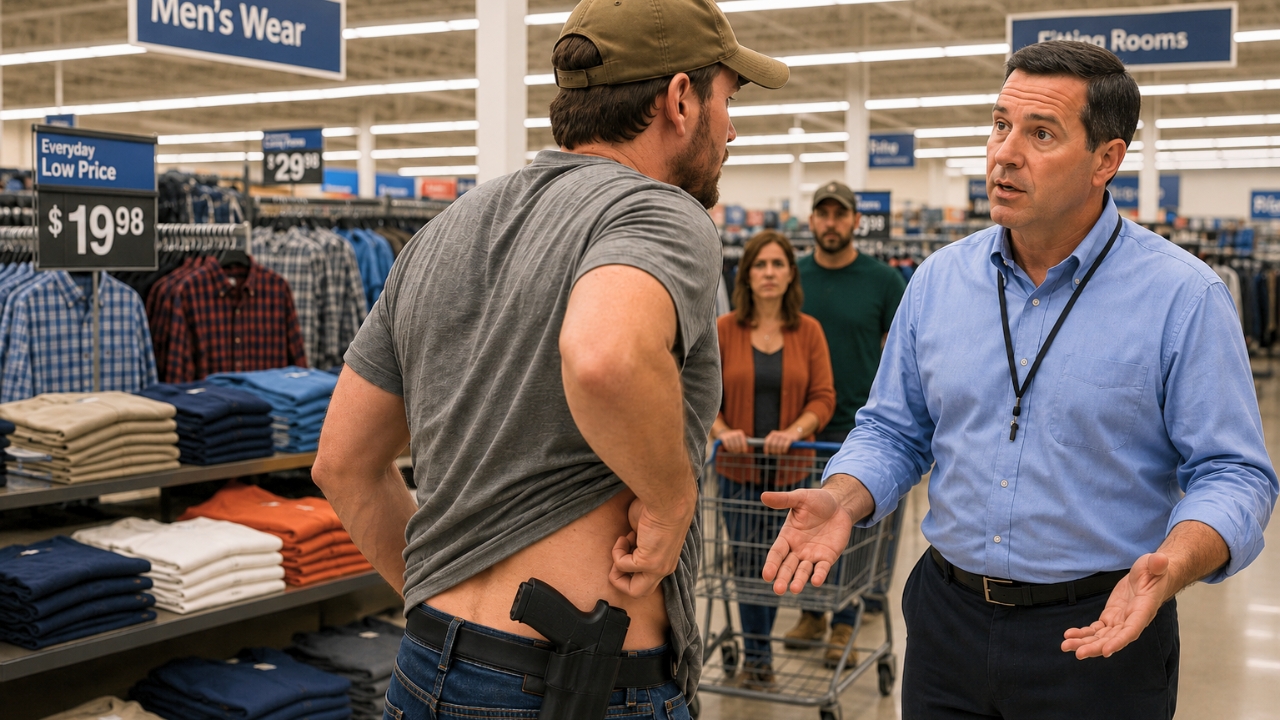
That was the whole point of his frustration. He was carrying concealed, minding his business, and going through a normal errand when his shirt rode up enough for the pistol to show.
Not a big scene. Not a drawn gun. Not somebody waving a firearm around.
Just a shirt that moved wrong.
In a Reddit post, the gun owner asked what happens if a concealed handgun becomes exposed because a shirt rides up. The question came from the kind of moment concealed carriers worry about because it sits in an awkward gray area. He did not intend to display the gun, but someone noticed it anyway.
And in public, intent does not always control the reaction.
The issue started when the gun became visible. Maybe he reached for something. Maybe the shirt caught on the grip. Maybe he bent, stretched, or turned in a way that pulled fabric up. That is all it takes. Concealed carry can look solid in the mirror before leaving home, then fall apart when real life starts moving around.
The store manager apparently treated the exposure like open carry.
That is where the debate kicked in. To the shopper, there was a difference between carrying openly on purpose and having a concealed firearm accidentally exposed for a moment. He was not trying to make a statement. He was not carrying outside the waistband in full view. He was dealing with a clothing failure.
But from the manager’s point of view, a gun was visible.
That is the hard reality of these situations. The person seeing the gun may not know the law. They may not know whether the carrier has a permit. They may not know if it was intentional or accidental. They may only know that there is now a firearm visible in their store, and they feel responsible for responding.
That can turn a tiny wardrobe issue into a whole confrontation.
The shopper’s question was really about consequences. If a concealed weapon becomes visible by accident, does it count as open carry? Does it violate the law? Does it violate store policy? Can someone be asked to leave? Could police get involved? What if the person fixes the shirt right away?
Those answers depend a lot on state law and private property rules, but the practical lesson is the same almost everywhere: once someone sees it, you may have to explain it.
A lot of concealed carriers underestimate how often clothing moves. Shirts ride up when reaching for top shelves. Jackets open in the wind. Seatbelts shift cover garments. A hoodie can catch on a grip. A tucked shirt can pull loose. Even a simple movement like bending to grab a dropped item can expose the butt of a handgun if the setup is not forgiving enough.
And most public places are not going to treat that like a technical discussion.
If a manager does not allow visible firearms, he may ask the person to cover it, leave, or take it to the vehicle. If the business bans firearms entirely, accidental exposure may be enough to bring the issue to the surface. If open carry is not legal in that area, the carrier may need to know whether accidental display is handled differently under the law.
That is why the post hit a nerve. It is not only about one shirt riding up. It is about the bigger problem of carrying in a world where not everyone sees the difference between responsible concealment and public display.
From the carrier’s side, accidental exposure can feel like a minor mistake. From everyone else’s side, it can feel like a gun suddenly appeared.
That gap matters.
It also shows why concealment is not only about comfort. A carry setup has to stay hidden while doing normal things. Shopping, reaching, bending, loading bags, getting into the car, using a restroom, picking up a kid, sitting in a booth — all of it counts. If the shirt only conceals while standing still, it is not really tested yet.
The shopper’s situation did not sound like a disaster, but it was the kind of warning that gets people to rethink their clothing, holster, and habits. Maybe the shirt was too short. Maybe the holster rode too high. Maybe the gun printed more than he realized. Maybe he needed a different cover garment or a better awareness check after reaching.
Whatever the cause, the result was simple: the gun showed, someone noticed, and suddenly an errand became a policy and legal question.
For concealed carriers, that is the whole nightmare in miniature. You can do almost everything right, and one lifted shirt can still make the firearm everyone’s business.
Commenters mostly answered with some version of “know your state law and fix your concealment.”
Several people said accidental exposure is handled differently depending on where someone lives. In some states, a brief accidental display may not be treated the same as intentional open carry. In others, the law or local interpretation may be less forgiving. That made the first piece of advice obvious: do not rely on Reddit for the legal answer. Read the law where you live.
Others focused on private property. Even if the exposure is legal, a store manager can still ask someone to leave or comply with store policy. A business does not have to argue legal definitions with a customer in the aisle. If management says cover it or go, the smart move is usually to stay calm and leave if asked.
A lot of concealed carriers in the thread said this is why gear and clothing matter so much. Longer shirts, better holsters, deeper concealment, and checking yourself after reaching or bending can prevent most of these moments. One accidental exposure may not be the end of the world, but repeated exposure means the setup is not working.
Some commenters said the manager calling it “open carry” may have been technically wrong, but that technicality did not help much in the moment. If the gun is visible to the public, the average person is not going to stop and debate intent.
The strongest practical advice was simple: cover it immediately, do not argue, and make the setup better before carrying that way again. Concealed carry only stays boring when it stays concealed.