Photo credit: The Avid Outdoorsman
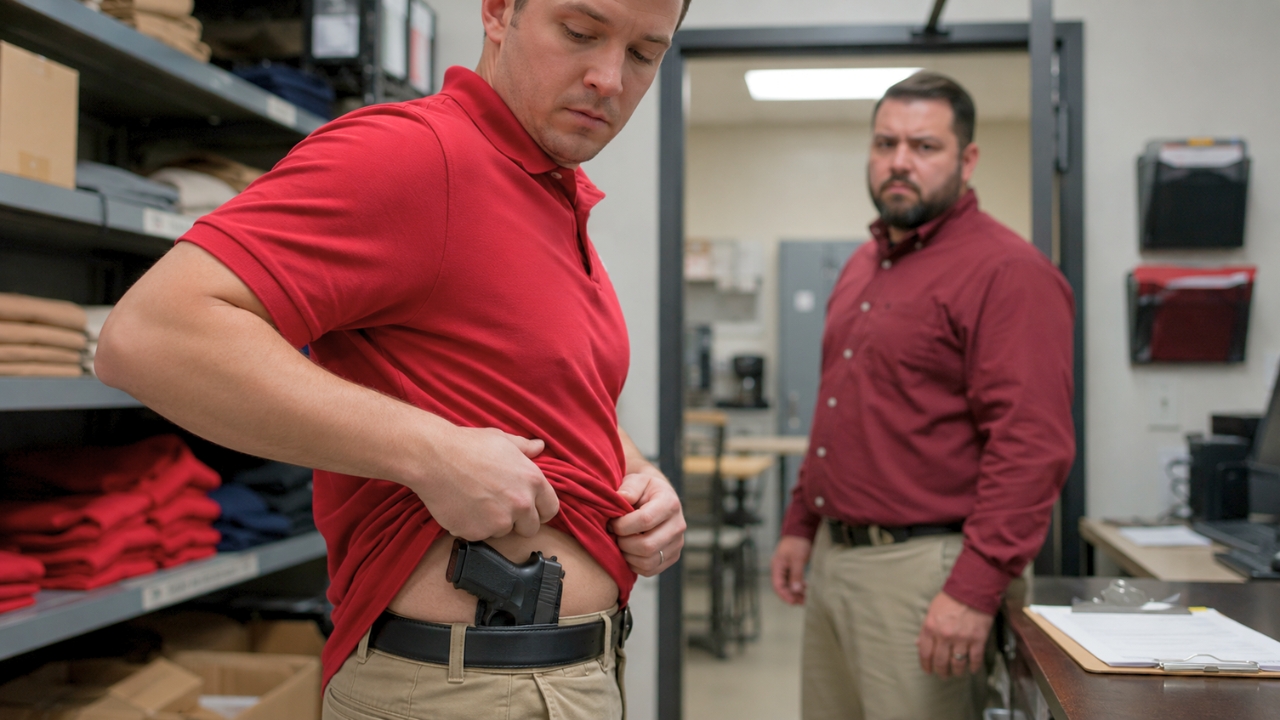
The employee thought he was protecting himself.
That is usually where these workplace carry stories start. A person has a permit, carries in daily life, and sees no reason to feel less prepared just because he clocked in for a shift. From his point of view, the gun is not there to scare anybody or start a scene. It is there because he does not want to be helpless if something bad happens.
But the workplace does not always see it that way.
In a Reddit post, a Target employee said he was fired after carrying at work. The situation kicked off a bigger argument in the comments because it raised an uncomfortable question: did his concealed-carry permit somehow put him on management’s radar?
That is the kind of thing that makes gun owners uneasy, especially the ones trying to keep work and carry completely separate.
The employee said he had been carrying while working at Target, then lost the job. He seemed frustrated and confused about how the company found out, because from his side, he believed he had been concealed. That is where people started digging into possibilities. Did somebody notice printing? Did a coworker see the gun? Did he talk about carrying? Did he get reported? Or did the permit itself somehow become part of the picture?
The permit theory is what made the story feel bigger than one person getting fired.
Most concealed carriers understand the obvious risks. A shirt rides up. A holster clip shows. A coworker bumps into it. A bag check finds something. A manager sees the outline. Those are normal ways workplace carry gets exposed. But the idea that paperwork or a permit could make an employer aware of something the employee thought was private adds another layer of discomfort.
Whether that was actually what happened or not, the result was the same: the employee was out.
And Target is exactly the kind of workplace where this was always going to be risky. Big retailers have policies, HR departments, corporate rules, liability concerns, customers, cameras, and managers who may not have much room to make personal judgment calls. Even if a local manager is sympathetic, the company policy may not be.
That is the part a lot of workers underestimate.
A person may be legally allowed to carry under state law and still be violating company policy by carrying on the job. Those are two different things. The permit answers one question: can the person legally carry in certain places? It does not answer whether the employer must allow that firearm inside the workplace.
At a major retailer, the employer’s answer is often no.
The employee’s firing may have felt harsh, especially if the gun never came out, never threatened anyone, and never caused a public panic. But from a corporate point of view, a worker carrying against policy can be treated as a clear violation. The company does not have to wait for a problem to happen. It can act once it believes the rule was broken.
That is where the personal-safety argument runs into the paycheck argument.
The employee may have felt safer armed at work. Maybe he worked late. Maybe he walked through parking lots. Maybe he did not trust that help would arrive quickly in a real emergency. Those concerns are not imaginary. Retail workers deal with unstable customers, theft, fights, threats, and all kinds of ugly public behavior.
But the company may still decide it does not want employees armed on the clock.
That leaves the worker with a hard choice: follow the policy, violate it and accept the risk, or find a job where the rules line up better with his own comfort level. What does not work well is assuming nobody will ever find out.
Because eventually, something gives.
It might be clothing. It might be a coworker. It might be a bag check. It might be a rumor. It might be a permit or paperwork issue, though commenters debated that hard. The exact path matters less than the broader warning. Once an employer finds out, the worker no longer controls the story.
And in this case, the story ended with termination.
There is also a lesson here about talking too openly. Even if the employee never intended to advertise it, workplace carry can become public through tiny details. A casual gun conversation in the break room. A coworker who knows you carry elsewhere. A social media post. A permit conversation. A visible clip. A shift in clothing. People notice more than carriers think.
At work, that can be enough.
The employee’s situation shows why workplace carry is one of the least forgiving parts of concealed carry. The gun can stay holstered. The employee can be responsible. The permit can be valid. And the job can still disappear if the company says firearms are not allowed.
For him, the hard lesson was that being legal does not always mean being protected from workplace consequences.
Commenters were split between sympathy and blunt workplace reality.
Some people felt bad for the employee because losing a job over a concealed firearm that was never used or displayed can feel extreme. They understood why a person might want to carry while working retail, especially with late shifts, parking lots, and unpredictable customers.
Others said the answer was simple: if company policy banned firearms, getting fired was predictable. A permit does not override an employer’s rules. Several commenters pointed out that big companies like Target are not likely to make exceptions once HR is involved.
The permit theory drew plenty of debate. Some commenters were skeptical that the permit itself had anything to do with it, while others wondered if some kind of background, paperwork, or internal reporting process had put him on the radar. Most agreed there was no clear proof from the post alone, so guessing too hard could muddy the lesson.
A lot of people focused on discretion. If someone chooses to carry at work against policy, commenters said he needs to understand the risk and avoid talking about it. Once coworkers know, it is no longer truly concealed in the social sense, even if the gun stays hidden under clothing.
The main advice was harsh but practical: read the policy, decide what risk you are willing to take, and do not be surprised if the company enforces its own rule. Carrying at work may feel like personal safety, but to an employer, it may look like a fireable violation.