Photo credit: TOPS Knives
A good knife is the difference between getting things done and struggling through the woods like a rookie. When you’re out in the bush, you need a blade that can handle the hard work, not some flimsy folder that folds when you need it most. That’s where carbon steel comes in. It holds an edge, sharpens up easy, and won’t quit when you’re batoning wood, skinning game, or carving up kindling for a fire.
But not all carbon steel knives are built the same. Some are made for brute-force chopping, others for fine carving, and the best can do it all. If you want a knife that’ll actually work when it matters, these are the ones worth carrying.
ESEE 6

The ESEE 6 is built for serious backcountry use. With a 6.5-inch 1095 carbon steel blade, it can baton firewood, carve feather sticks, and even handle light chopping. It’s got a full tang, which means you’re not going to snap it off at the handle, and the powder coating helps fight rust—because 1095 will rust if you don’t take care of it.
The Micarta handle gives you a solid grip even when wet, and the sheath is well-designed for carrying in different positions. This knife is a workhorse, plain and simple. If you need a tough blade that can take a beating and still hold an edge, the ESEE 6 is hard to beat.
Mora Garberg Carbon

Mora knives have been around forever for a reason—they just work. The Garberg is their toughest yet, featuring a 4.3-inch full-tang carbon steel blade with a Scandi grind that bites deep into wood. It’s razor-sharp right out of the box, and thanks to that grind, it’s easy to touch up in the field.
The polymer handle is comfortable and won’t absorb moisture, which is a plus in wet conditions. It’s got a 90-degree spine, so you can scrape a ferro rod without dulling the edge. If you need a lightweight, reliable bushcraft knife that won’t break the bank, the Garberg is a smart choice.
Condor Bushlore

The Condor Bushlore is a no-nonsense survival knife with a 4.3-inch 1075 carbon steel blade. It’s tough enough for serious woodwork but still compact enough for fine carving. The walnut handle gives it an old-school feel, and the leather sheath is one of the best you’ll find in this price range.
1075 steel isn’t as hard as 1095, but that means it’s less likely to chip and easier to sharpen in the field. If you’re after a classic bushcraft knife with a traditional look, the Bushlore checks all the right boxes.
Becker BK2

The Becker BK2 is an absolute tank. This thing has a 5.25-inch, quarter-inch-thick 1095 carbon steel blade, making it one of the toughest survival knives out there. It’s got the weight for chopping, but it’s still nimble enough for camp chores like carving and food prep.
The handle is simple but ergonomic, and the sheath is solid. The only real downside? It’s heavy. But if you want a knife that can take serious abuse—batoning, prying, even hammering—it doesn’t get much tougher than the BK2.
Ontario RAT-5

Ontario Knife Company knows how to make a hard-use blade, and the RAT-5 is a prime example. With a 5-inch 1095 carbon steel blade, this knife is built for serious survival work. The full-tang design gives it strength, and the Micarta scales offer a solid grip.
The black powder coating helps protect the steel from rust, but like any 1095 blade, it still needs maintenance. The sheath is solid, with multiple carry options. If you want a capable bushcraft and survival knife that won’t let you down, the RAT-5 is a solid choice.
Cold Steel SRK Carbon V

The Cold Steel SRK (Survival Rescue Knife) is a favorite among military personnel, and for good reason. It’s got a 6-inch Carbon V steel blade that can take a beating and keep going. The clip point design makes it good for both slicing and piercing, and the Kraton handle provides a sure grip even in wet conditions.
It’s not the best for fine carving due to the blade shape, but for general survival tasks, it holds up well. If you need a tough, versatile knife that can handle abuse, the SRK is worth a look.
Helle Temagami

Designed with input from survival expert Les Stroud, the Helle Temagami is a Scandinavian bushcraft knife with a 4.3-inch triple-laminated carbon steel blade. It’s got a partial tang, but don’t let that fool you—Helle’s laminated steel is incredibly strong, and this knife is built to last.
The curly birch handle gives it a traditional look and a warm grip, even in the cold. The leather sheath is well-made, and the overall balance of the knife makes it great for fine bushcraft tasks. If you like Scandinavian-style knives, the Temagami is a solid choice.
TOPS BOB (Brothers of Bushcraft)

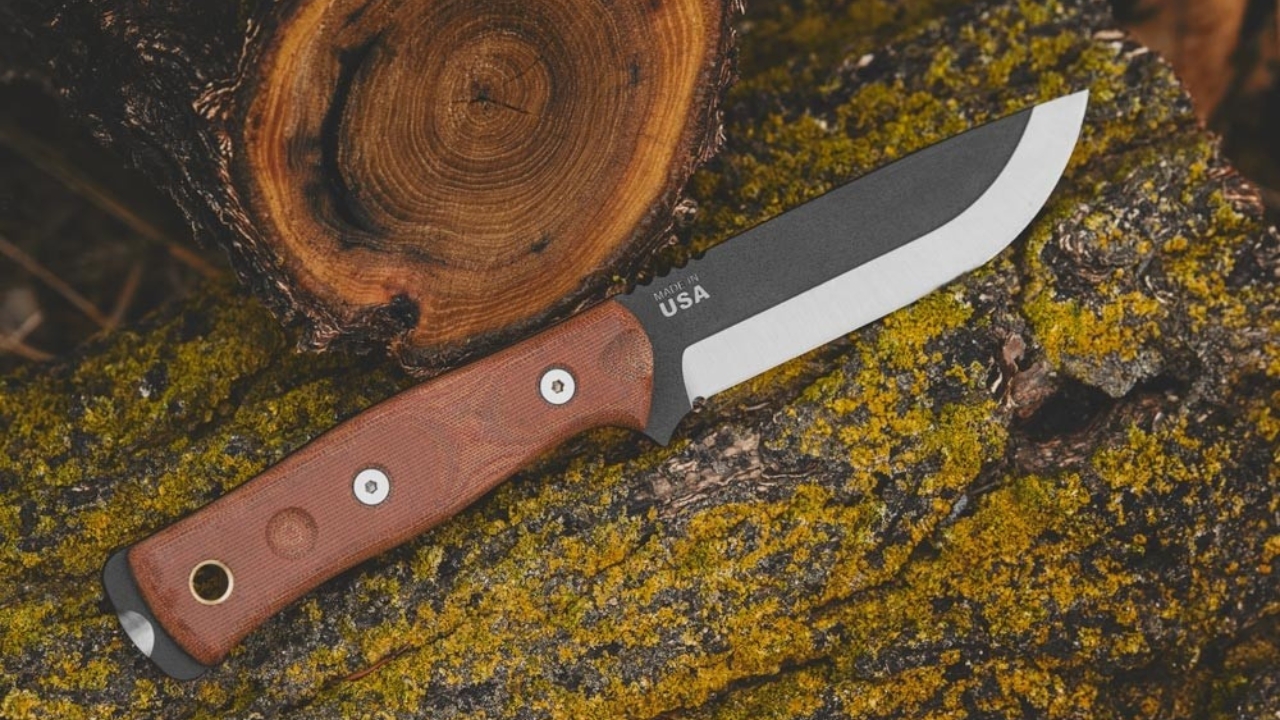
The TOPS BOB is built for serious bushcrafting. The 4.5-inch 1095 carbon steel blade has a Scandi grind, making it excellent for carving and wood processing. It’s got a good weight to it, making it sturdy enough for light chopping while still being nimble for finer work.
The handle has a bow drill divot for fire-starting, and the sheath comes with a ferro rod, which is a nice touch. If you want a rugged, field-tested bushcraft knife, the BOB is a great option.
Schrade SCHF36

Schrade makes solid budget-friendly survival knives, and the SCHF36 is a standout. It’s got a 5-inch 1095 carbon steel blade with a thick spine, making it strong enough for batoning and tough work. The rubberized handle gives you a secure grip, even when wet.
It comes with a nylon sheath and a ferro rod, so you’re getting a lot for the price. If you need a capable survival knife on a budget, this one is hard to beat.
Jacklore Classic

If you’re into handmade bushcraft knives, the Jacklore Classic is a beauty. With a 4-inch carbon steel blade and a Scandi grind, it’s built for serious woodcraft. The handle is custom-made to fit the user’s hand, making it one of the most comfortable knives you’ll ever hold.
Since it’s handmade, it’s not the cheapest option, but if you’re looking for a custom bushcraft knife that performs as good as it looks, the Jacklore is one to consider.
*This article was developed with AI-powered tools and has been carefully reviewed by our editors.