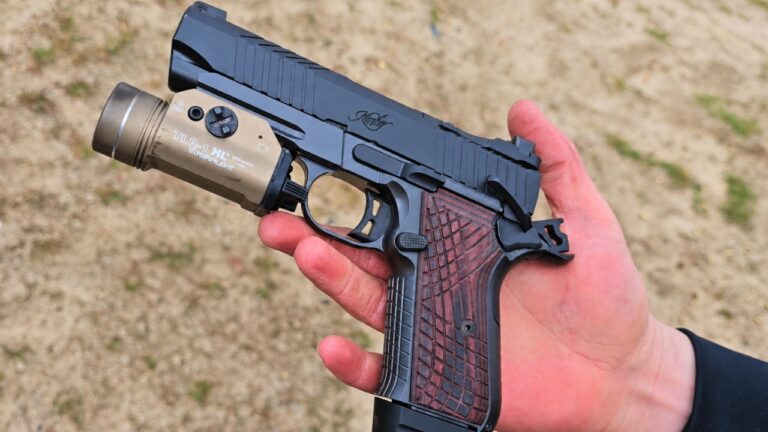
Photo credit: Reed Means/Shutterstock.com
The ruling hit, the hot takes hit faster, and a lot of people who couldn’t tell you what “text, history, and tradition” means somehow felt completely qualified to declare the whole thing either a win for civilization or the beginning of Mad Max. That’s the pattern now: a court decision lands, and the public treats the headline like it’s the entire record. In this case, we’re talking about a federal appeals court ruling tied to California’s open-carry restrictions — and the reaction online was a perfect reminder that gun debates don’t start with doctrine for most people. They start with a gut feeling about what “normal” should look like in public.
What the court actually did (in plain English)
Coverage of the decision describes the court finding California’s broad open-carry ban unconstitutional, with the reasoning grounded in the Supreme Court’s modern Second Amendment framework (including Bruen’s history-focused test). The important detail is that courts aren’t ruling on “vibes.” They’re ruling on whether the state can justify a restriction by pointing to historical analogs and a tradition of similar regulation. That doesn’t automatically mean “everyone open carries everywhere tomorrow,” and it doesn’t mean courts are blind to public-safety concerns. It means the state has to meet a specific legal burden, and in this ruling, the panel said California didn’t meet it for the kind of sweeping ban at issue.
Why the first arguments online weren’t about law at all
If you read the comment wars, they weren’t built around what the panel wrote. They were built around imagined scenes: “guns at bars,” “guns at grocery stores,” “guns near my kids,” and the ever-present “this makes me feel unsafe.” That word — “feel” — is the tell. Discomfort isn’t fake, and I’m not pretending people don’t react when they see a gun. But discomfort is not the same thing as evidence that something is criminal, reckless, or unconstitutional. The law isn’t supposed to evaporate because a stranger’s property triggers anxiety. That’s the core tension: public emotion is real, but rights don’t get voted off the island every time somebody gets uneasy.
The part everyone skips: open carry isn’t “new guns,” it’s “visible guns”
One of the most honest points you’ll hear in this debate is also the simplest: in a lot of places, you’re already around armed people and you don’t know it. Concealed carry exists. Off-duty cops exist. Private security exists. Regular citizens carry legally every day. Open carry changes visibility, not the reality that armed citizens are in public spaces. Visibility changes the mood — and that’s why so many reactions are emotional first. Some people interpret visible carry as intimidation. Some interpret it as normal. A lot depends on context, behavior, and the environment. That’s precisely why you can’t reduce the debate to “guns bad” or “fear stupid.” It’s a social trust problem wearing a legal costume.
What happens next (and what to watch if you’re actually tracking the story)
California gun cases almost never end cleanly. En banc review, stays, and eventual Supreme Court attention are always on the table, especially with an issue as politically radioactive as carry. If you’re a gun owner, the smart move is to track the procedural posture — not the memes — and understand what your state law actually says today versus what someone on X thinks the ruling means. The internet will keep arguing emotion-first because emotion gets clicks, but the people who win these fights are the ones who can separate “headline panic” from “binding legal effect.”
Like The Avid Outdoorsman’s content? Be sure to follow us.
Here’s more from us: