
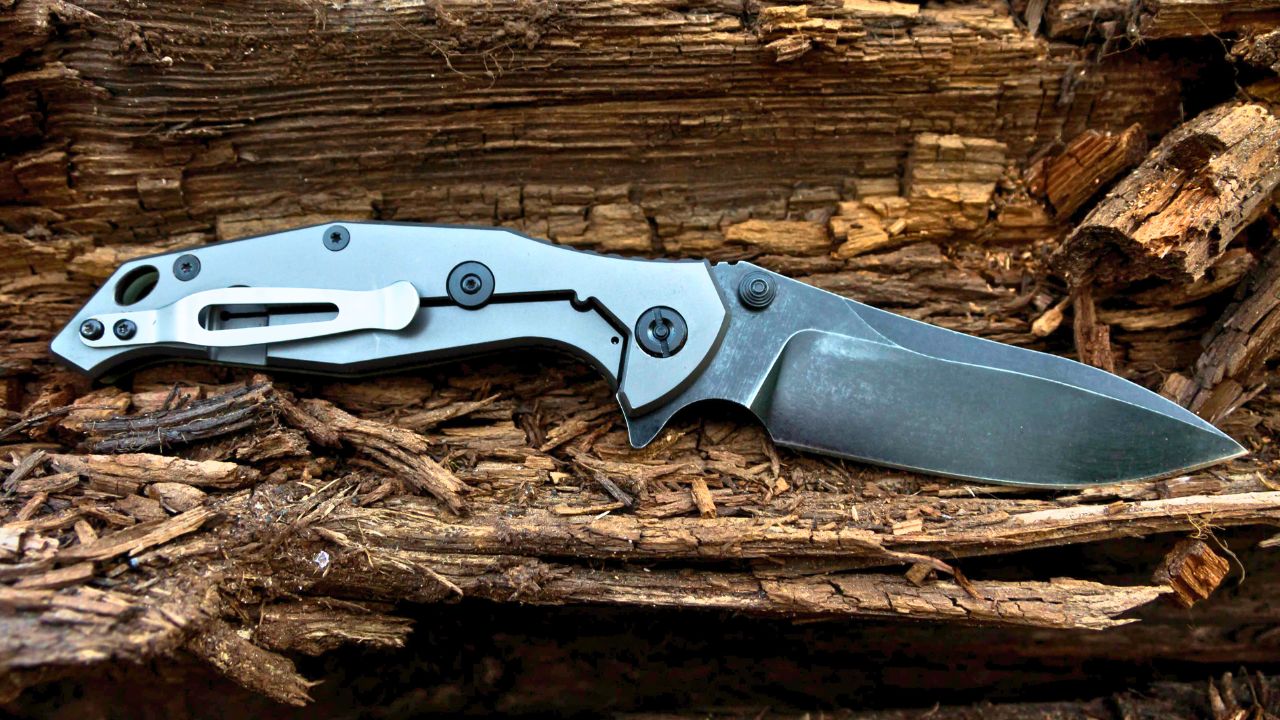
Photo credit: vzwer/Shutterstock.com
Knife people love to argue about steels, locks, and edge geometry, but in the woods you are far more likely to lose a folder because the pocket clip quietly let go than because the blade or pivot actually failed. The clip is the weak link between your expensive tool and the forest floor, and when it bends, loosens, or snags, your knife can vanish without a sound. If you treat the clip as a disposable accessory instead of life support for your edge, you are effectively gambling every time you step off the trail.
Why pocket clips fail more often than blades
When you think about catastrophic knife failure, you probably picture a snapped tip or a lock that gives out under torque. In practice, the more common disaster is simpler and more mundane: the clip loses tension, catches on something, or slowly walks its way off the fabric until the knife slips free. Everyday carry culture tends to obsess over metallurgy while treating the clip as an afterthought, even though that thin strip of steel or titanium is the only thing keeping a folder from joining the layer of lost gear under the leaf litter.
Real world anecdotes back this up. Owners talk about walking past a door frame, hearing a sharp “SNAP” as the clip catches, and suddenly realizing the knife is gone or hanging by a thread, exactly the kind of mishap described in guides on how to fix a bent pocket clip. In those moments, the blade, pivot, and lock are all perfectly fine, yet the tool is effectively lost because the retention system failed. Once you accept that the clip is the most failure prone component in the carry chain, it becomes obvious that you should spend at least as much time tuning and testing it as you do sharpening the edge.
The hidden risk in “good enough” clip tension
Most people only notice clip tension at the extremes, when it is so tight that it chews up pockets or so loose that the knife feels like it will fall out immediately. The more dangerous zone is the middle ground where the clip feels “good enough” in the hand but is just slack enough to let the knife creep upward with every squat, step over a log, or brush against a pack strap. In the woods, where your clothing is constantly flexing and catching, that marginal tension can translate into a knife working itself free over the course of an hour without you feeling a thing.
Some users are blunt about this risk, warning that they would “BTW, NEVER rely” on many factory clips to retain a knife in a pants pocket because “Sooner or late” the clip will fail and the tool will be gone, a sentiment captured in one stark customer warning. That kind of skepticism may sound extreme, but it reflects a hard earned lesson: if you do not deliberately test clip tension by tugging, twisting, and simulating real movement, you are trusting a thin piece of spring steel to behave perfectly in mud, rain, and brush after months of wear. In the backcountry, that is a poor bet.
Design choices that make some clips more failure prone
Not all clips are created equal, and some design choices make loss in the woods far more likely. Shallow carry clips that leave a large portion of the handle exposed are more prone to snagging on pack straps, seat belts, and low branches, which can lever the knife up and out of the pocket. Smooth, slick handle materials paired with low tension clips are another risky combination, because there is little friction to resist upward movement once the clip starts to ride.
Enthusiasts have been arguing for years about loop over versus standard clips, deep carry versus easy grab, and how much of the handle should be visible, a debate captured in detailed pocket clip talk that dissects these tradeoffs. In practice, you should evaluate design through a single lens: how likely is this configuration to snag or walk out of the pocket under the specific movements you make in the woods. A deep carry loop over clip that buries the knife and hugs the fabric tightly will usually be safer on a scramble than a decorative sculpted clip that looks great on a desk but rides high and loose on a backpacking trip.
How movement in the woods exposes weak clips
Trail movement is very different from office movement, and your clip feels that difference long before you do. Climbing over deadfall, kneeling to process tinder, or sliding down a muddy bank all flex your pants and waistband in ways that pry against the clip. Each flex is a tiny test of the spring, and if the clip has been bent out of shape or was never tuned properly, the knife can ratchet upward a millimeter at a time until it finally clears the pocket hem.
Experienced outdoors instructors like Brian, who demonstrates simple retention tricks in a video on how not to lose your knife, emphasize that you should assume your gear will be dragged, bumped, and twisted in the field and plan your carry accordingly, whether that means adding a lanyard or changing where you mount the knife, as shown in his practical advice on not losing your knife. If you only test your clip by walking around the living room, you are missing the very scenarios that expose its weaknesses. A few minutes of crawling, climbing stairs two at a time, and simulating a fall while wearing your pack can reveal whether the clip is truly secure or just office safe.
Fixed blades, pocket sheaths, and why clips still matter
Some users try to escape clip problems by switching to small fixed blades carried in the pocket, assuming that a sheath solves everything. In reality, many of those setups rely on their own clips or hooks, and they can be just as prone to snagging or poor retention. If the sheath rides too high or the clip does not bite firmly into the pocket seam, the entire package can slide out when you sit, run, or bushwhack, leaving you with nothing but an empty welted pouch.
Critics of these systems point out that you need two things between the sheath and the clip for reliable carry, and that when those elements are not tuned, “Everyt”hing about the setup becomes compromised, a point driven home in a breakdown of why most pocket carry fixed blades struggle with real world use in two key failure modes. The lesson for you is simple: swapping a folder for a fixed blade does not magically remove clip risk. You still need to evaluate how the sheath attaches, how deep it rides, and how it behaves when you move aggressively in the terrain you actually hike.
Maintenance: the difference between a secure clip and a lost knife
Even a well designed clip will fail if you neglect basic maintenance. Screws can back out over time, especially when exposed to vibration from walking and the constant flex of fabric, which lets the clip pivot or shift. Once that happens, the knife can start to wobble on the pocket edge, and the extra play makes it easier for the clip to ride up and off the material, particularly when you are stepping over logs or sliding through brush.
Owners who notice a clip swinging side to side often discover that one of the screws is loose and needs to be tightened gently, sometimes with a dab of blue thread locker to keep it from backing out again, as suggested in a detailed discussion of loose clips. At the same time, you should periodically inspect the clip itself for bending or fatigue, especially if you have heard that ominous SNAP when it caught on something. A quick re bend with padded pliers, done carefully to avoid cracking the metal, can restore tension and keep the knife anchored instead of drifting toward the trail.
When blade play distracts you from the real problem
Knife owners are understandably sensitive to blade play, and a little wobble can send you reaching for a Torx driver to tighten the pivot. The risk is that you become so focused on eliminating “wobbly blade syndrome” that you ignore the clip entirely, even though a slightly loose pivot is far less likely to cost you the knife than a compromised retention system. In the woods, a folder with a bit of side to side movement but a rock solid clip will usually serve you better than a perfectly tuned pivot riding on a flimsy spring.
Short explainers on issues like wobbly blade syndrome often note that wear and loosening are natural over time, and the same logic applies to clips. The difference is that a loose blade telegraphs its presence every time you open the knife, while a tired clip can quietly degrade for months. You should treat clip inspection as part of the same maintenance routine as pivot adjustment, checking screw tightness, spring tension, and how firmly the knife grips different fabrics before you head into the field.
Community workarounds: from ditching clips to changing carry
If you spend any time in knife forums, you will see a familiar pattern: someone posts about losing a favorite folder, and the replies are full of hard learned strategies to avoid a repeat. Some users simply accept that they will misplace knives and joke that “Correction, You will find it in a month after you bought several more as replacements,” while others describe carrying their pocket clip knives in specific positions or pockets to reduce the chance of snagging, as in one candid thread on not losing knives. The underlying message is that you should not assume the factory clip and default pocket choice are optimal for your body and habits.
Plenty of people go further and abandon clips entirely, arguing that a knife riding loose in the pocket or in a slip is actually safer for them than a poorly designed clip that catches on everything. One detailed discussion of “5 reasons to ditch your pocket clip” notes that a folder spends far more time in the pocket than in the hand and that comfort and security can be badly hurt by abysmal clip designs, especially on models like a Strider PT, leading some to carry a pen and other items without clips and report that loss has “never happened” to them, as described in a long running debate over going clipless. You may not need to remove the clip altogether, but you should be willing to experiment with alternative carry methods, from belt sheaths to pocket organizers, if your current setup keeps letting go.
Practical steps to keep your knife from vanishing in the woods
Once you recognize that clip failure is more likely to cost you a knife than a broken blade, you can start building habits that stack the odds in your favor. Begin with fit: match the knife to the pocket. A 4 inch knife in a 5 inch pocket has room to move and twist, which increases the chance that the clip will ride up, a point raised in a detailed discussion of pocket sizing. If your favorite hiking pants have shallow or loose pockets, consider switching to a different garment or moving the knife to a more secure location like a waistband or pack strap where the clip can bite firmly.
Next, address the clip itself. If you notice that knives keep falling out of your pocket, you are not alone, and others have asked “What knife/s are you having this issue with? Ive only had this issue with” certain models, as one user put it in a thread on knives falling out. That kind of model specific feedback can guide you toward aftermarket clips with stronger tension or different geometry. Finally, learn from high profile loss stories, like owners of the Benchmade 940 who report that “It is always the 940” that disappears because the clip is not super tight and the handle is super slick, and others like GeeDarnHooligan who realized they were not “some type of idiot carrying it wrong” but simply needed to adjust the clip until they liked the tension, as recounted in two related Benchmade loss reports and follow up tension advice. By tuning tension, checking screws, matching knife to pocket, and being willing to change carry methods when the clip keeps failing, you dramatically reduce the odds that your next hike ends with a favorite blade quietly disappearing into the undergrowth.
Like The Avid Outdoorsman’s content? Be sure to follow us.
Here’s more from us:


