Photo credit: Yuriy Golub/ Shutterstock.com.
Your knife is trying to tell you something every time it hits the board. If the edge keeps folding over instead of breaking out tiny chunks of steel, that is not random bad luck, it is a direct report card on the angle you sharpen to, the steel you are using, and how you cut. Once you understand why an edge rolls instead of chips, you can tune your bevels so the blade matches your habits instead of fighting them.
At its core, the difference between rolling and chipping comes down to geometry and support. A very thin edge at a low angle slices beautifully but has little metal behind it, so it can bend or fracture depending on the steel and the abuse. A thicker, more obtuse edge trades some laser-like sharpness for stability, which is why your angle choice quietly decides whether you see bent metal, missing chunks, or a durable “working” edge that just keeps cutting.
Rolled vs chipped: what your edge failure is really saying
When your edge rolls, the steel at the very apex has yielded and bent over instead of breaking off, which means the metal is relatively ductile and your geometry is thin enough that it can flex. A chipped edge, by contrast, shows that the steel at the apex could not deform plastically, so it fractured, leaving bright little notches that you can often feel with a fingernail. Knife makers and sharpeners describe a rolled edge as the thin strip of steel at the very tip “starting to deform” and literally rolling over to one side when it sees abuse or heavy use.
If you mostly see rolling, your angle is usually on the thin side for how you are using the knife, but the steel still has enough toughness to bend instead of shatter. If you mostly see chipping, your angle is often too low for a hard, brittle alloy, or you are driving that edge into material it was never meant to meet. Very hard Japanese-style blades, for example, can take extremely keen angles but are known to develop small nicks when pushed into bones or frozen food, which is why guides on why Japanese knives chip stress that even careful users will eventually see tiny fractures if they treat a fine slicer like a cleaver.
How edge angle actually works, in plain language
To understand what your rolled edge is telling you, you first need a clear picture of what “angle” means. The sharpening angle is the angle between one face of the bevel and an imaginary line straight down the center of the blade, so a 15 degree per side bevel creates a 30 degree inclusive edge. Knife educators explain that in the sharpening world the term Edge Angle is used for that per-side measurement, and that “How” you hold the blade against the stone or belt determines “What Angle” you actually create in practice.
Once you see angle as geometry instead of mystique, the tradeoffs become obvious. A lower angle gives you a thinner wedge that enters material with less resistance, which is why kitchen knives use finer angles than heavy outdoor blades. A higher angle leaves more steel behind the edge, so it is stronger but feels less razor-like. Detailed cutting guides note that knife edge angles around 15 degrees per side feel incredibly sharp but demand more careful use, while more obtuse bevels are built for rougher work and easier maintenance.
Why a rolled edge usually means “too thin for how you cut”
When your edge consistently folds over, it is often a sign that you have pushed the angle as low as you can for that steel and that style of cutting. Sharpeners on enthusiast forums will tell you that the ideal is “as low as you can without it chipping and rolling,” which is why one discussion on sharpening angle for edge retention describes the lower limit as the point where your own use starts to produce deformation. If you are seeing the edge lean over after a normal day of prep, that is your signal that the bevel is below that personal threshold.
Rolling also exposes how you actually move the knife, not how you think you do. One user who noticed their kitchen knife always rolled to the left was told that “use habits” were the likely cause, because repeated pressure from the same direction will eventually push the thin apex sideways, and that unfortunately knives that see heavy use will deform in the direction you load them. If your edge is rolling, your angle is probably fine for gentle slicing but too aggressive for the twisting, scraping, and board contact you actually deliver.
When chipping shows your angle and steel are out of sync
Chipping tells a different story. If your edge is breaking instead of bending, the steel at the apex is too hard and brittle for the angle and the tasks you are throwing at it. That is especially common with very hard Japanese blades that are ground to very low angles for food prep, then asked to chop through bones or frozen items. Makers who specialize in these knives warn that cutting items too hard for Japanese steel is one of the three main causes of chipped edges, and that while Japanese carbon steel is extremely rewarding, it is not forgiving when misused.
If you are seeing chips at very low angles, the fix is usually to thicken the edge slightly or reserve that knife for pure slicing. Some sharpeners talk about “how low is too low” and argue that as long as the knife withstands the normal use “YOU” put it through, the angle is acceptable, but that going thinner than that point only invites failure. In one discussion, a user named Popular-Net5518 summed it up by saying that the confusion comes from chasing theoretical sharpness instead of listening to what the steel and your own habits are telling you.
How different angles change sharpness, control, and durability
Once you start tuning angles on purpose, you can decide what kind of failure you are willing to risk. Very acute bevels around 15 degrees per side feel incredibly keen and glide through tomatoes and onions with minimal effort, but they are more likely to roll or chip if you twist the blade or slam into the board. Detailed angle guides explain that Knives with sharper angles around that range deliver higher cutting precision and cleaner slices, but they demand more frequent touch-ups and more disciplined technique.
On the other end, a bigger edge angle makes the edge more stable and less prone to visible damage, but you give up some effortless bite. The same cutting guide notes that a bigger edge angle makes the blade better suited for chopping through tougher ingredients or even light outdoor tasks, because there is more metal behind the apex to resist deformation. If your current angle is so thin that you are constantly seeing rolls, nudging it a few degrees more obtuse can move you into that more forgiving zone where the edge stays straight even when your technique is less than perfect.
Matching your angle to what you actually cut
Choosing the right angle is less about chasing a magic number and more about matching geometry to your real workload. Guides to kitchen sharpening emphasize that when you decide on a bevel, you should first understand what the sharpening angle is and how it affects the balance between sharpness and strength. One detailed explainer puts it plainly: First, let’s understand what the sharpening angle is, because a higher angle will be stronger but will also be less sharp.
In practice, that means you can run your dedicated slicer or Japanese gyuto at a lower angle for clean vegetable work, while keeping your heavier chef’s knife or boning knife a bit thicker to survive contact with joints and cartilage. Some makers even talk about building a “working edge,” a slightly toothy, more robust bevel that trades hair-popping sharpness for reliability when the blade comes up against hard surfaces like bone. One knife company explains that the type of steel and the type of heat treatment determine how thin you can go, and that a working edge is often the smarter choice if you know the knife will see abuse.
Sharpening technique: how your hands create rolling or chipping
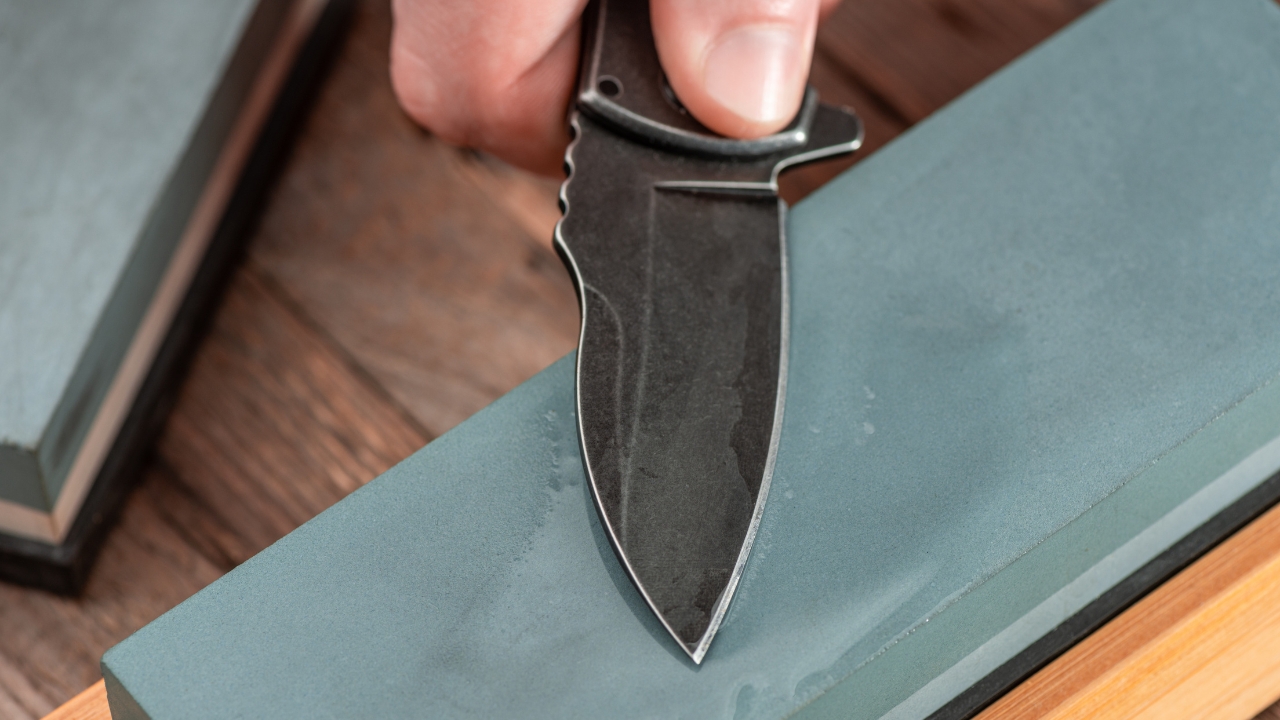
Even the perfect angle on paper will fail if your technique is inconsistent. If you wobble the blade on the stone, you create weak spots where the angle dips lower than intended, and those thin sections are where rolling and chipping start. Step by step guides to sharpening stress the importance of holding a steady angle from heel to tip, whether you are using a stone, a guided system, or a pull-through device, and they walk you through how to sharpen a knife so the bevel is even along the entire edge. One detailed tutorial on how to sharpen a knife explains how to set up your stance, control pressure, and work both sides evenly so you do not accidentally create a fragile wire edge that will fold over in the first cutting session.
Your maintenance routine matters just as much. If you rely only on a honing rod but never reset the bevel, you can end up endlessly straightening a fatigued, over-thin apex that wants to roll again. A step-by-step guide to using a rod notes that you should check your results and, if the edge is still dull or deformed, go back to a stone or other method before honing, because Step 4: Check Your Results is where you decide whether you have actually restored the geometry or just burnished a tired edge. If your knife keeps rolling after every session, that is a sign you need to thicken the bevel slightly or remove more fatigued steel instead of just polishing what is already too thin.
Using guides, tools, and angles that fit your skill level
Modern tools make it easier to hit a consistent angle, but they also make it easier to over-thin a blade if you are not paying attention. Educational hubs for powered sharpeners explain that kitchen knives use finer angles than outdoor blades and that you can use angle guides or built-in jigs to keep your bevels repeatable. One such guide on what is the best knife angle walks through how to tell what angle your knife is currently sharpened to and how to match that on a system, so you are not unknowingly grinding it thinner every time you touch it up.
Even short video tips can help you avoid the kind of geometry that leads to constant rolling. One clip from Work Sharp offers a quick guide to choosing angles for chopping versus slicing, reminding viewers that if you plan to “Chop” through tougher material, you should pick a more robust bevel than you would for a pure slicer. If your edge is rolling because you are using a very low angle meant for fine slicing, stepping up to the next angle setting on your guided tool can be enough to keep the apex upright under your real-world cutting load.
Reading your edge and adjusting before damage piles up
The most practical skill you can develop is learning to read the early signs of failure and adjust your angle before the edge is destroyed. After each sharpening session, run a fingernail lightly along the edge and look under bright light for any spots that reflect differently, which can indicate a roll or a tiny chip. Knife makers and sharpeners point out that the edge of a blade is very thin and that when it sees a lot of use it is going to deform in some way or another, so catching that first hint of a roll over lets you correct the angle or your technique before the problem compounds.
As you experiment, keep notes on which angles survive your routine and which fail. Enthusiast discussions about “how low is too low” often circle back to the same conclusion: as long as the knife withstands the normal use you put it through without chipping or rolling, the angle is appropriate for you. One thread where Popular-Net5518 weighs in captures that mindset, noting that the theory can get confusing but the practical test is simple. If your edge keeps rolling, it is not a moral failing or a bad knife, it is feedback that your current angle and habits are slightly out of alignment, and that a few degrees of adjustment can turn a fragile diva of a blade into a reliable partner on the board.
Like The Avid Outdoorsman’s content? Be sure to follow us.
Here’s more from us: