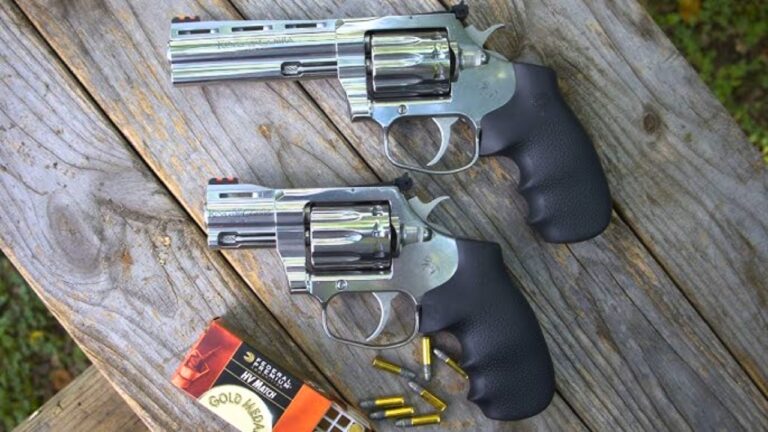
Photo credit: Texas Plinking/YouTube
Stainless handguns and rifles promise freedom from orange freckles and pitted slides, yet your own experience may tell you otherwise the first time a carry gun rides against bare skin in summer. If you treat “stainless” as a magic shield instead of a material with limits, sweat, humidity, and neglect will eventually mark your firearm. Understanding why that happens, and how to use a simple sweat test to expose weak spots, lets you keep your guns reliable without babying them.
Why “stainless” is not the same as rust-proof
You are told that stainless steel resists corrosion, and that is true, but the alloy was never designed to be invincible. Stainless steel relies on chromium in the metal to form a thin, self-healing oxide film that slows down rust, it does not eliminate the underlying chemistry that wants to turn iron into iron oxide. Even in controlled industrial settings, engineers accept that stainless is “naturally corrosion-resistant” rather than immune, and that exposure over long periods can still cause damage.
When you carry a pistol or run a rifle in the rain, you are pushing that protective film into harsher territory than a kitchen sink or refrigerator door. Chlorides, acids, and mechanical wear all attack the passive layer, and once it is breached, the underlying steel behaves like any other ferrous metal. Metallurgists who work with stainless emphasize that time, contamination, and environment are what turn “stain-less” into “stain-later,” which is exactly the pattern you see on guns that live in holsters and safes instead of laboratories.
The chemistry of sweat and why it attacks gun finishes
Your sweat is not just water, it is a corrosive cocktail that targets metal surfaces every time you carry inside the waistband or shoot in heat. Human perspiration contains sodium chloride, lactic acid, urea, and trace minerals that soak into grips, under sight bases, and along slide serrations. When that moisture evaporates, it leaves behind concentrated salts that pull more water from the air, creating tiny brine pockets that sit on your gun for hours.
Those chloride ions are especially aggressive toward stainless steel, because they disrupt the passive chromium oxide film that normally protects the alloy. Materials specialists who study why sweat makes stainless steel rust point to this chloride attack as the trigger that turns faint discoloration into real pitting. On a handgun, that means the backstrap, mag release, and slide flats that rest against your body are living in a chemical environment closer to a salt-spray test than a climate-controlled display case.
What stainless steel actually is on modern firearms
When you read “stainless” on a spec sheet, you are not getting a single, universal recipe, you are getting a family of alloys that trade machinability, toughness, and corrosion resistance. Many handgun slides and barrels use martensitic stainless grades that can be heat treated hard enough to withstand locking stresses, but those grades are more vulnerable to rust than the austenitic stainless you see in kitchen sinks. The gun industry accepts that compromise because a slide that peens or cracks is worse than one that needs occasional oil.
Even within the same model line, different parts may use different alloys, which is why you sometimes see a “stainless” slide with a slightly different hue than the frame or small parts. The more active the environment, the more those differences matter, because some compositions will pit faster when exposed to chlorides and acids. Corrosion specialists who rank elements by their activity list fluorine, chlorine, bromine, iodine, and astatine in that order, and those halogens are the same chemical family that makes chloride-rich sweat such a problem for stainless steel barrels and slides that are otherwise well made.
The “sweat test” you can run on your own guns
If you want to know how honest your gun’s finish really is, you can run a controlled sweat test instead of waiting for corrosion to surprise you. The basic idea is simple: expose a small, representative area of the firearm to your normal carry conditions, then watch closely for early signs of staining or roughness. You might wear the unloaded gun in your usual holster for a long, hot range session, or wrap a clean cotton patch dampened with your own sweat around a non-critical section of the barrel or frame for a few hours.
Once you remove the holster or patch, you inspect the metal under strong light, feeling for any change in texture with a fingertip. A faint rainbow discoloration that wipes away with oil suggests the passive film did its job, while stubborn dark spots or a sandpaper feel signal that the alloy and finish are struggling. By repeating the sweat test on different areas, such as under grip panels or along the dust cover, you map where your particular gun is most vulnerable, which is far more useful than assuming that a “stainless” label covers every surface equally.
Where and how stainless guns actually rust in the real world
Once you start looking, you see that stainless firearms tend to rust in predictable patterns that line up with sweat and moisture traps. The underside of a slide that sits against a leather holster, the backstrap that presses into your lower back, and the magazine baseplate that peeks out under a T-shirt all collect perspiration and lint. On rifles, sling swivels, scope bases, and the underside of the barrel near the stock channel often show the first freckles, because they are hard to dry and easy to forget.
These are also the places where chloride-rich residue can sit longest, especially if you holster up after a range session and leave the gun untouched for days. The passive layer on stainless steel can repair itself in clean air, but it struggles when it is buried under dried sweat and dust. Over time, that combination of trapped moisture and contamination defeats the corrosion resistance that stainless steel offers in theory, which is why you sometimes see a “rust-proof” gun with bright flats and ugly pitting in the corners.
How chloride-heavy environments magnify the problem
Your body is not the only source of chlorides that attack stainless guns, the environment you live and shoot in can quietly stack the odds. Coastal air carries salt particles far inland, so a pistol that never touches ocean water can still live in a thin haze of sodium chloride every day. If you keep that gun in a foam-lined case or a soft pistol rug, the fabric can absorb salty moisture and hold it against the metal, turning a storage solution into a corrosion incubator.
Indoor ranges and basements add their own twist, because poor ventilation and high humidity keep surfaces damp longer than you expect. In those conditions, the same chloride ions that make sweat so hard on stainless steel are constantly available in the air and on your skin. If you combine that with infrequent wipe-downs, you are effectively running a long-term corrosion test on your carry gun without meaning to, and the results will eventually show up as orange specks in the same high-contact zones your sweat test highlights.
Maintenance habits that actually work for stainless carry guns
Once you accept that stainless is a helpful starting point rather than a guarantee, your maintenance habits can be tailored to the real risks. The most effective step is also the simplest: build a routine where you wipe down exposed metal with a lightly oiled cloth every time you unholster after a sweaty day. That quick pass removes chloride residue before it can concentrate, and it refreshes the thin barrier that supports the alloy’s own passive film.
You also gain a lot by paying attention to the hidden surfaces that your sweat test reveals as weak spots. Removing grip panels, loosening optic plates, and sliding off handguards lets you clean and dry the crevices where moisture lingers longest. Corrosion experts who work with stainless in industrial settings stress that contamination and stagnant moisture are what defeat the material, and your guns are no different. A few minutes of targeted cleaning after heavy use does more for long-term appearance and reliability than any marketing claim about “rust-proof” construction.
Choosing finishes and holsters with sweat in mind
Because you know sweat is the main villain, you can choose gear that works with your maintenance habits instead of against them. Holsters lined with suede or untreated leather tend to hold moisture, so if you carry in hot weather, you are better served by smooth, sealed materials that do not act like a sponge. A rigid Kydex shell or a hybrid design with a synthetic backing gives sweat fewer fibers to cling to, which means less chloride-rich residue pressed against your slide all day.
On the gun itself, you can treat stainless as a base layer and still opt for additional surface treatments where you need them most. Nitriding, PVD coatings, and quality spray-on finishes add another barrier between your skin and the steel, especially on backstraps, magwells, and slide flats. Barrel makers who warn that stainless steel is not rust-proof often recommend similar protective steps for rifles that will see hard use in the field. You can apply the same logic to a compact pistol that lives against your body, choosing finishes and holsters that reduce how much sweat ever reaches the metal.
Using the sweat test as an ongoing reality check
The first time you run a sweat test on a new gun, you are establishing a baseline, but the real value comes from repeating it as your gear and environment change. If you switch holsters, add a red dot, or move from a dry climate to a coastal city, you can repeat the same controlled exposure and inspection to see whether new rust-prone areas appear. That feedback loop keeps your maintenance grounded in what your gun is actually experiencing instead of what the brochure promised.
Over time, you will notice that some combinations of alloy, finish, and carry method shrug off abuse while others demand more attention. By treating stainless steel as a helpful but limited tool, and by using your own sweat as a test medium, you turn corrosion control from guesswork into observation. The chemistry that makes fluorine, chlorine, bromine, iodine, and astatine so active is not going to change, but your habits can, and that is what keeps a “stainless” gun looking and running the way you expect when you finally need it.
Like The Avid Outdoorsman’s content? Be sure to follow us.
Here’s more from us: