
Photo credit: Christopher J Barger/Shutterstock.com
Every January, you see it on the edge of a food plot or along a logging road and feel that familiar jolt of optimism: a fresh-looking buck rub that seems to promise late rut fireworks. Yet in much of the country, that “rut sign” is more mirage than map, a leftover clue that no longer points to the action you think it does. If you keep treating every rubbed tree as a green light to camp on a stand, you risk burning daylight on sign that means almost nothing for how bucks are actually behaving now.
To make January hunts productive, you have to separate rut nostalgia from current reality and read buck sign in context instead of in isolation. That starts with understanding what rubs and scrapes really communicate, how their meaning shifts after peak breeding, and why your best odds now often lie away from the loudest sign and closer to food, security cover, and subtle travel routes.
Why that “fresh” rub in January is not the rut beacon you think
When you walk into a January woods and spot bright shavings on a sapling, it is tempting to assume a buck is still cruising for does. In truth, that same tree may have been hit repeatedly since the pre-rut, and the bark can look freshly shredded even when the intense breeding phase is long over. You are seeing a snapshot of dominance behavior that started months earlier, not a live broadcast of rutting activity that guarantees chasing or daylight movement in that exact spot.
Rubs fall into several categories, and some of them are little more than incidental marks that a buck leaves while moving from one place to another. On the Deer Hunter Forum discussion of Rubs, experienced hunters describe “Incidental” rubs that appear along casual travel routes and do not necessarily mark a core area or hot stand site. When you treat every January rub as a sign of an active rut funnel instead of asking which category it fits, you risk parking over low value sign while the real movement shifts to food and bedding patterns that have nothing to do with breeding.
How rubs and scrapes actually work earlier in the season
To understand why January sign can mislead you, you first need a clear picture of how bucks use rubs and scrapes when the rut is building. Early in the fall, bucks start laying down rubs as visual and scent markers, advertising dominance and staking out core travel corridors. As the pre-rut intensifies, those rub lines often trace the edges of bedding cover and staging areas, and they can be reliable indicators of where a mature buck feels comfortable moving in daylight.
Scrapes add another layer, functioning like a communal bulletin board where multiple deer deposit scent and check in regularly. A detailed guide to Rubs and Scrapes describes how bucks paw the ground, urinate so that the liquid runs down their legs, and let the remainder drop into the scrape, turning it into a concentrated scent hub. During this window, hunting active scrapes and rub lines can be deadly, because they reflect a buck’s daily loop and his rising interest in does before breeding chaos scatters him.
The pre-rut versus the chase: when sign really matters
Your odds of killing a mature buck over sign hinge on matching your tactics to the right phase of the season. In the pre-rut, when bucks are still patternable, setting up on rub lines and scrapes along travel corridors can be a high percentage play. One breakdown of rut mistakes notes that a tactic that works in late Oct and early Nov, such as camping over a heavily worked scrape, becomes far less effective once bucks shift into full chase mode and start roaming widely in search of receptive does.
As the chasing and tending phases take over, bucks abandon many of their earlier routines, and the hottest sign can go cold overnight. A detailed list of reasons your rut hunt falls flat explains that a strategy built around pre-rut sign is “not a choice tactic during the chasing and tending phases,” because bucks are no longer tied to those specific trees or licking branches in daylight. That analysis of 8 reasons your rut hunt stunk underscores why you cannot simply carry a November mindset into January and expect rubs to tell you where to sit.
Why January is a different animal in most of the country
By January in many northern and Midwestern states, the primary rut is weeks in the rearview mirror, and deer are shifting into survival mode. Bucks are worn down from breeding, does are largely bred, and the daily priority becomes conserving energy and finding calories, not advertising for mates. That is why so many seasoned hunters pivot away from rut sign and toward food sources, late season bedding cover, and low impact access once the calendar flips.
Guidance on how to deer hunt in January emphasizes that you should Scout food sources and trails for fresh tracks, droppings, and even buck sign, but the emphasis is on current feeding patterns rather than rut funnels. You are encouraged to glass fields, check for recent use around crops or mast, and then slip in tight to where deer are actually feeding and bedding now. In that context, a rub you notice along the way is just one small clue, not a command to ignore the bigger picture of winter behavior.
The big exception: the Deep South’s odd rut calendar
There is one major caveat to the idea that January rubs are mostly old news, and it lives in the Deep South. In parts of Alabama, Mississippi, Louisiana, and neighboring states, peak breeding can occur in late Dec or even into January, a pattern that has puzzled biologists for decades. If you drop a finger on a rut map of the Deep South, you can find pockets where the primary rut hits long after northern hunters have hung up their gear for the year.
Researchers who have been chasing an explanation for the Deep South note that these late breeding dates have not changed for decades, suggesting deep genetic and historical roots. In those regions, a fresh rub or active scrape in January can still be a live indicator of rutting activity, and you should treat it with the same urgency a Midwestern hunter would feel in early Nov. The key is knowing your local conception dates and not assuming your woods follow the same script as a different latitude.
Late rut sign versus late season survival sign
Even in areas with a traditional Nov rut, you will sometimes see chasing, fresh scrapes, and new rubs pop up in December and January. That does not automatically signal a problem in the herd. Biologists who study late breeding explain that Rubs, scrapes and chasing behavior during December and January are common sights in the South and have been well documented in scientific literature. Some of this activity reflects fawns and younger does coming into estrus for the first time, or adult does that were not bred on their first cycle and are recycling later.
At the same time, you have to distinguish between genuine late rut behavior and the everyday sign of deer simply living in winter. Trails beaten into the snow or mud, droppings around a standing cornfield, and tracks leading into a cedar thicket are survival sign, not breeding sign, and they tell you where deer are spending their limited energy. If you fixate on a single rub at the edge of that field and ignore the heavy trail cutting across the wind into bedding cover, you are letting a rut symbol distract you from the more important story the woods are telling in January.
How bucks still fight in January, and why that misleads you
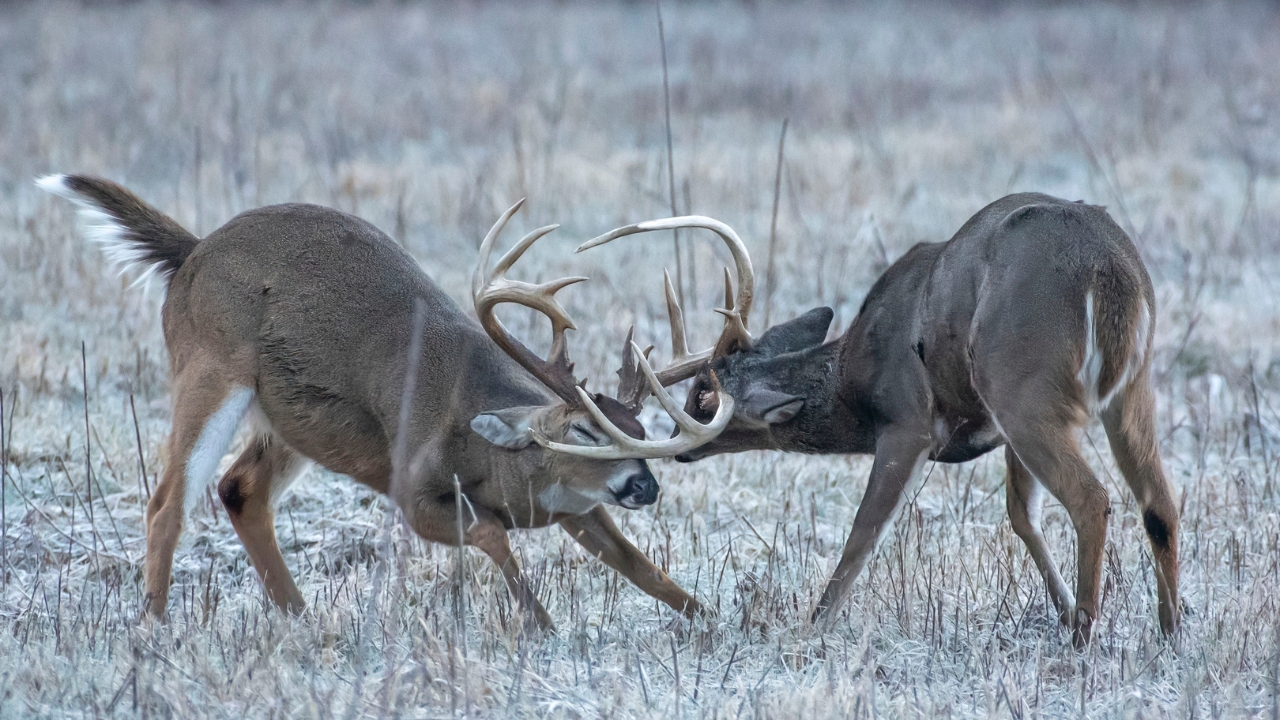
Another reason hunters overvalue January rubs is that bucks do not suddenly become docile when the main rut ends. A mature whitetail’s drive for dominance never really shuts off, and he will still posture, spar, and occasionally fight even when breeding is mostly finished. That lingering aggression can produce new rubs and broken branches that look like peak rut chaos, even though the underlying motivation is more about hierarchy than mating.
Veteran observers point out that Bucks Still Fight in January and that while the rut ends, fighting does not. When you see a freshly scarred tree or a patch of torn up ground now, it may reflect a brief clash over food or bedding rather than a hot doe pulling multiple suitors into the same clearing. If you treat every sign of conflict as proof of an active rut, you will keep setting up for a show that already left town.
Human scent, pressure, and the illusion of “dead” or “hot” woods
One of the cruelest tricks January plays on you is how quickly deer react to pressure after months of hunting season. Mature bucks and Alpha does have learned to associate human scent with danger, and they adjust their movement accordingly. Wildlife officials note that Young deer usually do not respond to human presence the way older deer do, while those mature animals react instantly when they smell people and can pinpoint rutting activity by scent alone.
That means you can walk into a January spot, see old rubs and scrapes, and declare the woods “dead” simply because the deer have shifted to moving after dark in response to your intrusion. Conversely, you might find a single fresh rub and convince yourself the area is “hot,” even though your repeated access has already pushed the buck to a different pattern. Managing your scent, limiting trips, and using careful entry routes are more important now than ever, because deer have had an entire season to learn your habits.
Smarter January setups: from rut sign to travel and food
To turn January from a frustrating grind into a calculated opportunity, you need to prioritize where deer want to be, not where they once advertised themselves. That starts with identifying primary food sources, such as standing soybeans, waste grain, or remaining acorns, and then mapping the safest routes deer can use to reach them from thick bedding cover. Advice on how to Scout food sources and trails in early January stresses looking for fresh tracks and droppings first, then layering in buck sign as a bonus clue rather than the main driver.
When you do factor in rubs and scrapes, focus on how they relate to terrain features and funnels instead of treating them as standalone destinations. One breakdown of rut mistakes warns that hunters often confuse the rut with the pre-rut and that getting away from obvious food sources, sign or not, can be wise. It suggests that sometimes the best move is to sit a subtle funnel with zero buck sign rather than a field edge glowing with old rubs, because pressured bucks prefer low profile routes. That perspective on 5 things hunters do wrong during the rut translates cleanly to January, when survival instincts push deer toward the safest, not the flashiest, paths.
Using tech and timing to read January sign correctly
Modern tools can help you separate meaningful January sign from background noise, as long as you use them with discipline. Cellular trail cameras, for example, can show you whether a rub line is still being visited in daylight or if all the action has shifted to the middle of the night. A detailed breakdown of the best times to hunt scrapes and rubs notes that these tools, combined with an understanding of how sign changes through the season, can dramatically increase your odds of harvesting a mature buck.
You should also pay attention to how individual bucks use scrapes and rubs differently as winter sets in. Writer Alex Comstock has pointed out that Scrapes get every bowhunter excited in Oct, but their value as stand locations drops sharply once bucks lock down with does and then slide into post-rut recovery. By January, a scrape that was a hub in late Oct may only see sporadic nighttime visits, while the same buck spends his limited daylight on a quiet trail between a south facing slope and a standing cornfield. If you let your cameras and careful observation tell you which sign is still active, you will stop chasing ghosts and start hunting the deer that are actually on their feet.
Like The Avid Outdoorsman’s content? Be sure to follow us.
Here’s more from us:


