Photo credit: Body Stock/Shutterstock.com
Some guys show up in the deer woods with enough firepower to drop a grizzly. And while it might feel good to carry a cannon, it’s not always the smartest move. Overkill doesn’t just beat up your shoulder—it can ruin meat, waste money, and make you look like you don’t know what you’re doing.
There’s a time and place for big calibers, but if you’re shooting small- or medium-sized game with something designed for elk or bigger, you might want to rethink your setup. Here are the rounds that tend to go way beyond what’s actually needed.
.338 Lapua Magnum for Whitetail

The .338 Lapua was designed for long-range military use, not for dropping 150-pound deer at 100 yards. It’s powerful, sure—but more than necessary for whitetail. It’ll punch right through and take a lot of usable meat with it.
Unless you’re set up for 800-yard shots on wide-open terrain, there’s no good reason to lug a rifle this heavy and punishing. Stick with something more practical and save the Lapua for when you’re shooting steel at extreme distances.
.45-70 Government for Varmints

The .45-70 is a thumper. It shines on big hogs or anything that might charge, but folks occasionally use it on critters like groundhogs or coyotes—and that’s a waste. You’re not hunting elephants.
It’s slow, drops fast, and carries enough punch to destroy smaller game outright. You don’t need that kind of force for a target the size of a cat. It’s expensive, loud, and excessive for anything under 100 pounds.
.300 Remington Ultra Magnum for Mule Deer

The .300 RUM was built for big-bodied animals and long-range shots out West. If you’re taking a mule deer at 150 yards, this round is overdoing it. The recoil’s harsh, the ammo’s pricey, and the meat damage is real.
You’ve got better options that shoot flatter without burning out your barrel or your shoulder. A .270 or .308 will get the job done clean without blowing through both lungs and half the ribs.
.50 BMG for Hogs

Yes, some guys do this. The .50 BMG is built to disable vehicles and punch through barriers—not pigs. There’s no practical reason to use a round this size for animals that can be dropped with a .223 or .308.
You’re hauling a benchrest gun into the field for targets that don’t require anything near that level of force. It’s overkill in every sense—recoil, cost, and impact. Unless you’re filming a YouTube stunt, leave it at home.
.300 Winchester Magnum for Eastern Whitetail

The .300 Win Mag is great for elk and Western hunts where you might need to reach out, but in the thick woods of the East, it’s way more than you need. Most shots are under 100 yards, and this round can be brutal on meat.
You’ll deal with extra recoil, louder reports, and more damage to the vitals than necessary. A good .243, .30-30, or .270 will kill just as clean and be a whole lot easier to shoot accurately in tight cover.
.338 Winchester Magnum for Black Bear
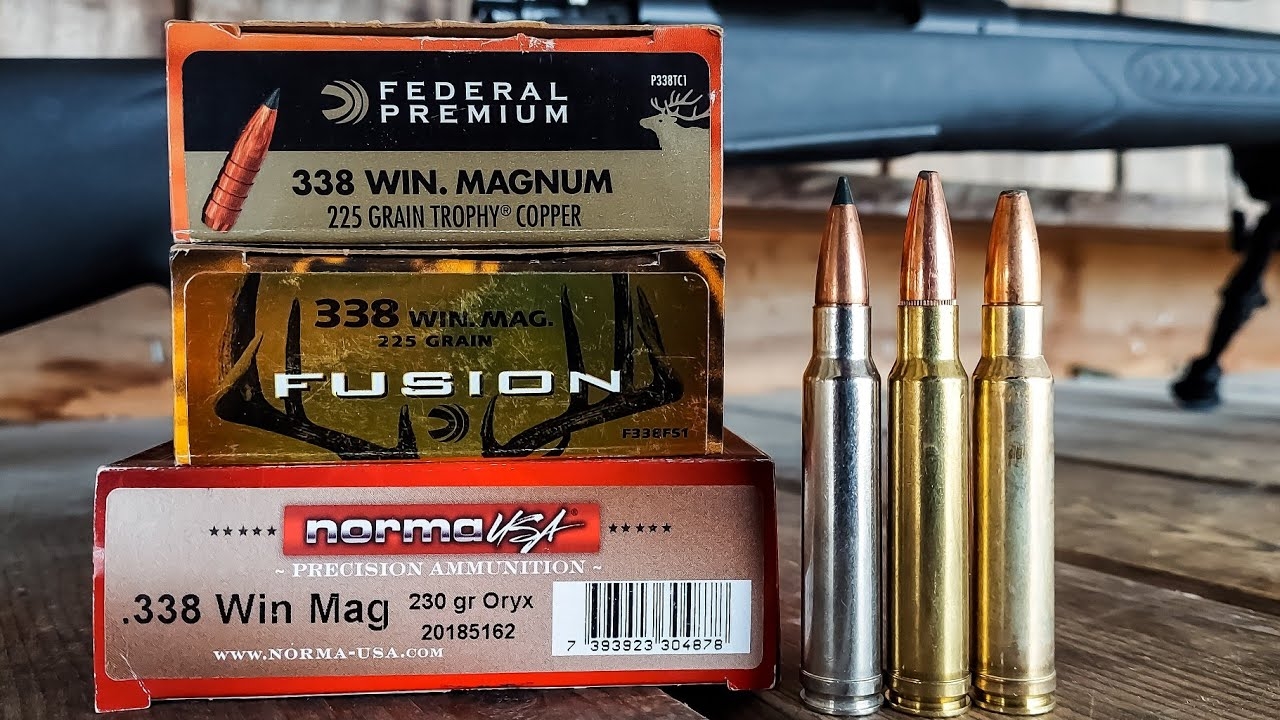
Unless you’re up north with a real chance at a big brown or grizzly, the .338 Win Mag is too much for most black bear hunts. These bears are usually taken under 200 yards and don’t require that much energy to put down clean.
It’ll kill one, no doubt, but so will a .308 or even a .30-06 with the right bullet. Save the .338 for more serious threats and go with something that won’t rattle your teeth every time you pull the trigger.
7mm Remington Magnum for Coyotes

The 7mm Rem Mag is a capable round with great range, but it’s too much gun for a 40-pound predator. You’ll end up vaporizing a coyote if your shot’s even a little off-center. That kind of energy isn’t needed here.
It’s also not a cheap round to shoot, and you’re likely going to burn your barrel faster than necessary chasing varmints. A .223 or .22-250 is a better fit for coyotes—flat, fast, and a lot more forgiving.
.375 H&H Magnum for Elk

It’s hard to call any round “too much” for elk, but the .375 H&H edges into that territory. It was built for Africa and dangerous game. Elk are big, but not that big. This round brings punishing recoil and weight that most elk hunters don’t need.
There are plenty of proven elk cartridges that hit hard and shoot flatter, like the .300 Win Mag or 7mm Mag. Unless you’re planning to use one rifle for everything from moose to Cape buffalo, this one might be more than necessary.
.44 Magnum Rifle for Rabbits

A .44 Magnum lever gun is fun to shoot, but it’s not ideal for small game. Rabbits, squirrels, and other light critters don’t need that kind of knockdown power. You’ll be lucky if there’s anything left to throw in a stew pot.
A .22 LR or .17 HMR is a much better call. They’re accurate, cheap to shoot, and don’t obliterate your target. The .44 is great for deer at close range—leave it in the safe when you’re after smaller fare.
.223 Remington for Turkeys

The .223 is popular and versatile, but it’s not the right call for turkey hunting. Unless you’re head-shooting them at distance, it’s too risky—you’ll tear through meat and might not get a clean drop if your shot’s off.
Shotguns are the tool for this job. A good turkey load through a 12 or 20 gauge gives you a wider pattern and more forgiving margin for error. Save the .223 for varmints or range time where it really shines.
*This article was developed with AI-powered tools and has been carefully reviewed by our editors.