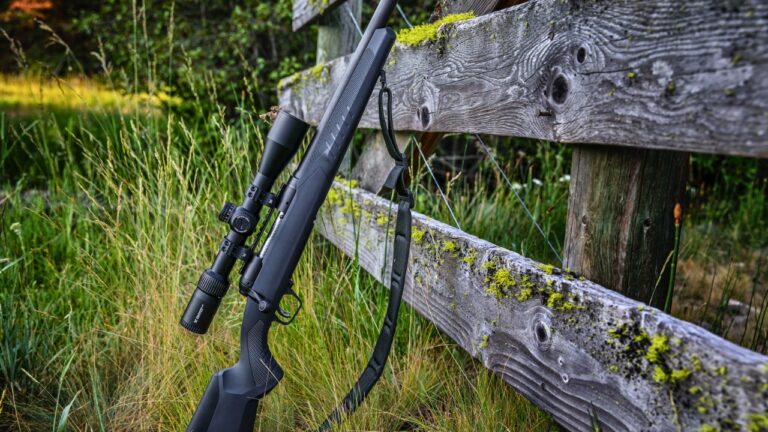
The Browning BAR has always lived in a weird spot in the hunting world. It’s not the trendy “mountain rifle” pick, and it’s not the tactical crowd’s favorite toy either. It’s a hunting gun that’s been doing hunting-gun work for a long time, and the guys who run them tend to be the same type of guys who don’t talk much online about what they carry into the woods. They just show up with something that runs, shoots straight enough, and doesn’t beat them up when they’re trying to make a clean shot from a cold stand. That’s why the BAR keeps hanging around. It’s not trying to win a beauty contest. It’s trying to put meat down when the weather is ugly and the shot isn’t from a bench.
The MK4 version doesn’t magically reinvent the BAR, but it doubles down on the things the BAR is actually good at in the first place. It’s a semi-auto that’s built around hunting, not around “look what I built” setups. If you’ve never hunted with a semi-auto rifle much, you might assume the only advantage is speed. Speed is part of it, but the bigger advantage is how the whole system behaves under real recoil, real cold, and real field pressure when your position isn’t perfect. The BAR’s strengths show up in those moments, and that’s where a lot of other rifles that seem great on paper start to feel less forgiving.
It’s built to cycle like a hunting rifle, not like a range toy
The BAR’s identity starts with the fact that it’s a gas-operated semi-auto designed around hunting loads and hunting reliability. In the real world, that matters because hunting ammo isn’t always “soft,” and weather isn’t always friendly. A good bolt gun will run in almost anything as long as you can work it, but semi-autos live or die by how well they manage gas and timing across the kinds of loads hunters actually use. The BAR has been around long enough that Browning knows exactly what it’s trying to be: a rifle that cycles consistently without you having to baby it, tune it, or turn it into a project that only runs with one specific load and one specific cleaning schedule.
That design choice matters more than most people admit because hunting is not a controlled environment. You’re dealing with dust, pine needles, rain that turns into grit, and cold that makes lubricants thicken and hands get clumsy. In those conditions, a semi-auto that’s built around real hunting use can feel like cheating in the best way, because it removes the mental overhead of “run the bolt cleanly” when you’re rushed, twisted around, or shooting from a position where cycling a bolt will break your cheek weld and cost you the sight picture. The BAR’s whole point is that you stay in the gun, you stay on the animal, and the rifle does its part without drama.
Follow-up shots are a benefit, but staying in the sight picture is the real win
People talk about follow-up shots with semi-autos like it’s only about dumping another round fast. That’s not the right way to think about it for hunting. The bigger advantage is that the BAR lets you keep your head on the stock and keep your eyes on what the animal is doing after the shot. That matters because animals don’t always react the way you expect, and the shot you thought was perfect sometimes needs a quick correction if the animal moves, turns, or doesn’t show the reaction you wanted to see. With a bolt gun, even a good shooter can lose a beat while working the action, especially in awkward positions. With a BAR, you can watch, confirm, and act without breaking your entire rhythm.
That “stay in the gun” advantage is also where real-world confidence comes from. When you can see the hit, see the reaction, and stay in control, you make better decisions. That doesn’t mean you shoot faster just because you can. It means you’re less likely to rush the first shot out of fear that you won’t get another chance. A lot of hunters take bad first shots because they feel pressure to make it happen right now. A BAR doesn’t erase that pressure, but it can reduce the panic factor because you know you’re not going to lose the entire sight picture the second you need to run the rifle again.
Recoil management is better than most people expect, and that shows up in field accuracy
Semi-autos have a recoil feel that a lot of hunters don’t really understand until they shoot one side-by-side with a comparable bolt gun. The BAR spreads recoil out differently because the action is doing work, and that can make the rifle feel smoother under the shot. It’s not magic, and it doesn’t turn a hard-kicking caliber into a .22, but it can make recoil less sharp, and that has a real effect on how well people shoot in the field. A lot of misses and bad hits are recoil anticipation more than people want to admit, especially when the shot is from an uncomfortable position and the shooter is already tense.
That recoil behavior is one reason the BAR tends to “shoot better in the woods” for a lot of practical hunters than their lighter bolt guns. Light rifles are great to carry, but they punish you more under recoil, and that punishment shows up in flinches, rushed shots, and poor follow-through. The BAR is not a featherweight, and you feel that on the shoulder during a long walk, but the trade is that it’s steadier when you’re actually trying to shoot, and it’s easier for a lot of people to stay honest on the trigger. Field accuracy isn’t about printing tiny groups when you’re calm; it’s about putting a first shot exactly where it needs to go when you’re breathing hard and the moment is real.
The weight is a tradeoff, but it’s also why it settles and tracks well
Let’s not pretend weight doesn’t matter. A BAR is generally going to feel heavier than the bolt guns people pick for “all-day carry” hunts, and if you’re climbing ridges or covering miles, you’ll notice it. But weight is not automatically bad. Weight is stability. Weight is less wobble. Weight is a rifle that doesn’t feel twitchy when you’re trying to hold on a small window through brush. A lot of hunters shoot heavier rifles better, and it’s not because they’re stronger; it’s because the rifle isn’t dancing around every time their heartbeat bumps the stock.
That steadiness is also why the BAR can feel so natural from improvised rests. When you lay a rifle across a pack, a rail, or shooting sticks, a heavier rifle tends to settle into that support instead of skittering and bouncing. In real hunting, that matters because you rarely get the perfect rest you pictured in your head. You get what you get, and you make it work. The BAR’s weight, combined with the way it recoils, makes it easier to stay on target and call your shot honestly. If you’re the kind of hunter who values clean hits over internet bragging, that’s not a small benefit.
Where semi-auto hunting rifles get misunderstood: reliability expectations and maintenance
Some guys avoid semi-auto hunting rifles because they’ve seen cheap semi-autos that were picky, dirty, and unreliable, and they assume all semi-autos are like that. The BAR isn’t in that category, but it still lives in the reality that semi-autos have different maintenance needs than bolt guns. A bolt gun will tolerate neglect in a way that most semi-autos won’t, and that’s just the truth. If you’re going to carry a BAR, you need to treat it like a serious hunting tool and keep it reasonably clean and lubricated for the conditions you’re in, especially if you hunt in fine dust, gritty snow, or freezing rain that turns into grime.
The upside is that you don’t have to be obsessive to get good performance. You just have to be consistent and realistic. The BAR’s reputation comes from years of hunters using it as a work gun, not a safe queen, but the guys who get the best results tend to be the same guys who check their gear before season, verify their zero, and don’t show up with old, questionable ammo and a rifle they haven’t touched since last fall. That’s not “high maintenance.” That’s basic competence, and the BAR rewards that competence with a rifle that keeps doing what it’s supposed to do when the hunt isn’t comfortable.
Optics setup matters more on this rifle than people think
A BAR can be extremely practical with the right optic, because its strengths show up when shots happen fast and you need a clear sight picture without fighting the gun. You don’t need some giant scope that turns the rifle into a top-heavy mess, and you don’t need a bargain optic that loses clarity right when the light is fading and deer start moving. The sweet spot is usually a simple, proven hunting scope in a sensible magnification range, something that gives you a clean image at dawn and dusk and tracks reliably when you confirm zero. If you want a straightforward example that’s easy to find and actually makes sense for this role, a Leupold VX-3HD in a practical hunting magnification range is the kind of optic that pairs well with a rifle like this because it’s built for hunting conditions, not just range days.
The reason optics matter so much on a BAR is that the rifle encourages you to stay in the sight picture and watch the animal through the shot and after the shot. If your scope has a tight eyebox, poor low-light performance, or a reticle you can’t pick up quickly, you’re throwing away one of the rifle’s biggest practical advantages. The BAR isn’t about making 600-yard shots feel easy. It’s about making real hunting shots cleaner and more repeatable when the moment is moving. A good, simple scope helps you do that, and a bad scope makes the whole setup feel worse than it should.
The bottom line: the BAR MK4 is a “real hunting” rifle because it forgives real hunting problems
The Browning BAR MK4 gets the important stuff right because it was built to solve hunting problems, not internet arguments. It cycles smoothly, it helps you stay in the gun, and it manages recoil in a way that makes a lot of hunters shoot better when it matters. It’s not the lightest option, and it’s not the simplest mechanical design in the world, but it’s not trying to be. It’s trying to be the rifle you trust when the shot happens quick, the light is fading, the angle isn’t perfect, and you need the rifle to do its job without you thinking about it.
If you’re the kind of hunter who cares more about clean kills than bragging rights, the BAR makes sense in a way a lot of people don’t appreciate until they’ve spent time behind one. It’s steady, it’s fast in the ways that matter, and it can be incredibly practical when your field positions aren’t pretty. If you want one sentence that sums it up, it’s this: the BAR MK4 is for hunters who want the rifle to help them avoid small mistakes, because in real hunting, small mistakes are the ones that turn into long nights.
Like The Avid Outdoorsman’s content? Be sure to follow us.
Here’s more from us: