Photo credit: Ultimate Reloader/YouTube
There’s something about the .30-30 that keeps it hanging around, no matter how many new cartridges hit the shelves. It doesn’t have the flattest trajectory. It’s not the hottest round on paper. But none of that matters in the woods where it counts. The .30-30 earned its place in deer camps because it flat-out works—and it’s never given you a reason to doubt it. You can talk all day about modern bullets and long-range performance, but for the kind of hunting most folks actually do, the old lever gun still makes a lot of sense. That’s why it keeps showing up in truck racks, scabbards, and meat poles across the country. And once you’ve taken a deer with one, odds are you’ll want to do it again.
It points faster than most rifles ever will
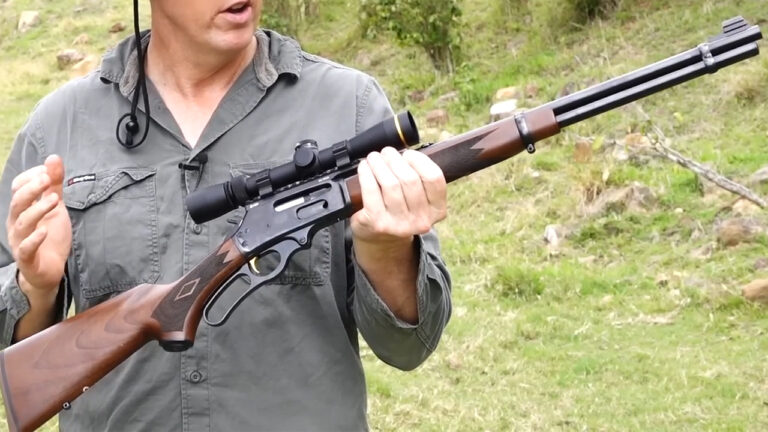
A .30-30 lever gun shoulders like it was made for you. That’s what gets people hooked. You don’t wrestle with it in tight cover. You don’t have to think about lining up the sights—it’s already there. When a buck crashes through thick timber, a .30-30 brings a kind of confidence that’s hard to describe until you’ve been in that moment. You’re not calculating drop or dialing turrets. You’re reacting, and the rifle is ready. It’s not a benchrest gun. It doesn’t need to be. For fast, instinctive shots in the woods, nothing swings smoother. Plenty of rifles are accurate, but very few feel this natural when time is tight.
It’s built for the way most folks actually hunt

A lot of hunting these days gets marketed like you’re on a sniper team in the Rockies. But let’s be honest—you’re probably sitting in a ladder stand, walking logging roads, or easing through hardwoods hoping to cut fresh sign. That’s the kind of hunting the .30-30 was made for. Inside 150 yards, with brush between you and the deer, it performs right where you need it to. No need for a 6-pound scope or a bipod. You shoulder it, find the vitals, and squeeze. For real-world whitetail hunting, you’d be hard-pressed to find a cartridge more practical.
It doesn’t beat you up at the range or in the field
There’s something to be said for a rifle you want to shoot. The .30-30 has always struck that balance—plenty of power, but not punishing. You can run through a box at the range without flinching or bruising your shoulder, and when you’re hunting, you don’t have to brace for recoil. That makes you more confident with it. A rifle that’s comfortable gets practiced with. One that’s painful stays in the case. That’s part of the reason the .30-30 keeps hanging on—it’s shootable for young hunters, small-framed folks, or anybody who’s tired of getting kicked around by magnums.
The lever action makes it more than a tool

There’s a connection you get with a lever gun that’s hard to explain if you haven’t carried one. Something about thumbing rounds into the loading gate, working the lever by feel, and knowing that each shot is backed by over a hundred years of woods lore. It’s not about nostalgia—it’s about trust. These rifles aren’t built for showing off at the range. They’re meant to get dirty, get scratched, and keep working. The .30-30 is a workingman’s gun, and every scratch on the stock means it’s doing its job. That bond builds over seasons, not weekends.
Ammo options are better than they’ve ever been
For a while, folks knocked the .30-30 for being stuck in the past. Flat-nose bullets, limited range, not much variety. That’s changed. With polymer-tipped loads like Hornady’s LEVERevolution, you’re stretching effective range and flattening trajectory without giving up reliability. Standard soft points still put venison in the freezer season after season. And even with all the supply chain drama, .30-30 tends to stay on shelves when flashier calibers vanish. Whether you’re zeroing in at 100 yards or slipping through brush on a spot-and-stalk, there’s ammo out there that’ll do the job—and it won’t cost a fortune.
It works from the stand, saddle, or side-by-side

You don’t need a shooting mat and a weather meter to hunt with a .30-30. Whether you’re in a treestand or on horseback, the rifle adapts. It’s short, easy to carry, and doesn’t snag every branch you walk past. In a saddle scabbard, it rides clean and draws fast. Tossed behind the seat of a truck, it’s ready whenever you need it. In a world full of 10-pound rifles built like space guns, the .30-30 keeps proving that a short lever-action with a low-power optic or irons is still one of the most useful tools a hunter can have.
It’s what a lot of us started with—and keep coming back to
There’s a reason the .30-30 often ends up being someone’s first deer rifle. It’s approachable, affordable, and forgiving. But more than that, it builds memories. That buck you shot at 60 yards on a frosty November morning? Odds are the rifle in your hand was a .30-30. Even after you’ve moved on to other guns, something keeps pulling you back to it. Maybe it’s the feel. Maybe it’s the history. Maybe it’s knowing that when everything else fails, that old lever gun still has one more deer left in it. Either way, it keeps earning its place in the safe.
Like The Avid Outdoorsman’s content? Be sure to follow us.
Here’s more from us:
The worst deer rifles money can buy
Sidearms That Belong in the Safe — Not Your Belt
*This article was developed with AI-powered tools and has been carefully reviewed by our editors.