Photo credit: Mitch Cox Photo/ShutterStock.com
Old revolvers have a way of telling the truth faster than a lot of modern handguns do. That is a big reason so many experienced shooters still respect them, even if they carry something newer every day. A good old double-action revolver does not give you much room to fake your way through a trigger press, hide behind a forgiving grip, or rush through sloppy fundamentals and still come away thinking you shot well. If your technique is weak, the target usually tells you in a hurry.
That is what makes revolvers so useful and so humbling at the same time. They are not necessarily harder in every possible way, but they are less willing to flatter the shooter. A modern polymer pistol can sometimes let a rough trigger press slide just enough that the results stay passable. An old revolver, especially one with a traditional double-action pull, tends to drag all the little problems into the open. It is one of the reasons people either learn to respect them fast or start making excuses for them almost immediately.
The trigger pull shows you exactly how honest your trigger control is
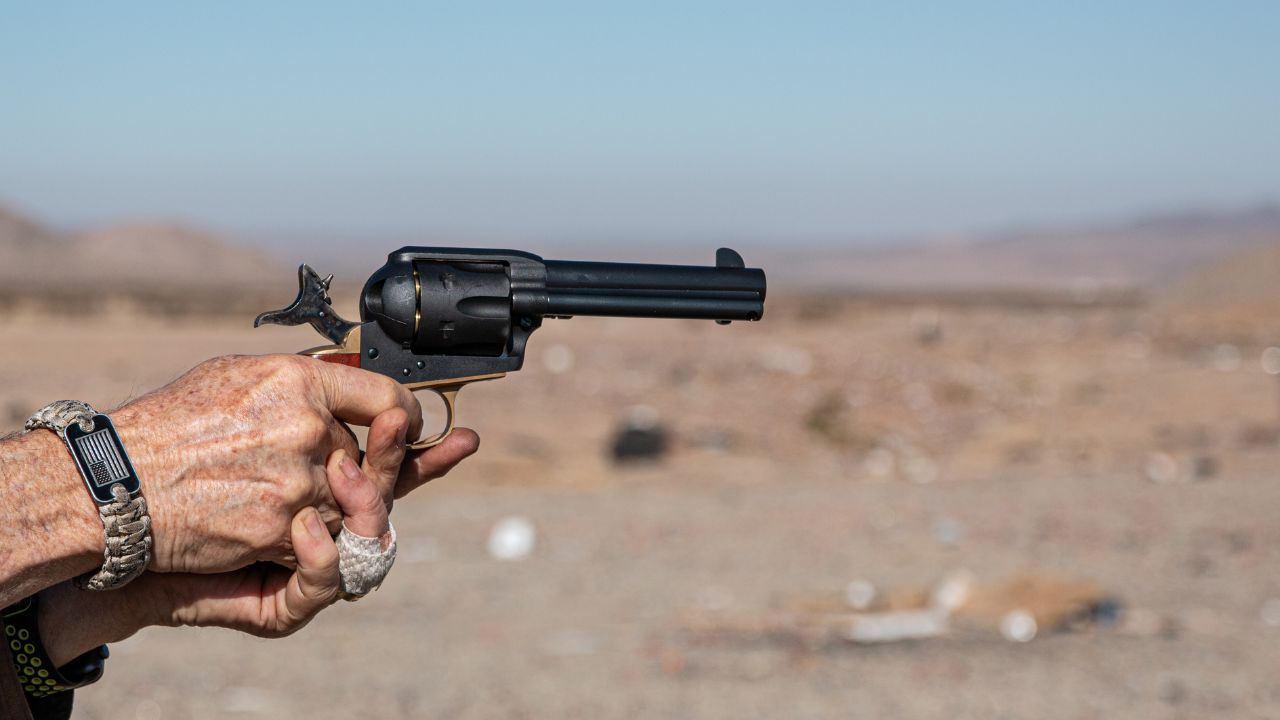
The first thing old revolvers expose is trigger control. A traditional double-action revolver asks the shooter to do more work with the trigger finger than most striker-fired pistols ever will. That longer, heavier pull does not automatically make the gun inaccurate. What it does is magnify everything the shooter is doing wrong on the way to the break. If you are slapping, jerking, tightening the whole hand, or trying to force the shot at the last second, the revolver usually shows it with no mercy.
That is why people so often shoot a revolver worse than they expected on the first serious outing. They may be good shooters overall. They may run a semi-auto just fine. But the revolver makes them confront how clean their trigger press really is instead of how clean they thought it was. The gun does not care about intent. It cares about what your hands actually did. That kind of honesty is brutal, but it is useful.
Weak grip habits show up faster when the gun starts moving
A lot of shooters think of revolvers as being all about trigger control, but grip issues get exposed fast too. Old revolvers, especially lighter magnum guns or compact defensive models, make it obvious when the shooter does not really know how to control the gun through recoil. A loose support hand, poor hand placement, inconsistent pressure, or a grip that shifts between shots becomes harder to ignore when the revolver bucks, rolls, or lifts more than a shooter expected.
This is where weak habits often get blamed on the gun instead of the shooter. The revolver gets called unpleasant, snappy, or old-fashioned when the real problem is that the shooter was relying on a more forgiving pistol to cover bad grip discipline. A revolver often refuses to do that. If your hold is weak, the sights will tell you. If the gun moves too much in your hands, the next shot will tell you. You do not have to wonder for long.
Revolvers punish the urge to rush the shot
One of the easiest bad habits to develop with a handgun is the urge to rush the final part of the shot once the sights look close enough. Plenty of shooters get away with that more often than they should on semi-autos. Old revolvers tend to punish it. The longer double-action pull makes people impatient. They start the press well enough, then speed up the last part of it because they want the shot gone. That is where the front sight gets dragged off target and the round lands somewhere the shooter hates.
This is one reason old revolvers are so good at exposing weak shooting habits. They make impatience visible. A shooter who thinks he is missing because the sights are bad or the gun is too old often finds out the real problem is that he was trying to finish the shot instead of pressing through it cleanly. The revolver does not create the bad habit. It simply stops hiding it.
They make sight discipline matter again
Another thing old revolvers do well is remind shooters how much sight discipline still matters. A lot of older revolvers come with plain sights, narrower sight pictures, or a less forgiving visual setup than what people are used to on modern optics-ready pistols. That means shooters cannot get lazy about what they are seeing. If the front sight is not where it should be, or if the shooter is overconfirming and then jerking the trigger anyway, the target usually makes the problem obvious.
That is not really the revolver being outdated. It is the revolver forcing the shooter to participate more honestly in the shot. Modern pistols with better sights, red dots, or softer triggers can make the whole process easier, and there is nothing wrong with that. But the older revolver often works like a stress test. It makes you prove that you still know how to see what matters and act on it without drama.
They expose how much the shooter depends on forgiveness
A lot of handgun skill is not only about what you can do with your favorite pistol. It is about how much of your performance comes from the pistol being easy to shoot. Old revolvers expose that difference fast. If a shooter’s semi-auto gives him a shorter trigger, more grip, better sights, softer recoil impulse, and more margin for sloppy input, he may look better than his actual fundamentals deserve. Then he picks up an older revolver and finds out his shooting was leaning on forgiveness more than he realized.
That is why revolvers can be so revealing. They strip away some of the mechanical kindness. They leave the shooter with a gun that asks for cleaner execution and gives less back for free. The target becomes harder to sweet-talk after that. The result may be humbling, but it is also honest. A shooter who can run an old revolver well usually has something real underneath the performance.
Follow-through gets tested harder than people expect
Revolvers also expose weak follow-through because people tend to treat them like the shot is over the moment the trigger breaks. That is a mistake with any handgun, but older revolvers make it show up clearly. The shooter breaks the shot, mentally checks out too early, and lets the sights leave the job before the bullet is gone and the gun is fully managed. The result often looks like a mysterious flyer, but the mystery is usually just poor follow-through.
A revolver demands more discipline here because the trigger cycle and recoil rhythm encourage shooters to stay connected to the gun all the way through the shot. If they do not, the hits tend to wander. This is one more reason old revolvers expose weak habits so fast. They make it hard to fake control once the gun starts moving and the trigger starts working against impatience.
They remind you that good shooting is supposed to be repeatable
One reason people still learn a lot from old revolvers is that they force repeatability. The shooter cannot rely on one lucky clean press or one easy string with a forgiving pistol. He has to grip the gun properly, see enough sight, manage the longer pull, and keep doing it without changing the process every shot. If any part of the routine falls apart, the revolver usually shows it before the cylinder is empty.
That is valuable because a lot of weak habits only survive when the shooter never has to repeat clean fundamentals under a little pressure. The revolver breaks that illusion. It makes the shooter build the shot the same way every time, and when he does not, the results usually stop being pretty.
Why that kind of honesty still matters
That is the bigger reason old revolvers still matter even in a world full of better sights, optics cuts, polymer frames, and higher capacity. They are excellent teachers because they expose the shooter’s input more clearly than many modern pistols do. They do not let weak trigger work feel acceptable. They do not let poor grip discipline hide behind a forgiving recoil pattern. They do not let impatience pass for confidence.
That is why old revolvers still expose weak shooting habits fast. They are not magical. They are just honest. And sometimes honesty is exactly what a shooter needs if he really wants to know where the problem starts.
Like The Avid Outdoorsman’s content? Be sure to follow us.
Here’s more from us: