
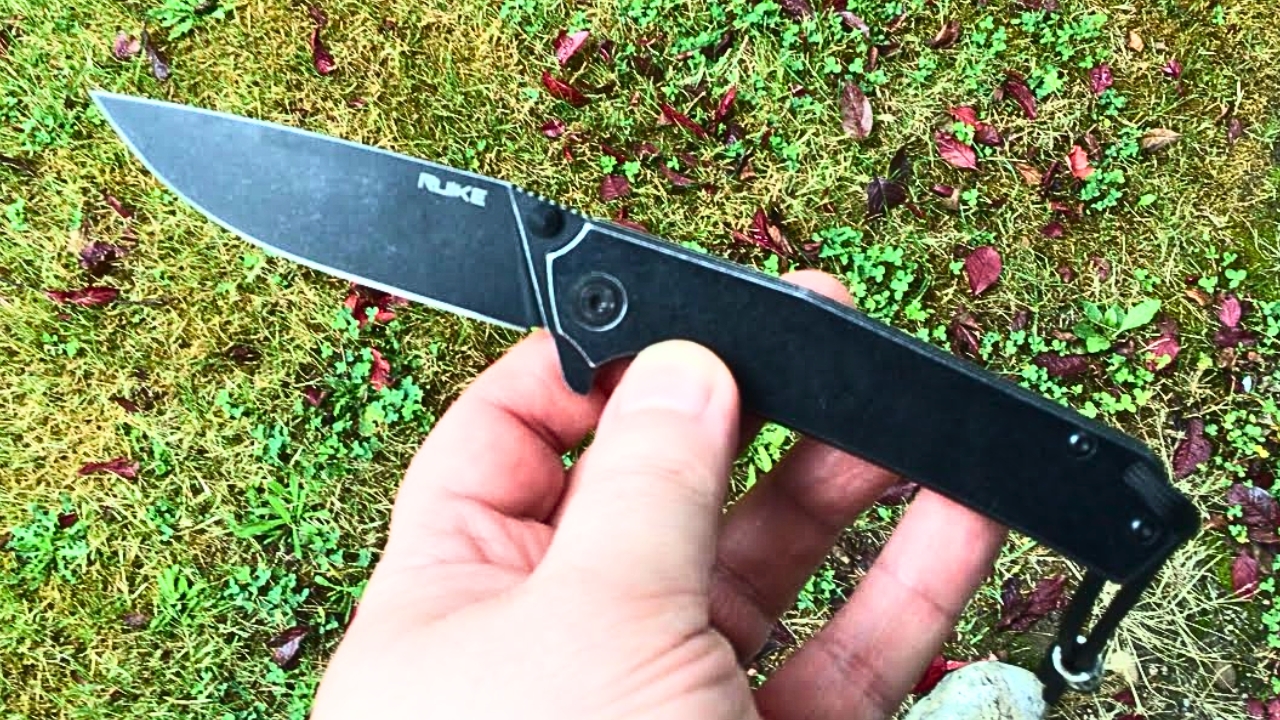
Photo credit: Tctbnl/YouTube
A good budget EDC knife isn’t supposed to impress anyone on Instagram. It’s supposed to disappear in your pocket, open with one hand when the other is busy, and cut clean without feeling like it’ll rattle apart. Under $50, you’re not paying for fancy materials or boutique branding—you’re paying for design that works and quality control that doesn’t miss the basics.
The trick is knowing what to prioritize. Look for a blade shape that actually slices, a lock that inspires confidence, and handle scales that don’t feel like a toy. Steel matters, but heat treat and geometry matter more at this price point. These are the knives that usually come in under fifty bucks and still feel like real tools you can carry every day.
Ontario RAT Model 2

If you want one budget folder that rarely disappoints, the RAT 2 is the answer. It’s a mid-size knife that carries flat, gives you plenty of control, and doesn’t feel flimsy when you’re bearing down on a cut. The ergonomics are the real win—your hand lands in the same place every time, and the knife stays planted.
The blade steel varies by version, but the bigger story is how well it’s put together for the money. You can break down boxes, slice cord, and do the daily chores without the knife feeling “soft” or sloppy. It’s also easy to keep tuned with basic maintenance, which matters when this is the knife you actually use instead of baby.
Ontario RAT Model 1

The RAT 1 takes the same idea as the RAT 2 and stretches it into a bigger, more hand-filling working knife. If you’ve got larger hands or you prefer a folder that feels like it can handle rougher tasks, this one often hits the sweet spot without costing much more.
You get a longer edge, a handle that fills your palm, and a design that’s been proven by a ton of everyday users. It’s not flashy, but it’s steady—no weird hot spots, no awkward angles, and no “why did they do that?” moments when you start cutting. When a budget knife feels trustworthy, it usually has a shape like this: practical, comfortable, and built around real use.
QSP Penguin

The Penguin is one of the best examples of a budget knife that feels more expensive than it is. The sheepsfoot-style blade gives you control and a strong tip area for utility work, but it still slices well for daily carry tasks. The handle shapes are usually comfortable, too, without sharp edges digging into your hand.
What makes the Penguin stand out is how “together” it feels. The action tends to be clean, the lockup feels solid, and the knife doesn’t come across as a compromise. You’ll notice it when you’re doing repetitive cuts—cardboard, plastic strapping, feed bags—where cheap knives start to feel gritty or loose. For a lot of people, this is the budget knife that turns into the one they keep grabbing.
CJRB Feldspar

The Feldspar is a budget knife that gets the fundamentals right: it carries well, it cuts efficiently, and it doesn’t feel like it was built to hit a price point at all costs. The blade profile is useful for everyday work, and the handle shape tends to fit a wide range of hands without drama.
What you’re paying for here is consistency. You can flick it open, do your work, and put it away without constantly thinking about the knife. That’s what separates a good under-$50 folder from the stuff that feels disposable. The Feldspar also hits that “real knife” feel when you’re actually cutting—stable in the hand, predictable through material, and easy to keep sharp without needing special gear or patience.
CJRB Ria

If you like a slim, pocket-friendly carry that still feels like a serious tool, the Ria is worth your attention. It has a clean, understated profile and a blade shape that’s made for slicing and daily utility. In the pocket, it doesn’t take up much space, and in the hand it feels more confident than its size suggests.
The Ria shines when you want a knife you’ll actually carry every day. It’s light enough that you don’t leave it behind, but it isn’t toy-like when you put it to work. For opening packages, cutting cord, trimming material, and all the little tasks that add up, it keeps up without feeling loose or awkward. It’s the kind of budget knife that looks calm and performs that way, too.
Ruike P801

The P801 is a classic “budget doesn’t mean rough” folder. It has a clean all-metal feel, a straightforward blade shape, and an overall build that often surprises people the first time they handle it. If you like a knife that feels solid without being bulky, it’s a strong option.
Where the P801 earns its keep is in the details—how it opens, how it locks up, and how it feels during longer cutting sessions. A lot of cheap metal-handled knives feel slippery or sharp-edged. This one usually avoids that, which makes it more comfortable for real use. It’s also a knife that tends to look and feel consistent from day to day, not like something that’s going to develop weird play after a few weeks in your pocket.
CRKT Pilar

The Pilar is a small knife that feels tougher than it looks. The blade is shaped for utility work, and the grip gives you a surprisingly confident hold for a compact folder. It’s the kind of knife you can carry in light clothing without it feeling like an anchor, but still use like a tool when you need to.
CRKT’s budget lineup can be hit or miss, but the Pilar has stayed popular because it delivers a sturdy feel at a low price. You’ll notice it in tougher cuts where tiny knives usually feel sketchy. The Pilar keeps your hand close to the work, which helps control, and the overall build usually feels tight. If you want a smaller EDC that doesn’t act delicate, this one gets a lot right.
CRKT Squid

The Squid is another compact knife that punches above its weight. It’s built around a practical blade shape, a handle you can actually hang onto, and an overall size that makes it easy to carry anywhere. It’s not trying to be a big hard-use folder—it’s trying to be the knife you always have.
That’s why it works. A lot of budget knives are either too tiny to grip or too clunky to carry. The Squid splits the difference. It’s especially good for daily chores—packages, tape, cord, food prep in a pinch—where you want control and a clean cut. The best part is that it tends to feel more “finished” than most knives in its price range, which is exactly what you want under fifty bucks.
Kershaw Cryo

The Cryo has been around for a long time because it hits that budget sweet spot: it feels sturdy, it opens fast, and it carries like a real working knife. It’s not feather-light, but it rides well in the pocket and gives you a reassuring, solid-in-hand feel when you’re using it.
You’ll appreciate the Cryo most if you’re hard on your gear. The handle and lock design tend to feel confidence-inspiring, and the blade shape is built around utility. It’s a good “truck knife” style EDC—something you can keep on you, use without worrying, and not feel sick about if it gets scratched up. Under $50, that matters. You want a knife that can take normal abuse and still feel predictable when it’s time to cut.
Kershaw Emerson CQC-6K

The CQC-6K is a practical budget folder with a purpose-built feel. It’s designed around quick deployment and hard, everyday work—opening boxes, cutting cord, trimming material, and all the tasks that happen when you’re moving fast. It carries a little larger than some options here, but it rewards you with a grip that feels secure.
This knife tends to appeal to people who want a folder that feels ready for rough handling. You’re not buying it for refined action or fancy finishing. You’re buying it because it feels like a tool. The blade shape is utility-forward, and the overall build is usually confidence-inspiring for the price. If you want a budget knife that doesn’t come across as delicate, this one fits that lane.
Buck 112 Slim Select

Buck’s Slim Select line is a smart option when you want a budget knife with a traditional, trustworthy feel. The 112 Slim Select carries flat, feels comfortable in the hand, and gives you a blade shape that works for real daily cutting—especially the kind of tasks you run into outdoors.
What makes it stand out is that it doesn’t feel disposable. The build has that Buck “this is a real knife” attitude, and it tends to lock up in a way that inspires confidence. If you want a knife you can carry to work and still throw in a hunting pack, this is a good middle ground. It’s not trying to be trendy. It’s trying to be useful, and that’s why it doesn’t feel cheap.
Buck 110 Slim Select

The 110 Slim Select brings the classic 110 vibe into a carry-friendly package that won’t beat up your pocket. You still get that familiar profile and a blade that’s at home doing everyday chores, but the slimmer build makes it more realistic as an EDC folder.
This is a good pick if you like knives with a little tradition behind them and you want something that feels dependable without a big price tag. In use, it tends to feel steady—no weird flex, no “toy knife” sensation when you’re cutting thicker material. It’s a budget folder that feels like it belongs in a working rotation, not a drawer. If your EDC crosses over into camp life, this one makes a lot of sense.
Cold Steel Tuff Lite

The Tuff Lite looks a little odd until you start using it. The blade shape is built for controlled utility cuts, and the handle gives you a secure grip that feels confident for a small knife. It’s compact, but it doesn’t feel fragile, which is a rare combo in budget folders.
Cold Steel tends to build knives that can take rougher handling than their price suggests, and the Tuff Lite fits that pattern. It’s especially good for tasks where control matters—cutting zip ties, trimming cord, opening packages, and working in tight spaces. The edge tends to stay useful longer than you’d expect because the blade shape encourages clean, controlled slicing instead of sloppy prying. If you want a smaller EDC that acts like a serious tool, this one delivers.
Cold Steel SR1 Lite

The SR1 Lite is a lot of knife for the money. It’s bigger, thicker, and more hard-use oriented than many budget folders, and it tends to feel like something you could actually lean on when tasks get rough. If you want a budget knife that feels overbuilt, this is one of the obvious choices.
That larger, sturdier build is exactly why it doesn’t feel cheap. Some knives under $50 feel light and hollow, like they’re built for opening tape and nothing else. The SR1 Lite feels more like a working tool you can trust for heavier chores—cutting thick material, breaking down hard cardboard, and general abuse that would make slimmer knives feel sketchy. It’s not for everyone as an everyday pocket carry, but if you like a stout knife, it’s hard to beat.
Opinel No. 8

The Opinel is proof you don’t need modern styling to get real performance. The No. 8 is a lightweight, straightforward folder that cuts like a much more expensive knife because the blade geometry is built for slicing. If your daily use involves food, cardboard, rope, or general camp chores, it keeps doing clean work with very little effort.
What surprises people is how “right” it feels in use. The handle is comfortable, the blade takes a keen edge, and the knife stays useful longer than many thicker budget folders. It’s not meant for prying or rough twisting cuts, but for honest slicing it’s excellent. If you want an under-$50 carry that feels classic and performs like a cutter, the Opinel still earns its spot.
Victorinox Spartan

A Swiss Army Knife doesn’t look like a modern EDC folder, but the Spartan keeps showing up in pockets for a reason: it handles real daily problems without fuss. The main blade cuts well, sharpens easily, and stays practical for the tasks most people actually do—packages, food, light trimming, and quick fixes.
The bigger advantage is everything around the blade. Scissors are nice, but on the Spartan you’re getting tools that save the day more often than you’d expect. That’s why it doesn’t feel cheap—it feels useful. The fit and finish are usually consistent, the knife carries easily, and it doesn’t scream for attention. If your idea of EDC is being prepared instead of looking tactical, the Spartan is one of the smartest under-$50 choices you can make.
Like The Avid Outdoorsman’s content? Be sure to follow us.
Here’s more from us:


