Photo credit: Hop/YouTube
The 1990s were a weird, great era for handguns. Departments were switching to high-capacity 9mms, concealed carry was growing, and the gun counter culture was shifting from “one good revolver” to “which semi-auto has the most rounds and the coolest ads.” You also had the early days of polymer dominance, the rise of practical shooting influence, and a whole lot of big-name imports that felt futuristic at the time.
Some of these pistols earned their fame. Some rode a wave of magazine covers and movie scenes. Either way, if you were buying or dreaming in the ‘90s, these are the handguns you saw people chasing, trading for, and bragging about—often for reasons that made perfect sense back then.
Glock 17

In the ‘90s, the Glock 17 was the handgun people argued about at the counter and quietly wanted in their range bag. You were seeing law enforcement adoption everywhere, and that fed the idea that it was the “serious” choice. It wasn’t pretty, but it worked, and that mattered to buyers who were tired of finicky pistols.
You also got capacity without drama. Seventeen rounds of 9mm felt like a big deal, and the simple manual of arms made it easy to run. If you were chasing a pistol because you wanted something modern, durable, and easy to keep running, the Glock 17 kept landing on your short list.
Glock 19

The Glock 19 became the “do everything” pistol before people even used that phrase. In the ‘90s, you could carry it, shoot it all afternoon, and still feel like you had a duty-capable gun. That size hit a sweet spot when more folks started paying attention to concealed carry.
You didn’t need to baby it, either. The 19 had the same straightforward controls and reputation for running that made Glock a household name. For buyers who wanted one handgun that could serve as a nightstand gun and a belt gun, the Glock 19 was the one you saw people hunting for—especially once word got around that it shot bigger than it looked.
Beretta 92FS

The Beretta 92FS was pure ‘90s cool, and you didn’t have to squint to see why. It was the U.S. military sidearm, it showed up in movies, and it had that unmistakable profile that made people stop and stare in the display case. Plenty of buyers wanted one because it looked like a “real” service pistol.
It also shot well for a lot of people. The weight soaked up recoil, the sight radius helped, and the gun felt smooth when everything was right. If you were a new shooter, it could make you look better than you were. In that decade, a 92FS scratched the itch for capacity, credibility, and style all at once.
SIG Sauer P226

The SIG P226 was the pistol you bought when you wanted to be taken seriously. In the ‘90s, it had a reputation for accuracy and duty-grade toughness, and it wore that “professional” vibe that appealed to cops, competitors, and guys who read too many gun magazines.
You also got a trigger system that felt more refined than a lot of the era’s choices. The DA/SA setup wasn’t everyone’s favorite, but people trusted it. The P226 wasn’t cheap, and that was part of the attraction—if you saved up for one, you felt like you bought quality. In that decade, chasing a P226 was often chasing confidence.
SIG Sauer P229

The P229 became the “carry SIG” a lot of people wanted once they realized a full-size duty pistol wasn’t always fun to haul around. In the ‘90s, it offered the same SIG feel and build quality in a more compact package, and that mattered as concealed carry got more mainstream.
It also carried a certain status. The P229 was tied to federal and agency use in the public imagination, and that made it a magnet for buyers who wanted a serious defensive pistol. It wasn’t the lightest option, but it handled recoil well and tended to shoot straight. If you wanted a compact gun that didn’t feel compromised, the P229 was an easy obsession.
Heckler & Koch USP

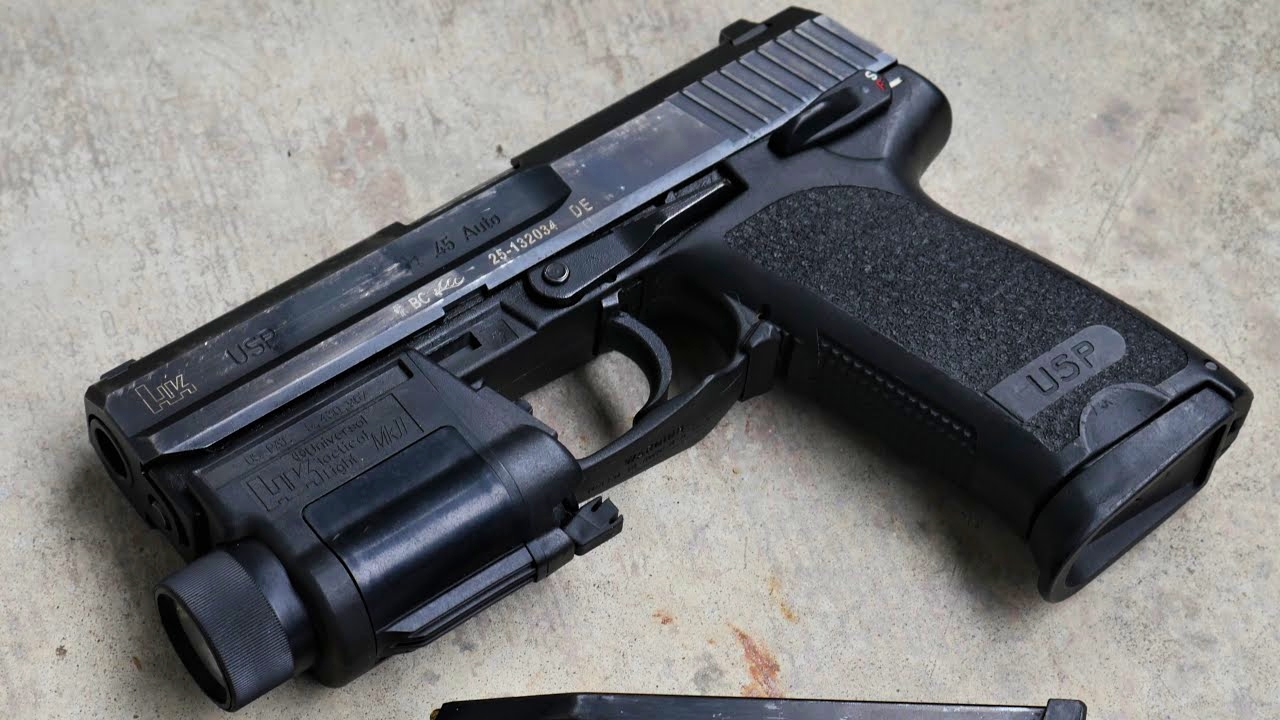
The H&K USP showed up and felt like something from the future. In the ‘90s, it had that overbuilt, “engineered like a tank” reputation, and the price tag made people want it even more. If you liked the idea of a pistol that could handle abuse, the USP was a strong pull.
The controls and variants also added to the mystique. Safety/decocker options, different trigger setups, and that H&K aura made it feel like a premium tool. Some buyers chased it because it looked and felt different than the mainstream crowd. Others wanted it because it carried a reputation for reliability that matched the era’s obsession with duty-grade gear.
Heckler & Koch Mark 23

The Mark 23 was the kind of handgun people chased more in their imagination than in their holster. In the ‘90s, it was famous for being massive, expensive, and tied to special operations lore. If you wanted the “ultimate” pistol, the Mark 23 sat on the top shelf like a trophy.
Most folks didn’t need it, but that wasn’t the point. It represented capability, durability, and a certain kind of gun nerd prestige. The size made it impractical for daily carry, but it was a range conversation starter every single time. In that decade, chasing a Mark 23 was chasing a legend—whether you ever bought one or not.
Colt 1991A1 / Series 80 Government Model

The 1911 never went away, but the ‘90s were a big time for people rediscovering it as a serious fighting pistol. Colt’s Government models—especially the 1991A1-era guns—were on a lot of wish lists because they carried the Colt name and that classic look.
You also had the practical shooting influence pushing the platform back into the spotlight. People wanted a .45 that felt like history but could still run modern defensive ammo and keep up at the range. Some buyers chased Colts because they wanted “the real thing,” not a copy. Others wanted a base gun to tune. Either way, Colt 1911s were absolutely part of the ‘90s chase.
Kimber Custom Classic

Kimber hit the ‘90s at the right time with 1911s that looked sharp and promised features people used to pay a smith for. If you wanted a 1911 that felt updated—better sights, tighter fit, modern styling—Kimber was suddenly the name getting whispered across gun counters.
A lot of buyers chased them because they wanted a 1911 that felt like it came ready to play. The look was clean, the marketing was everywhere, and the idea of getting a “custom” style pistol without waiting months was a big deal. Not every gun was perfect, but the brand’s momentum was real. In that decade, Kimber helped turn the 1911 into a fresh obsession again.
Smith & Wesson Model 686

Even with the semi-auto boom, the S&W 686 stayed on the chase list because it was the revolver people trusted. In the ‘90s, a stainless .357 with a good trigger and a strong frame felt like the safest bet in the world—especially if you grew up around wheelguns.
The 686 also shot well. You could run .38s all day, then load .357s when you wanted to remind yourself what recoil was. For home defense, woods carry, or range work, it covered a lot of ground. Buyers chased it because it had a reputation for durability and accuracy that didn’t depend on magazines or ammo sensitivity. It was a workhorse that still looked good doing it.
Smith & Wesson Model 29 / 629

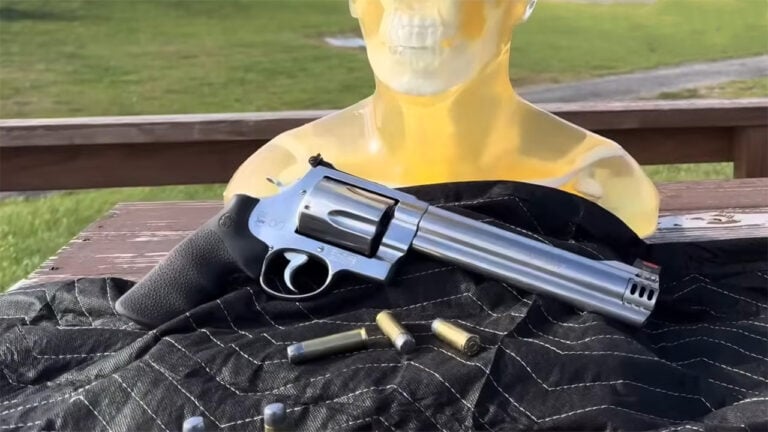
If you wanted power in the ‘90s, the Model 29 and stainless 629 were the revolvers people still talked about. The “Dirty Harry” effect didn’t disappear overnight, and a big .44 Magnum on the shelf had a gravitational pull that smaller guns didn’t.
A lot of buyers chased one for the experience as much as the capability. It was the gun you brought out when friends visited the range, the one that made you slow down and shoot deliberately. Sure, it wasn’t practical for most daily needs, but it wasn’t bought for practicality. In that decade, owning a 29 or 629 felt like owning a piece of American gun culture.
Ruger GP100

The Ruger GP100 earned its place in the ‘90s because it felt like it could survive anything. If you were the type who actually shot a lot of .357 Magnum, you heard the same thing over and over: the GP100 was built for it.
Buyers chased them because they wanted a revolver they didn’t have to worry about. The gun wasn’t delicate, and it didn’t pretend to be. It was a solid choice for a truck gun, a woods sidearm, or a range revolver that lived a hard life. In a decade full of new semi-auto options, the GP100 appealed to people who valued strength and simplicity, even if it wasn’t the fanciest thing in the case.
Ruger P89

The Ruger P89 wasn’t glamorous, but it was absolutely something people chased in the ‘90s for one big reason: it was affordable and tough. If you wanted a 9mm with decent capacity and you didn’t want to spend SIG money, the P89 made sense.
It also had that “Ruger built it like a brick” reputation. The gun was chunky, the trigger wasn’t winning beauty contests, but it usually ran. For a lot of buyers, that’s what mattered. You could buy one, buy ammo, and actually shoot it instead of babying it. In the ‘90s, the P89 was the kind of pistol that got recommended by the guy who cared more about function than flex.
CZ 75B

The CZ 75B was the sleeper pick that ‘90s shooters chased once they got a taste of it. It had that smooth, natural grip shape, a low bore feel, and accuracy that surprised people who only knew the big American and German names.
Part of the appeal was that it felt like a “smart” buy. You weren’t following the crowd—you were getting a pistol that shot well and carried a strong reputation among people who actually spent time on the range. It also had the versatility of DA/SA with the option to run cocked-and-locked if that’s your thing. In that decade, finding a CZ 75B often felt like discovering a secret that wasn’t going to stay secret.
Browning Hi-Power

The Browning Hi-Power was still getting chased hard in the ‘90s because it sat at the crossroads of classic design and real-world capability. Thirteen rounds of 9mm was still respectable, and the gun carried a pedigree that made collectors and shooters both pay attention.
People wanted them because they felt good in the hand and had that old-school steel vibe that was starting to feel rarer as polymer took over. A lot of buyers also chased the Hi-Power as a “one day I’ll own one” pistol—part history, part range pleasure. It wasn’t the newest design, but it didn’t need to be. In the ‘90s, a Hi-Power was the kind of gun that made you feel like you had taste.
Desert Eagle Mark VII / Mark XIX

The Desert Eagle was the ultimate ‘90s “because I can” handgun. It was huge, loud, and unapologetically ridiculous, which is exactly why people chased it. Between movies, magazines, and pure range theatrics, it became a symbol of excess that a lot of shooters wanted to experience firsthand.
Most owners weren’t buying it for practical reasons. You bought it because it was a statement. It also introduced a lot of shooters to the reality that big power comes with big tradeoffs—weight, ammo cost, and a gun that demands attention. But none of that stopped the chase. In that decade, the Desert Eagle was the handgun people wanted to shoot once, and a surprising number of them wanted to own forever.
Like The Avid Outdoorsman’s content? Be sure to follow us.
Here’s more from us: