

Photo credit: WildMedia/Shutterstock.com
Hog hunts have a way of turning “good enough” gear into a problem. Hogs move, they don’t always present clean angles, and the follow-up shot matters a lot more than people expect. When your firearm choice forces you into tiny targets, slow cycling, awkward handling, or marginal power, you raise the odds of a wounded boar in thick cover. That’s where hunts get tense fast.
None of this is meant to shame anyone’s favorite gun. Plenty of these models are solid in their lane. The issue is using them outside that lane, then acting surprised when the hunt gets messy. If you want safer, cleaner outcomes, start by avoiding picks that shrink your margin for error.
Ruger 10/22

The 10/22 is a classic for plinking and small game, and that’s exactly why it shows up on hog hunts in the hands of people trying to “make it work.” On hogs, .22 LR leaves you an extremely narrow window for a clean kill, and real hunts rarely give you perfect angles, perfect distance, and a calm animal.
The danger isn’t the rifle—it’s what it tempts you to attempt. When your only ethical shot options are tiny and unforgiving, you’re far more likely to wound and create a tracking job that pushes you into brush and darkness. A 10/22 can be fun all day, but it’s a poor tool for a tough animal that can soak up bad decisions.
Henry U.S. Survival AR-7

The AR-7 was built around portability, light weight, and stowing in a compact package. That mission comes with tradeoffs: tiny sights, light barrel profile, and a platform that was never intended for hard-hitting game. On hogs, those compromises show up fast.
If you’re chasing moving animals, trying to place shots precisely, and needing quick, confident follow-ups, the AR-7 puts you behind the curve. Add the fact you’re still working with .22 LR, and your margin for error gets thin enough to be dangerous. The AR-7 is neat for its intended role, but it’s a rough pick when the animal can bite back and the terrain won’t forgive a poor hit.
Heritage Rough Rider

A Rough Rider is a fun rimfire revolver. It’s also one of the easiest ways to convince yourself you’re “armed” while carrying a tool that doesn’t match the job. With .22 LR out of a handgun-length barrel, you’re giving up velocity and practical performance right when you need it most.
The other issue is pace. Single-action revolvers slow you down on follow-ups, and hog hunts often demand follow-ups. When a boar turns or disappears into cover, you don’t want to be cocking a hammer and hoping the next shot lands in a tiny vital window. A Rough Rider belongs at the range, on a trapline, or in the kit for pests. It’s a risky primary choice around hard-hunted hogs.
North American Arms .22 Mini-Revolver
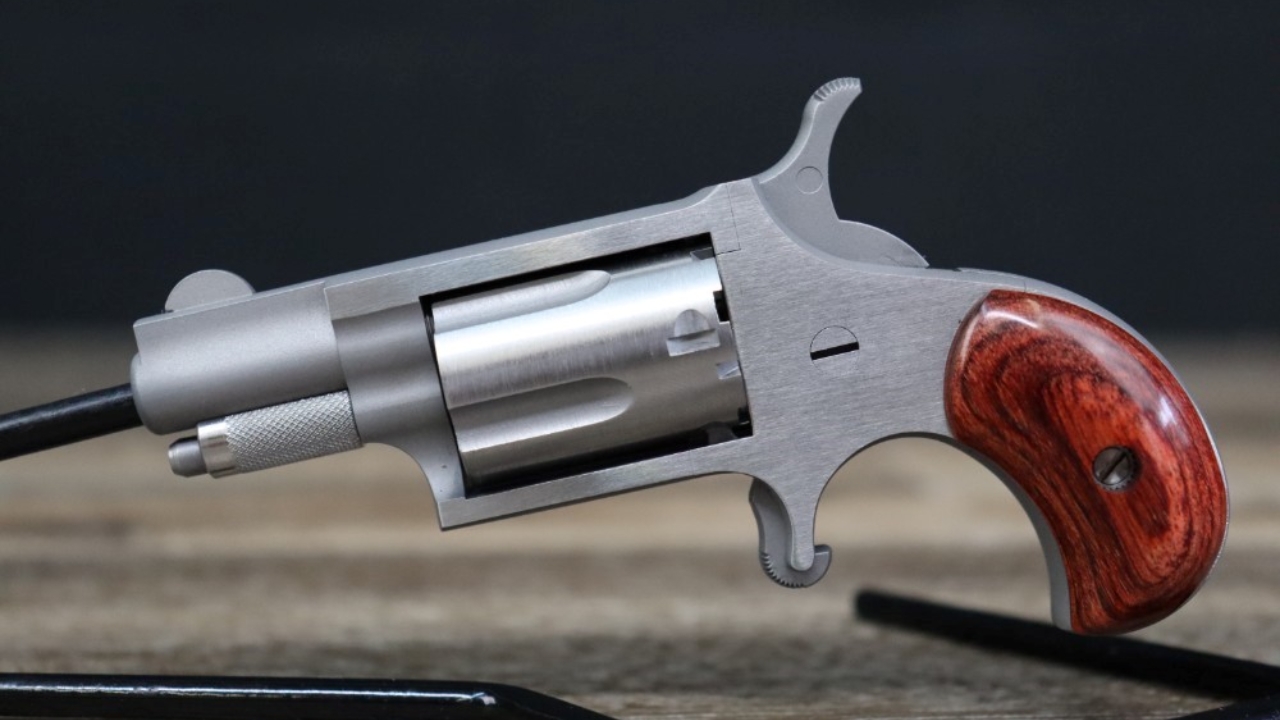
The NAA mini-revolver is an “always there” gun, and that’s its entire appeal. The problem is that “always there” turns into “I’ll use this,” even when the task is far beyond what it was built for. The grip is tiny, sights are minimal, and speed is limited. Accuracy under stress can be tough even at close range.
On hogs, .22 from a micro handgun puts you in a corner where nearly every real-world shot is a bad shot. If you’re forced into close distances or odd angles, you’re now relying on a cartridge and platform that demand near-perfect placement. That’s how you end up with a wounded boar and a long, unpleasant night. Carry it as a last-ditch option if you must, but don’t build a hog plan around it.
Ruger LCP II

The LCP II is popular because it disappears on your body, not because it shoots like a full-size handgun. That tradeoff matters when your target is a tough animal that may not stop quickly. The small grip and light weight can make recoil feel sharp, and the short sight radius magnifies mistakes.
On hogs, you want repeatable hits and fast follow-ups. A pocket .380 can struggle to give you both, especially when you’re shooting at an angle or through light brush. Even if the gun runs fine, the platform pushes you toward rushed shots and shallow performance. The LCP II is built for discreet carry against human threats at close range. Using it as a hog solution raises the chance you’ll be tracking instead of recovering.
Kel-Tec P-3AT

The P-3AT helped define the ultra-light .380 pocket pistol category. It’s also a model that highlights why ultra-light pistols can be a bad choice for hog hunting. When a handgun is tiny and light, it can be harder to control, harder to shoot accurately, and less forgiving when your grip isn’t perfect.
Hog encounters don’t always happen when you’re set up like a range lane. You might be kneeling, twisting, shooting around brush, or moving with other hunters. A pistol that demands ideal technique can betray you when the moment gets hectic. Even with good ammo, you’re still dealing with .380 limitations on a durable animal. If you carry a P-3AT for daily life, that’s one thing. Making it your hog answer invites trouble.
Smith & Wesson Bodyguard 380

The Bodyguard 380 carries easily and rides well in a pocket holster, but it can feel like a handful once you start firing fast. The long trigger pull and small grip can slow accurate follow-ups, and those follow-ups are where hog hunts often get decided.
The real risk is confidence mismatch. The gun feels comforting because it’s there, and that comfort can push you into taking shots you wouldn’t take with a better tool. On a hog, marginal placement can mean a wounded animal that disappears into thick cover. That’s not the place to learn that micro pistols are harder to shoot well than people admit. The Bodyguard is a carry gun. Treat it like one, and keep your hog setup built around control and dependable performance.
Glock 42

The Glock 42 is one of the softer-shooting .380 pocket options, and it’s easy to understand why people bring it along. Even so, it’s still a small pistol in a small cartridge. When hogs are moving or quartering, you may not get the straight, broadside look you want, and that’s where .380 starts to feel thin.
A lot of hunters also underestimate how much shooting changes under stress. The sight picture gets rushed, the grip gets sloppy, and hits land where they shouldn’t. With a larger cartridge and a larger handgun, you can sometimes muscle through small mistakes. With a micro .380, mistakes get punished. The Glock 42 is a great deep-carry tool for people who shoot it well. It becomes a risky hog gun when it replaces a purpose-built hunting setup.
Taurus Judge

The Judge is famous, and it draws hunters who like the idea of a revolver that can throw .410 and .45 Colt. The problem is that many people lean on the .410 side of the equation with loads that don’t deliver reliable, deep performance on a hog. It can create the illusion of effectiveness at close range while failing to put decisive damage where it needs to go.
There’s also the handling side. The Judge is bulky for what it offers, and many shooters don’t practice enough with it to run it well under pressure. When a boar shows up fast, you don’t want to be guessing how your chosen load behaves or hoping the spread does the work. If you want a revolver for hogs, pick a setup that’s predictable and gives you strong, repeatable results. The Judge can be fun, but it’s a common pick that can lead to messy outcomes.
Smith & Wesson Governor

The Governor has the same temptation as the Judge, plus the option of .45 ACP. That sounds versatile, but versatility can become confusion if you aren’t disciplined. Many owners carry mixed loads, switch shells around, and never build a clear idea of what the gun does best. On hogs, unclear planning turns into poor shots.
The .410 angle is still the big issue. People expect it to act like a short shotgun, then get surprised by inconsistent patterns and shallow effect when they’re counting on a quick stop. The Governor is also large, and the size can trick you into thinking it’s easier to shoot than it really is. If you run it with a serious, proven load and practice, it can work. The risky part is the way most folks actually use it: as a novelty that gets promoted into a hunting role.
Mossberg 590 Shockwave

The Shockwave looks like it was made for close-quarters work, and that look sells a lot of them. The issue is that the short, bird’s-head grip format is harder to control than a stocked shotgun, especially when you’re trying to put precise hits on a moving hog. Recoil management and follow-up speed tend to suffer for most shooters.
Hog hunts often happen in low light or in tight cover, which is exactly where you want controllability and a consistent mount. A stocked shotgun gives you that. A Shockwave often gives you awkward angles and slower recovery between shots. It can be handled safely with training, but many hunters buy it because it seems handy, then discover it’s harder to run well than it appears. When the animal is close and the pace is fast, awkward handling becomes real risk.
Remington TAC-14

Like the Shockwave, the TAC-14 trades a shoulder stock for compactness. Compactness sounds good in brush, but the cost is stability and accuracy under stress. If you don’t have a solid mount, your sights aren’t where they should be, and your shots land wider than expected. That’s how you create wounded hogs.
The TAC-14 also tends to encourage “point shooting” habits. That might feel fine on steel plates, but hog vitals aren’t big, and angles change quickly. A proper, stocked shotgun makes it easier to be precise and fast at the same time. With a TAC-14, most people end up being neither. It’s not that the gun cannot work—it’s that it demands a level of practice many hunters won’t put in. In the real world, that gap shows up at the worst time.
Hi-Point 995TS Carbine

The 995TS is popular because it’s affordable and it runs on common 9mm ammo. The problem for hog hunts is that 9mm out of a carbine still isn’t a dedicated hog performer, especially when you’re dealing with bigger animals and imperfect angles. You can get good results with careful shot placement, but hog hunts don’t always allow careful.
The other risk is how people treat it: as a “cheap beater” they don’t train with much. They’ll sight it loosely, grab whatever ammo is around, and head out. That approach might still punch paper fine, but it’s a recipe for mediocre hits in the field. A wounded hog is not a cheap problem. If you choose a 9mm carbine for hogs, you need disciplined ammo choice and realistic distance limits. The 995TS often gets used the opposite way.
Kel-Tec SUB-2000

The SUB-2000 is clever: folding design, pistol mags, light weight. Those strengths can also become weaknesses when you’re hunting. The sight setup is basic, the ergonomics are quirky, and many shooters find it slower to get a solid cheek weld and consistent sight picture than with a traditional carbine. On a fast-moving hog, inconsistency shows up as misses or marginal hits.
A folding gun also tends to ride in packs or vehicles until it’s needed, which sounds handy. In practice, that can lead to rushed deployment and rushed shots. When hogs pop out close and moving, you want your gun ready and your handling automatic. If you’re still settling the gun, adjusting your head position, or fighting the trigger, you’re behind. The SUB-2000 is a solid utility carbine for many roles. It becomes a risky hog choice when you treat it like a quick fix for a hunt that demands repeatable accuracy.
Ruger Wrangler

The Wrangler is a fun rimfire revolver with a price that invites casual ownership. That casual vibe is what makes it dangerous in a hog context. A .22 single-action revolver demands careful placement, and hog hunts rarely give you time and angles that favor careful placement. You’re also fighting a slower manual of arms when a follow-up shot matters.
The Wrangler’s fixed sights and short barrel don’t help you stretch distance or refine hits under pressure. In low light, it’s even tougher. When a hog turns, drops into brush, or starts moving toward cover, you don’t want to be relying on a rimfire revolver to end the situation quickly. If the Wrangler is along as a plinking gun at camp, fine. When it becomes part of the hog plan, you’re taking on risk that doesn’t need to be there.
Like The Avid Outdoorsman’s content? Be sure to follow us.
Here’s more from us:


