
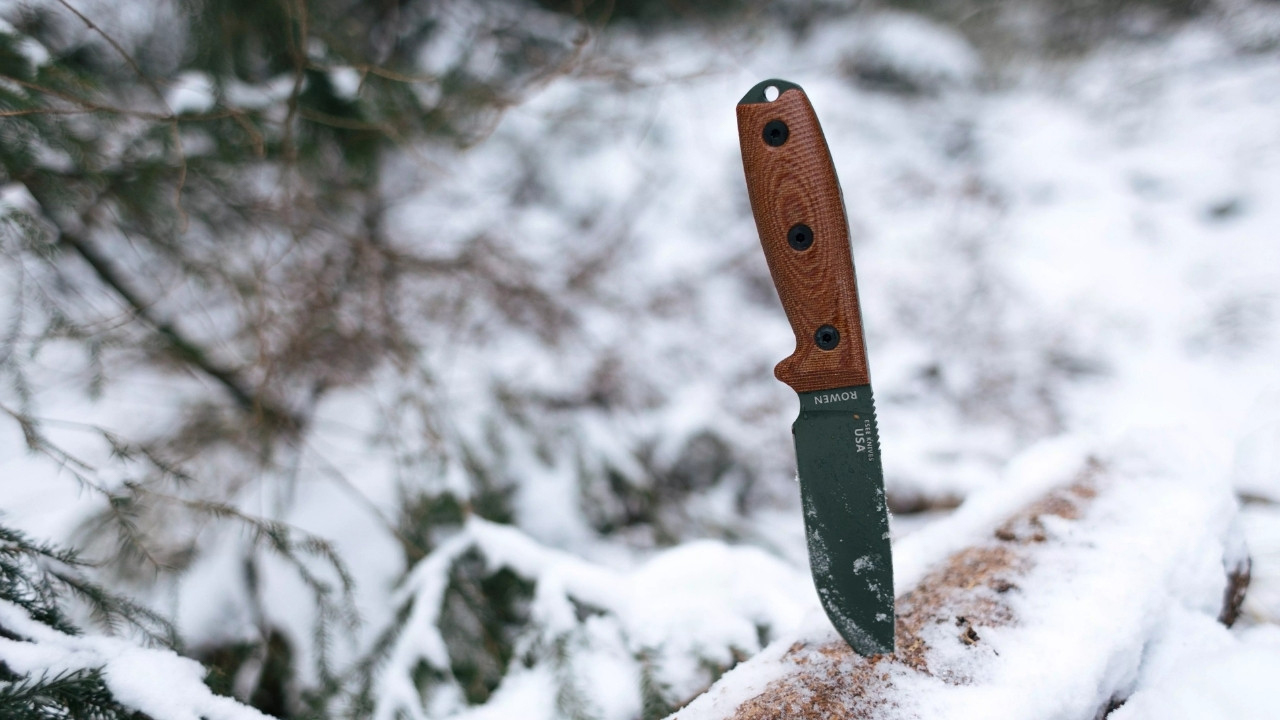
Photo credit: Knives and Tools
No knife is literally “chip-proof.” If you slam a thin edge into hard bone at a bad angle, you can damage anything. But some knives are way more forgiving when you make that mistake — mostly because of tougher steels, smarter heat treats, and thicker edge geometry that won’t turn a small bone tap into a ruined edge. These are specific knives hunters lean on when they want a blade that can take a little ugliness without falling apart.
ESEE 4 (1095)

The ESEE 4 is a classic “take the hit and keep working” knife. 1095 isn’t a trendy super steel, but it’s tough, it’s predictable, and it doesn’t have that fragile, glassy edge feel some high-hardness steels can get. The blade stock and overall geometry also help—it’s not a thin slicer meant for perfect cuts only. When you bump a rib or scrape a joint, you’re far more likely to get a little edge rolling you can touch up than a nasty chip you can’t ignore. It’s also easy to field sharpen, which matters when you’re mid-job.
ESEE 5 (1095)

If you want even more margin for error, the ESEE 5 is built like a brick. It’s thicker, more wedge-like, and generally more tolerant of ugly contact because the edge isn’t trying to be a razor-thin laser. That thicker geometry is exactly what helps when you hit bone: the edge has more “support” behind it, so it’s less likely to fracture. You won’t get the slickest slicing knife on earth, but you do get a tool that keeps cutting after mistakes. For hunters who are hard on knives or process in rough conditions, this is one of the safest bets.
KA-BAR Becker BK2 Campanion (1095 Cro-Van)

The BK2 has a reputation for being overbuilt, and that’s a good thing in this context. It’s thick, tough, and not fragile at the edge, so accidental bone contact usually doesn’t turn into edge chipping drama. The tradeoff is it’s not a super efficient slicer for delicate work, but it shines when you need a knife that can take bad angles and heavy pressure without feeling like it’s going to punish you. If you’re the type who sometimes ends up “levering” a cut a little (even when you shouldn’t), the BK2 forgives more than most.
Cold Steel SRK (SK-5)

The SRK in SK-5 is a workhorse choice that tends to be more forgiving than a lot of harder, more brittle steels. SK-5 isn’t glamorous, but it’s tough enough to handle real hunting chores and the occasional “oops” moment around cartilage and bone. The SRK’s blade shape and thickness help too—it’s not ground paper-thin. If you hit bone, you’re more likely to see a little rolling or a minor flat spot that sharpens out quickly, instead of a chunk missing from the edge. For the money, it’s one of the better “abuse-tolerant” options.
Morakniv Garberg (stainless or carbon)

The Garberg is a fixed blade that punches above its weight because it’s simple, sturdy, and easy to maintain. It’s not built on brittle, high-hardness hype. It’s built to work. Bone contact is exactly where that practicality shows up. The edge tends to be more forgiving than super thin, high-performance slicers, and the knife is easy to bring back with basic sharpening gear. It’s not a cleaver and it’s not a pry tool, but for real processing where you might bump bone, it’s a steady performer that doesn’t fall apart on small mistakes.
Ontario RAT-5 (1095)

The RAT-5 is another “honest steel, honest geometry” knife that hunters keep using because it behaves predictably. 1095 can take a lot of abuse without chipping out like some high-carbide steels, especially when the edge isn’t ground too thin. That matters when you hit bone unexpectedly or when you’re working fast and your cuts aren’t perfect. You may still dull the edge faster than a premium steel, but dulling is usually a better failure mode than chipping. Touch-ups are quick, and the knife keeps moving.
TOPS B.O.B. (Brothers of Bushcraft) (1095)

TOPS knives are typically built for real-world use, and the B.O.B. is a solid example. The thicker spine and tougher, simpler steel are a good combo for resisting chips when you hit hard stuff. The knife isn’t trying to be a scalpel—so it doesn’t punish you the same way a thin, high-hardness knife can when it hits bone at a bad angle. This is the type of blade that tends to take “field ugly” better: gritty hide, cartilage, occasional bone contact, and less-than-perfect technique.
Bark River Bravo 1 (CPM 3V version)

If you want a premium option that’s known for toughness, the Bravo 1 in CPM 3V is a strong pick. 3V is popular in hard-use knives because it’s built for impact toughness compared to many “edge retention first” steels. That toughness helps reduce the chance of chipping when you get accidental bone contact or you put a little side load into a cut. The Bravo 1 also tends to have a geometry that supports the edge well. You can still damage any knife with enough bad luck, but this one is far less likely to punish a small mistake.
Bark River Gunny (CPM 3V version)

Same toughness story as the Bravo 1, just in a handier size for actual processing. A smaller, controllable blade can reduce mistakes in the first place, and 3V gives you that “forgiving” feel when you do bump something hard. The Gunny is often a nice middle ground: it cuts efficiently enough for meat work but doesn’t feel like a fragile slicer that can’t take real contact. If you want one knife that behaves well in the field and doesn’t get dramatic around bone, this model is worth looking at.
Fallkniven F1 (laminated VG10)

The F1’s laminated construction is part of why people trust it in rough use. It’s designed to be a survival-style knife that holds together under real stress, and it generally behaves better than thin, brittle slicers when it hits harder material. Bone contact is a situation where you want controlled geometry and a blade that doesn’t “micro-chip” easily. The F1 isn’t a dedicated boning knife, but it’s a very solid “do work” blade that tends to handle accidental contact without turning into a mess. Keep the edge at a sensible angle and it stays forgiving.
Buck 119 Special (420HC)

This is a sleeper choice for this exact problem. Buck’s 420HC, with their heat treat, is usually more forgiving than people expect. It may not win edge retention contests online, but it tends to roll and dull before it chips badly, which is often what you want when you hit bone. The 119’s classic hunting shape is also familiar and controllable. If you want a knife that behaves predictably and sharpens back fast, especially for traditional field dressing, this one keeps earning its place.
Condor Bushlore (1075)

1075 is a tough, simple carbon steel that usually doesn’t chip easily because it’s not chasing extreme hardness. The Bushlore is built like a working knife, and it handles the “dirty reality” of outdoor cutting better than a lot of sleek, thin blades. If you bump bone, you’re more likely to dull the edge or roll it slightly than lose chunks. That’s a win in the field because it’s fixable fast. It’s also a knife you won’t baby, which means you’ll actually use it confidently instead of tiptoeing around every cut.
Helle Temagami (triple-laminated steel)

Helle’s laminated blades are known for being smooth cutters that still have a lot of toughness built in. For processing tasks, that combination can be useful: you get good slicing ability without the “fragile edge” feel you can run into with some higher-hardness steels and thin grinds. Bone contact still isn’t ideal, but these knives often handle minor mistakes without catastrophic chipping. The Temagami in particular is a solid outdoors blade that does well when your cuts aren’t perfectly clean and you need a knife that stays predictable.
Spyderco Waterway (LC200N)

LC200N is a corrosion-resistant steel with a reputation for toughness and stability in real use. It’s not an “edge retention monster,” but it’s a very practical steel that tends to behave well when you hit hard stuff. The Waterway is a fixed blade designed with wet, messy work in mind—fish, meat, and cleanup scenarios where corrosion and maintenance matter. When you accidentally scrape bone or hit something harder than expected, you’re less likely to see those annoying brittle chips you get from steels that prioritize hardness over toughness.
Cold Steel Master Hunter (VG-10 San Mai)

Another tough, field-focused option with a design that’s been used for hunting work for a long time. The Master Hunter’s construction and geometry are built around being a dependable cutter that doesn’t fall apart when conditions get messy. Bone contact can still dull any edge, but this style of knife is generally more forgiving than ultra-thin, high-hardness blades that chip when you look at them wrong. It’s a good choice for hunters who want a blade that feels sturdy and dependable in the hand, not delicate.
Like The Avid Outdoorsman’s content? Subscribe to our newsletter so you never miss an article.
Here’s more from us:


