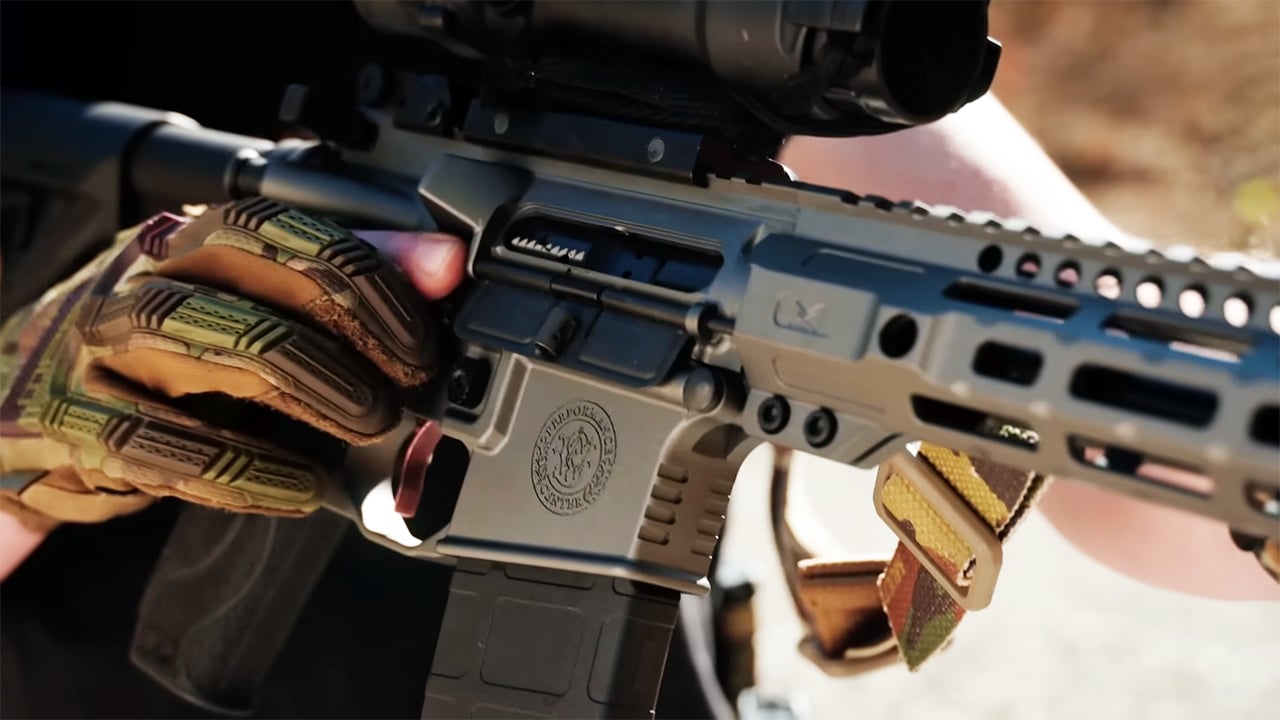
Photo credit: Smith & Wesson/Youtube
The gun owner had been talking up his rifle.
That is what made the whole thing hurt.
It was not just a quiet little malfunction nobody noticed. He had his friends there. A bunch of them. He had been telling them how much he liked the quality of his M&P-15, probably doing the usual proud-owner routine before a range day. You know the one. Good rifle, good setup, good choice, worth the money.
Then he stepped up to the line and the rifle basically came apart.
In a Reddit thread, gun owners were sharing their most embarrassing firearm moments. One commenter said that when he first got his AR-15, he did not realize that changing the buttstock meant he needed to watch for the rear takedown pin detent falling out.
That is a tiny part with a big job.
For someone new to ARs, it is easy to underestimate how much those small springs, pins, and detents matter. They do not look impressive. They do not feel like the heart of the rifle. They are the kind of little pieces that disappear into carpet, bounce across a bench, or vanish on a work table while you are focused on the larger parts.
But if one goes missing, the rifle may not stay together the way it should.
That is what happened here.
He said the detent fell out when he changed the buttstock, but he never saw it go. Since it is such a small part, it slipped away without him realizing anything was wrong. He put the rifle back together, put the rear takedown pin back in, and stored it in the safe for an upcoming range day.
That is the dangerous part of small mistakes. Everything can look “close enough” until the gun is actually handled.
When range day came, he had about eight good friends there, ready for a fun shoot. The pressure was already built in. Nobody wants to look clueless in front of a crowd, especially after spending 15 minutes praising the rifle. He walked up to the line with the AR, raised it, and did not notice the takedown pins were missing.
Somehow, the rifle had stayed together up to that point.
Then he reached for a magazine, inserted it, and tapped the bottom.
The entire upper fell off.
That is the kind of moment where the world slows down for the wrong reason. One second you are the guy with the nice rifle. The next second you are staring at your AR in pieces while your friends are standing there watching the confidence drain out of your body.
He said he just sat there staring in disbelief.
Honestly, that feels about right.
The embarrassment was obvious, but the better ending was hidden inside it: the rifle fell apart before he fired it. That matters. A firearm revealing a problem before a live round goes off is embarrassing, but it is also a gift. If something is assembled incorrectly, missing parts, or not retaining the upper and lower properly, finding out with an empty rifle on the line is much better than finding out under recoil.
The commenter said he was glad it ended with the gun falling in half before he shot it instead of “literally blowing in half” after he shot it. That may be a little dramatic mechanically, but the instinct was right. When a gun is not assembled correctly, you stop. You do not try to force it, laugh it off, or keep shooting because your buddies are watching.
You figure out what failed.
The story is funny because nobody got hurt and the rifle chose the most humiliating possible timing. But it is also useful because it shows how small AR parts can create big headaches. The rear takedown pin detent and spring help keep that pin retained. When that system is not right, the pin can walk out or fail to stay where it belongs. If the pins are not retaining the upper and lower properly, the rifle is not ready to fire.
That is not a cosmetic issue.
It is also a reminder that any modification deserves a function check. Changing a buttstock, grip, trigger, buffer tube, handguard, or anything else may involve parts under spring tension or small components that are easy to lose. Once the work is done, the rifle needs to be checked before it goes into the safe and definitely before it goes to the range.
Do the pins stay in? Does the safety work? Does the trigger reset? Does the bolt cycle? Does the magazine seat? Does the upper lock to the lower? Are there extra parts on the bench that should not be extra?
That last question is always worth asking.
The guy’s mistake was embarrassing because it happened in front of friends after he had bragged on the rifle. But it was also a clean lesson. One tiny missing detent turned the whole gun into a public demonstration of why assembly details matter.
He thought he was about to show off his AR.
Instead, the AR showed everyone what he forgot.
Commenters understood the embarrassment because almost everyone who works on guns has lost a spring, pin, or tiny part at some point.
Several people in the thread reacted to the broader theme of range-day humility. The whole post was full of stories about guns biting people, parts flying off, and shooters learning lessons in front of witnesses. That made the AR story fit right in: a small mechanical oversight becomes a full public humbling.
The practical takeaway was clear. When changing AR parts, especially anything near the buffer tube, stock, or rear takedown pin area, watch the detents and springs. They are easy to lose and easy to underestimate, but they keep important controls working the way they should.
Others would likely point out that a function check after any modification is not optional. Before the rifle goes into the safe or to the range, check the takedown pins, safety, trigger, reset, and general assembly. If something feels loose or looks off, stop and fix it before live fire.
The best part of the story was that the rifle failed before anyone pulled the trigger. Embarrassing? Absolutely. But a gun falling apart in front of friends is still a much better lesson than a gun failing under recoil with live ammo in the chamber.