Photo credit: Vortex Nation/YouTube
A lot of recoil talk is exaggerated, but recoil still matters when you’re trying to shoot well off sticks, on a steep hillside, or late in the season when you’re bundled up and tired. The best “hit hard without punishing you” rifle rounds tend to land in a sweet spot: enough bullet weight and sectional density to penetrate and break bone, enough velocity to make expansion reliable, and a recoil level that lets you practice without developing bad habits.
You don’t need a shoulder-thumper to kill cleanly. You need a cartridge you’ll actually shoot a lot, and a bullet that matches the animal and the distance. These are the rounds that keep showing up in freezers because they’re effective, manageable, and honest.
6.5 Creedmoor

The 6.5 Creedmoor hits harder than its recoil suggests because it drives efficient bullets that penetrate well and hold velocity. On deer-sized game, it’s flat enough to be forgiving and calm enough to let you spot impacts, which makes you more effective than a louder, harder-kicking setup.
Where it really shines is consistency. With a good hunting bullet, you get reliable expansion and straight-line penetration without needing magnum speed. In a normal-weight rifle, recoil stays mild, and that means you’ll practice more and shoot better under pressure. It’s not a magic wand for every animal at every distance, but for deer, pronghorn, and even elk with smart bullets and reasonable shots, it’s a hard cartridge to argue with.
7mm-08 Remington

The 7mm-08 is one of the easiest “serious hunting” rounds to shoot well. It gives you more bullet weight than the 6.5 crowd usually runs, and it does it with recoil that stays comfortable in most rifles. You get a cartridge that carries energy cleanly and penetrates in a way that surprises people who only judge by caliber size.
It also behaves in the real world. Factory ammo is common, accuracy is usually good, and it doesn’t need long barrels or finicky setups to perform. For deer and black bear it’s a hammer, and with the right bullet it’s also a very workable elk round inside sane distances. Most hunters shoot it better than bigger cartridges, and better shooting is what makes hard hits happen.
.308 Winchester

The .308 has been knocking animals down for decades because it’s balanced. You get a .30-caliber bullet with plenty of weight options, dependable performance, and recoil that most hunters can manage without flinching. It’s not a magnum, but it doesn’t need to be when the bullet lands where it should.
In practical rifles, the .308 is often easier to live with than the “faster” cartridges because it’s predictable. It doesn’t require long barrels to work well, and it tends to shoot accurately with a wide range of factory loads. If you want one round that covers deer, hogs, and black bear—and can stretch to elk with a tough bullet—the .308 does it without making range days miserable. That’s why people stick with it.
.270 Winchester

The .270 Winchester has always been a “hits harder than it feels” round because it shoots flat and drives bullets fast enough to open reliably, yet recoil stays moderate. It carries energy well for its recoil level, and it’s one of those cartridges that makes you look better than you are when you’re shooting across a cut field or a canyon.
The .270 also wins on availability and practicality. It’s easy to find ammo, easy to tune a rifle around, and it tends to be accurate without drama. With modern bullet choices, it’s more versatile than people give it credit for. Deer and pronghorn are easy work, and it can handle elk with a controlled-expansion bullet and good shot placement. You get real reach without paying the recoil bill that many magnums charge.
.30-30 Winchester
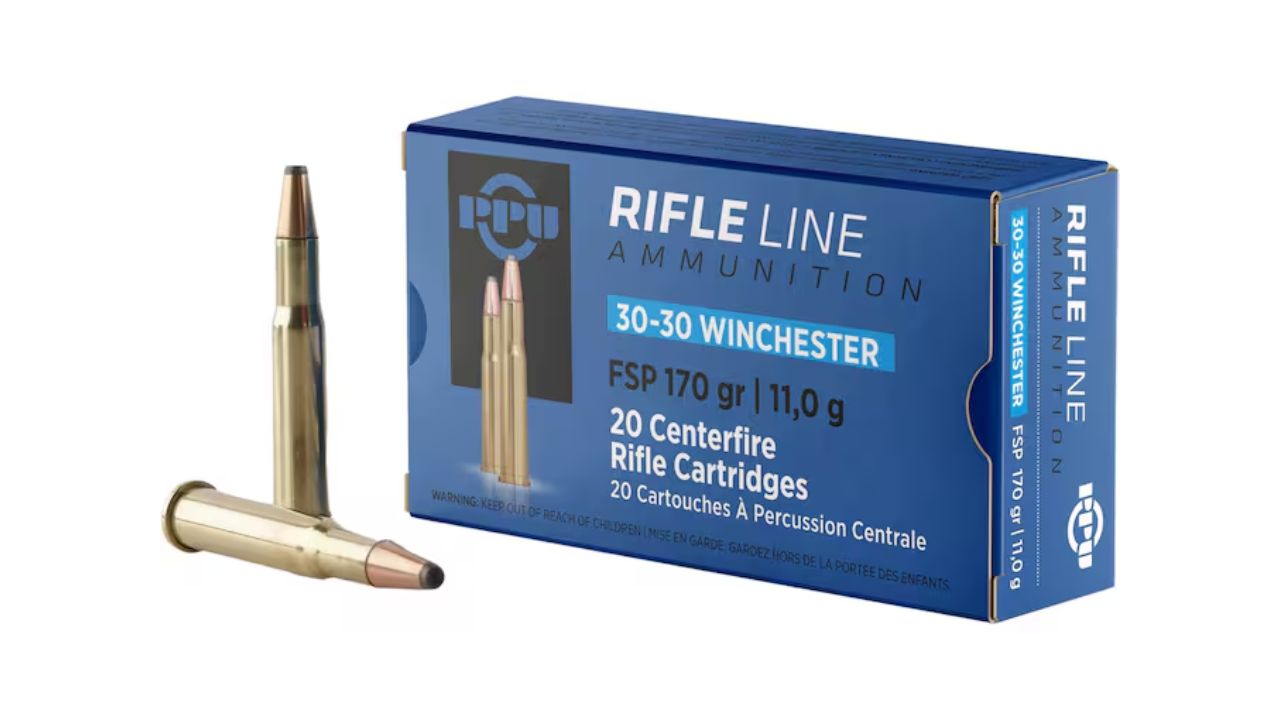
A .30-30 doesn’t hit like a magnum on paper, but it hits hard where it counts—inside typical woods ranges—without punishing recoil. It’s a cartridge built around real hunting distances, and the mild recoil encourages fast, accurate shooting in awkward positions. That’s why it keeps filling tags year after year.
At 100 yards and in, a .30-30 with a quality hunting load can be decisive on deer and hogs. It penetrates well, punches through brush-country angles, and doesn’t beat you up in a lightweight lever gun. It’s also easy to carry, which means it’s there when you need it. If your hunting is thick cover and quick shots, the .30-30 gives you hard hits without the shoulder slap, and that’s not outdated—it’s practical.
.300 Savage

The .300 Savage is an old-school cartridge that still makes sense if you want .30-caliber authority without magnum recoil. It sits in a useful space: more punch than the mild intermediate rounds, less recoil and blast than bigger .30-caliber options. It’s a cartridge that kills cleanly because it sends a sensible bullet at sensible speed.
What holds it back is availability compared to .308, but performance is real. In classic deer rifles, it’s often very shootable, and the recoil stays comfortable. It’s especially good for hunters who like traditional rifles and hunt inside normal ranges. When you’re not chasing long-distance numbers, you start appreciating cartridges like the .300 Savage that put bullets where you aim without turning practice into a chore. It’s still a legitimate “hit hard, shoot easy” round.
6.5×55 Swedish

The 6.5×55 has been proving itself on game for more than a century because it penetrates like it means it and recoils like it’s being polite. It pushes long, efficient bullets that carry momentum and slip deep. That combo makes it feel mild on the shoulder while still delivering the kind of terminal performance hunters respect.
In the field, it’s a steady, confidence-building cartridge. It’s accurate in a lot of rifles, and it doesn’t demand high pressure or loud blast to work well. On deer it’s excellent, and it has a real track record on larger game with proper bullets and reasonable distances. The biggest drawback is that factory ammo can vary depending on the rifle and market, but the cartridge itself is the real deal. It’s one of the best answers to “hard hit, soft recoil.”
.257 Roberts

The .257 Roberts is a classic for a reason: it’s easy to shoot, flat enough for open country, and surprisingly effective on deer-sized game when you use good bullets. Recoil is mild, which keeps you honest on the trigger and lets you practice without dreading the next shot.
This round shines for hunters who want performance without drama. It’s especially good for deer and pronghorn where you might take a longer shot and still want a manageable rifle. You’re not using it to smash through heavy bone on elk, but within its lane it kills cleanly and predictably. The downside is that it’s not as common on every store shelf as mainstream cartridges, yet the performance is why it keeps a loyal following. If you like efficient rounds that don’t beat you up, the .257 Roberts still earns its spot.
.243 Winchester

The .243 Winchester is the definition of “shoot it well and it works.” Recoil is light, the cartridge is flat-shooting, and it’s easy for most hunters to stay calm behind the rifle. When you’re trying to place a bullet precisely, low recoil is a real advantage, not a weakness.
With the right bullet, the .243 is excellent for deer and pronghorn, and it’s a favorite for new hunters who need confidence without flinch. The key is bullet choice—use a purpose-built deer bullet, not a fragile varmint load, and keep your shot angles realistic. It won’t do what a .30-caliber does on tough animals, but it doesn’t have to. For the game it’s meant for, it hits hard because you hit where you mean to. That’s the whole point.
.350 Legend

The .350 Legend is a modern “practical power” round that gives you a heavier bullet and respectable energy with recoil that stays friendly. In the deer woods, it hits with authority, and you don’t need to be a recoil junkie to shoot it well. That’s exactly why it took off in straight-wall states and beyond.
It’s not a long-range cartridge, and it doesn’t pretend to be. Inside normal hunting distances, it delivers a solid, clean punch without the blast and shoulder slap of bigger rounds. It’s also easy to suppress and easy to run in handy rifles, which keeps the whole setup comfortable. If you’re hunting deer and hogs in thick cover or on smaller properties, the .350 Legend gives you hard hits without making practice unpleasant. It’s a round built for real-world hunting.
.45-70 Government (in heavier rifles)

The .45-70 can be a brute or it can be surprisingly manageable, and the difference is the rifle weight and the load choice. In a solid lever gun with sensible hunting loads, recoil can be more of a strong push than a sharp slap. You get big-bore authority without needing high velocity, and that’s what makes it effective up close.
On game at woods ranges, it hits hard in a way you can feel through the results. Penetration is excellent, and it handles steep angles well. The trick is not chasing the hottest loads unless you truly need them. Run traditional pressure loads or modern “middle ground” loads in a sturdy rifle and you get a cartridge that’s powerful without being punishing. It’s not your 300-yard specialist, but for thick cover and big-bodied animals, it’s a classic that still earns respect.
.260 Remington

The .260 Remington is a sleeper that does much of what the 6.5 Creedmoor does—efficient bullets, good penetration, solid downrange behavior—with recoil that stays light. It’s easy to shoot well, which is why people who actually spend time behind one tend to keep it.
It’s an especially good choice for hunters who want a mild cartridge that still feels “serious.” With a quality hunting bullet, it handles deer and pronghorn cleanly, and it’s capable on elk within reasonable distances when you pick a tough bullet and place it right. The reason it’s underrated is mostly timing and marketing, not performance. If you want a round that hits above its recoil class and you don’t need the most popular label in the store, the .260 Remington is a smart, effective option.
.25-06 Remington

The .25-06 is a fast, flat, deer-and-pronghorn specialist that stays surprisingly comfortable to shoot in a normal hunting rifle. Recoil is moderate, and the cartridge rewards clean trigger work because the trajectory makes ranging errors less punishing. When you’re hunting open country, that matters.
This round is at its best when you use sturdy hunting bullets that hold together and drive deep. It’s not a sledgehammer for the largest game, but it’s a very effective round for deer-sized animals, and it hits with more authority than people assume because it delivers speed and good bullet construction. It also tends to be accurate, and accuracy you can actually use is what makes a cartridge feel powerful. If you want reach without getting slapped around, the .25-06 belongs in the conversation.
.280 Remington

The .280 Remington is a near-perfect balance for hunters who want a little more than the .270 class without stepping into hard-kicking magnum territory. It offers excellent bullet options, strong downrange performance, and recoil that stays manageable in most rifles. That makes it a cartridge you can practice with and still trust on bigger animals.
In real hunting terms, it’s flexible. It works for deer and pronghorn with standard loads, and it scales up to elk with tougher bullets while keeping recoil reasonable. It’s also a cartridge that tends to shoot well once you find what your rifle likes, and it doesn’t require gimmicks to perform. The only real downside is that it’s not as universally stocked as the big household names, but performance is why it keeps fans. It hits hard, and it lets you shoot like you mean it.
7×57 Mauser

The 7×57 Mauser is a classic that keeps earning respect because it’s efficient and easy to shoot. It pushes 7mm bullets that penetrate well, and it does it with recoil that stays comfortable. Hunters have been taking large game with it for a long time, and the reason is simple: it works without beating you up.
This round is at its best in practical hunting ranges where bullet placement and penetration matter more than raw speed. With a good modern hunting bullet, it handles deer and black bear cleanly, and it can be used on elk with smart choices and disciplined shot placement. It’s also a cartridge that tends to feel “smooth” when you shoot it—less bark, less snap, more control. If you value shootability and real-world effectiveness, the 7×57 still makes a lot of sense.
Like The Avid Outdoorsman’s content? Subscribe to our newsletter so you never miss an article.
Here’s more from us: