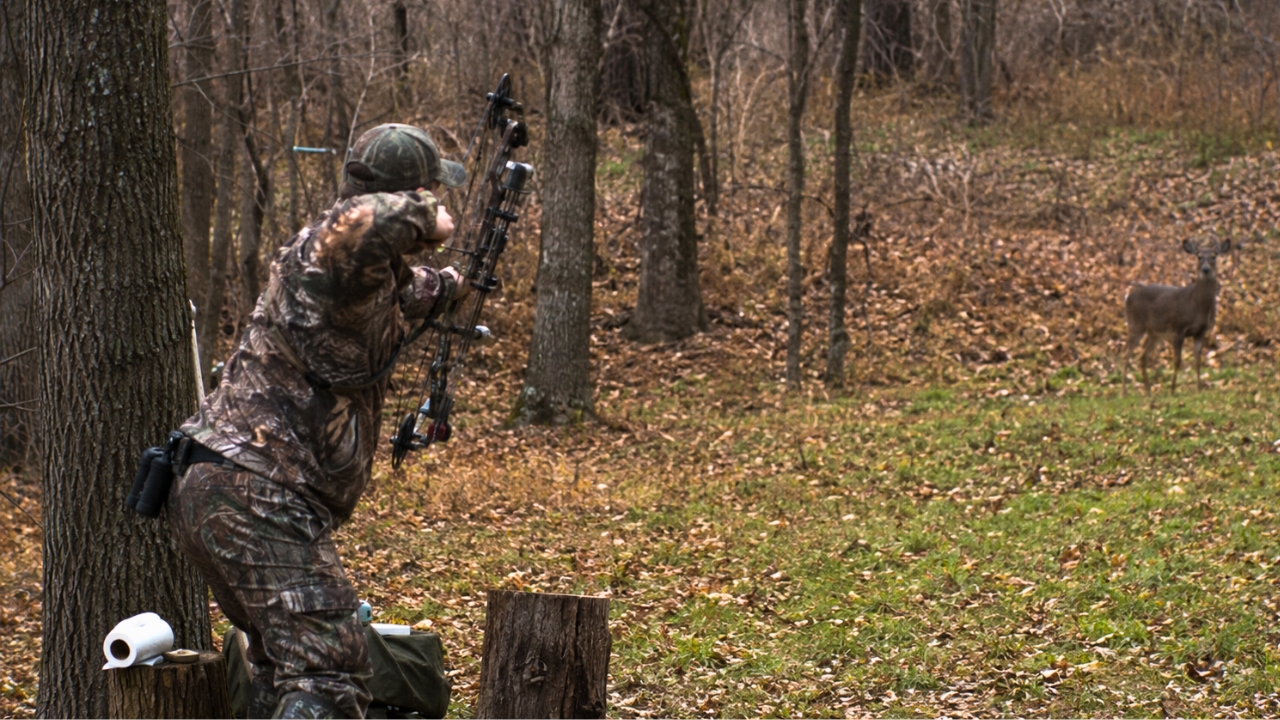
Photo credit: The Avid Outdoorsman
The bowhunter picked the worst possible time to set his bow down.
Not on purpose, obviously. Nobody plans it that way. You sit for hours with nothing happening, fighting the quiet, watching the same lanes, trying not to move too much. Then the second you finally decide you can relax for a minute, the woods decides to make you pay for it.
That is exactly how this went.
In a Reddit thread, hunters were sharing funny mistakes from the field, and one story involved a bowhunter who set his bow down for a bathroom break. Naturally, that was when a doe came running in at about 40 yards.
That is hunting at its most irritating.
The hunter was suddenly in the one position no bowhunter wants to be in. The deer was there. The chance was there. The bow was not in his hands. Instead of easing into a quiet draw with everything ready, he had to recover from his own timing first.
That is where things usually start falling apart.
A bow shot is not something you want to rush. You need your grip right. You need the release ready. You need your feet or seat stable. You need the deer’s angle. You need to know the distance. You need to draw without getting busted. None of that gets easier when you just set your bow down because you thought nothing was happening.
Now the hunter had to get the bow back up, settle himself, and somehow make a shot while his brain was probably yelling at him for putting it down in the first place.
The doe being at 40 yards made it even trickier.
Forty yards is not impossible for a practiced bowhunter, but it is far enough that small mistakes get bigger fast. A rushed draw, bad anchor, wrong pin, tense grip, or punched trigger can send an arrow high, low, or wide. Add surprise and embarrassment, and the shot gets a lot harder than the distance sounds.
He still took the shot.
And he missed high.
That is painful, but it is also the cleaner version of a bad outcome. A clean miss is frustrating. A high hit on a deer is a nightmare. If the arrow sailed over her back or missed without wounding her, then the hunter got the lesson without a long, miserable tracking job attached to it.
Still, missing high after that kind of chaos had to sting.
The whole thing probably replayed in his head right away. If he had waited two more minutes. If he had kept the bow in his hand. If he had ranged the lane ahead of time. If he had taken one more breath. If he had passed on the shot instead of rushing it after being caught off guard.
Those “ifs” are brutal after a missed opportunity.
The practical lesson is pretty simple: keep the bow within reach and ready, even during boring stretches. That does not mean being unsafe or reckless. It means understanding that deer show up when they show up, not when the hunter feels fully prepared. If you set the bow down, climb down, dig through the pack, unwrap food, check your phone, or handle a bathroom break, that may be the exact moment something steps out.
It always feels personal, even though it is not.
The woods has a talent for punishing distraction. Deer can be absent for hours, then appear during the 20 seconds when your hands are full. A hunter can sit motionless all morning, then get caught during one careless shift. That is why experienced hunters build habits around staying ready even when nothing has happened for a long time.
Especially with a bow.
A rifle may be easier to bring back into play quickly. A bow requires more movement and more timing. If it is leaned somewhere awkward, hanging out of reach, or set down during the wrong moment, the shot opportunity may be gone before the hunter can even get anchored.
In this case, he got the bow back up, but he did not get himself fully back under control.
That missed high shot likely came from the rush. Maybe he misjudged 40 yards. Maybe he used the wrong pin. Maybe he jerked the release. Maybe the doe jumped the string. Maybe he simply had too much adrenaline after realizing the deer had caught him unready.
Whatever the exact cause, the setup started going sideways the moment the bow was not where it needed to be.
And you know the buddies had fun with it later. Bathroom-break deer stories are unforgiving. Someone will ask if he needs permission before setting the bow down. Someone will tell him the deer wait for it. Someone will offer to stand guard next time. That is the kind of mistake that becomes camp material fast.
But it is also a real bowhunting lesson.
The quiet parts of the hunt matter. The boring stretches matter. The little decisions matter. Where the bow is hanging. Whether the release is clipped. Whether lanes are ranged. Whether the hunter can get ready without a big scramble. Those details are easy to ignore until a deer shows up during the one minute everything is out of place.
The doe gave him a chance anyway.
He rushed it, missed high, and walked away with the kind of lesson that probably kept his bow a whole lot closer on future sits.
Commenters treated it like classic hunting timing — the kind that feels almost scripted against the hunter.
Several people understood the frustration of deer appearing the moment a hunter relaxes, eats, moves, checks his phone, climbs down, or deals with a bathroom break. It happens often enough that most hunters have their own version of it.
Others focused on the shot itself. Forty yards with a bow is doable for some hunters, but it is not a distance to rush when surprised. If the hunter is scrambling, breathing hard, or not fully settled, passing may be smarter than forcing the shot.
A lot of practical advice came down to readiness. Keep the bow within easy reach, range your lanes ahead of time, and build a setup where you can get into shooting position with as little movement as possible.
Some commenters also pointed out that a clean miss is better than a bad hit. Missing high hurts, but it is far better than wounding a deer because the shot was rushed after a chaotic setup.
The main lesson was simple: deer love bad timing. Keep the bow close, because the woods will absolutely test the one minute you think you can set it down.