Photo credit: Vortex Nation/YouTube
Ammo and barrel length have turned “flat-shooting” into a marketing word, but trajectory is math, not attitude. A cartridge can start fast and still fall off hard if the bullet has a lousy ballistic coefficient, if the load uses light-for-caliber projectiles, or if you’re firing it from the short barrels that are popular now. The other trap is zero distance: a 100-yard zero makes almost everything look easy up close, then it reminds you what gravity does.
What follows are rifle calibers that often get talked about like laser beams, then surprise you once you start shooting past typical woods ranges. None of these are bad rounds. They work well inside their comfort zone. The point is to keep your expectations aligned with what the cartridge can really do, so you don’t end up blaming your rifle, your scope, or your skills for a drop chart that was never going to flatter you.
.30-30 Winchester

People hear “lever gun deer round” and assume it shoots flatter than it does, because it’s been taking game for so long. The reality is that most .30-30 loads push a relatively blunt, flat-nosed bullet at moderate speed. That bullet sheds velocity fast, and the arc shows up sooner than many expect.
Inside 150 yards it feels point-and-shoot, especially with a practical zero and a steady rest. Stretch it to 200–250 and you start holding over hair instead of aiming through it, even with good sights most days. Add a little wind and those flat-nose bullets drift more than sleek spitzers, so your “flat” idea falls apart fast in open country. The .30-30 is honest and effective, but it won’t pretend to be a beanfield round.
.45-70 Government

The .45-70 sounds like a big, thumping powerhouse, and some folks mentally translate that into “it carries so much energy that drop doesn’t matter.” Gravity doesn’t care how hard a bullet hits. Most .45-70 hunting loads launch heavy bullets at speeds that are mild compared to modern bottlenecks, and the trajectory looks like it.
At close range it’s devastating and easy to place, especially on bigger-bodied game. Past 150–200 yards, you’re managing a lot of arc unless you’re running modern, higher-pressure loads and a bullet built to hold speed. Even then, the wind can push that big slug more than you’d guess, and a small ranging mistake turns into a miss or a poor hit. Carry a .45-70 as a close-to-midrange hammer, not a cartridge that forgives sloppy distance calls.
7.62x39mm

The 7.62x39mm gets described like a short, handy “do everything” rifle round, which can make it sound flatter than it is. Many loads throw a relatively heavy bullet at moderate speed, and the common bullet shapes aren’t designed to cheat the wind or hang onto velocity for long.
Up close it’s efficient and hits with authority. As ranges stretch, the drop shows up quickly and the wind starts steering things around. It’s also a cartridge where barrel length and load choice swing results a lot, because many rifles are compact and many ammo options are built for economy, not ballistics. If you keep it inside typical woods distances, it shines. If you expect it to behave like a modern 6mm at 300+, it’s going to disappoint.
.300 AAC Blackout

The name alone makes people think “modern, tactical, flat,” and then the .300 Blackout teaches a lesson. It was built to run well in short barrels and to work with both supers and subs. That flexibility is the point, and flat trajectory isn’t.
With supersonic loads, you’re still pushing a .30-caliber bullet at speeds that look modest next to classic deer rounds. With subsonic loads, the arc becomes dramatic in a hurry, and range estimation turns into the whole game. The Blackout is excellent when you want a compact rifle that runs reliably and hits hard at close range. Treat it like a 0–150 yard solution unless you’ve done the homework with your exact load and zero, because it won’t bail you out at distance.
.350 Legend

The .350 Legend gets sold as an easy-shooting straight-wall that reaches farther than older thumpers, and it can—within reason. The trap is assuming it’s “flat” because recoil is manageable and velocity sounds decent on paper. Most loads still use relatively blunt .35-caliber bullets that shed speed faster than sleek spitzers.
Inside 150–200 yards it’s a very practical deer round, and it’s easy to shoot well from field positions. Past that, drop and wind drift become the story, especially if you’re using common hunting bullets designed for reliable expansion at modest impact speeds. It’s a great fit for states with straight-wall rules, and it’s friendly to practice with. Keep your expectations grounded: it’s not a 6.5, and it won’t give you the same margin for range errors once you stretch past typical farm-stand distances.
.450 Bushmaster

The .450 Bushmaster has a modern name and a modern following, so it’s easy to assume it shoots flatter than traditional big-bores. In reality, it’s a heavy bullet at moderate speed, and that combination drops fast once you push past common hunting ranges. It hits hard, but that doesn’t cancel the arc.
At 50–150 yards it can feel almost effortless, especially with a good zero and a steady rest. Start talking 200+ and you’re living on holdovers and good range calls. Wind drift also surprises people because the bullets are large and not especially sleek. The Bushmaster is a great tool for close-range deer, hogs, and thick cover work. Treat it like that and you’ll love it. Treat it like a flat shooter and you’ll chase misses.
.444 Marlin

The .444 Marlin carries a reputation as a hard hitter, and plenty of hunters assume that means it shoots flatter than other lever-gun cartridges. Most loads launch a big .44-caliber bullet with a shape that isn’t built for long-range aerodynamics. It loses speed quickly, and the drop curve shows up early.
In the woods it’s excellent: fast handling, strong terminal performance, and clean sight pictures at practical distances. Stretch it beyond 150–200 yards and the trajectory starts demanding real compensation, especially with iron sights or a basic reticle. Wind can also move it around more than you’d expect, because that big bullet isn’t slicing through the air. If you want a classic brush cartridge with serious punch, the .444 does the job. If you want “flat,” look elsewhere.
.35 Remington

The .35 Remington gets talked about like a do-it-all deer round with extra authority, and it does hit well in the woods. The misconception is thinking it’s a flat shooter because it’s a centerfire and it’s been a staple for so long. Most .35 Rem loads push a medium-weight bullet at speeds that are comfortable, not blistering, and the bullet profiles aren’t long-range focused.
With a sensible zero, it’s easy to place shots inside 150 yards and it carries momentum that helps on tough angles. As the range stretches, you’ll see more arc than you’d expect from the way people talk about it. Wind drift also becomes a factor sooner than it would with a higher-BC 6.5 or 7mm. The .35 Rem is dependable and effective, but it’s a woods round first, not a distance round.
.223 Remington

The .223 Remington gets called “flat” because the bullets start fast and the recoil is light, which makes hits feel easy. The catch is that many common .223 bullets are light, and light bullets shed velocity and get pushed by wind. At typical coyote distances it looks great. Past that, the cartridge starts asking for better ballistic choices and better range discipline.
With the right bullet and a longer barrel, you can stretch it, but most hunting setups aren’t optimized for that. Shorter barrels, economy ammo, and soft-point designs aimed at close-range expansion can all steepen the curve. You can make the .223 work, but you do it by picking smart bullets and knowing your dope, not by assuming it stays flat forever because it started quick.
.22-250 Remington

The .22-250 Remington has “fast varmint round” written all over it, so it sounds like a laser. At 100–300 yards with a light, explosive bullet, it often is. The surprise comes when people expect that same behavior farther out or in real wind. Many .22-250 loads use light bullets with modest ballistic coefficients, and they can shed speed and drift more than you’d guess.
You can load heavier .224 bullets and improve the picture, but that’s not what many rifles are twisted for, and it’s not what many hunters buy off the shelf. Past 350–400 yards, the wind becomes the boss and the drop stacks up faster than the reputation suggests. The .22-250 is excellent at what it was built for. It’s not a free pass on range estimation once you push beyond its comfort zone.
.220 Swift
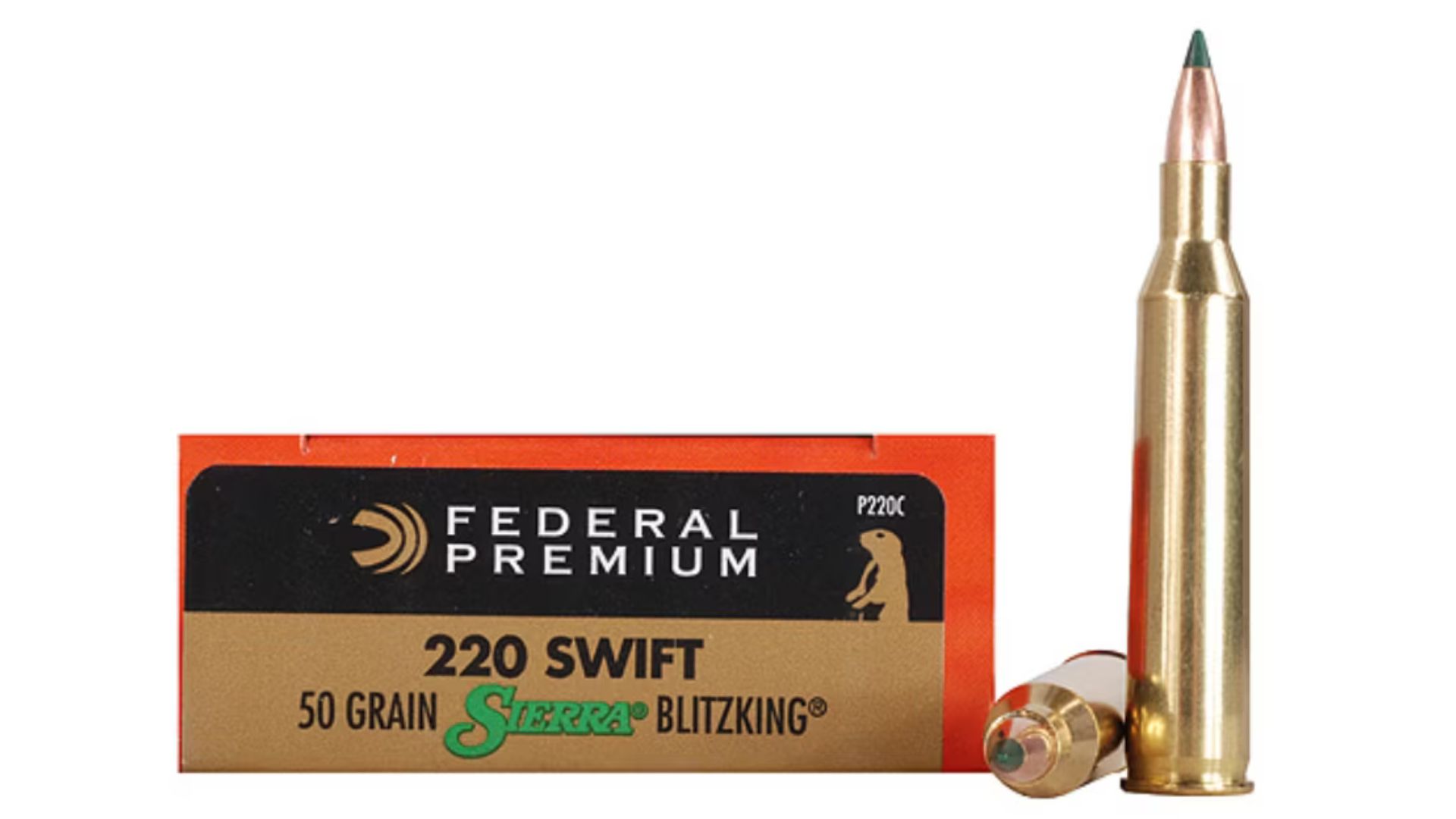
The .220 Swift has a legendary reputation for speed, and speed is the easiest way to make a cartridge sound flat. The Swift does start very fast, especially with light varmint bullets, and it’s deadly on small targets inside normal varmint distances. The misleading part is thinking raw velocity automatically keeps a bullet flat far out.
Light bullets with thin jackets often have low ballistic coefficients, and they slow down quickly. Once the velocity advantage fades, the trajectory and wind drift can look a lot more ordinary than the name implies. Heavier bullets can help, but many Swift rifles and loads still center on classic varmint weights. If you run the Swift within the distances it was built around, it’s impressive. If you expect it to ignore wind and gravity at extended ranges, it will humble you.
.204 Ruger

The .204 Ruger is another “sounds flat” cartridge because it’s fast and the recoil is so light that you can spot your own hits. That’s a great experience, but the ballistics can fool you. Many .204 bullets are very light, and even with impressive muzzle speed, light bullets can lose steam quickly and get pushed around in the wind.
On calm days inside typical varmint ranges, it’s hard to beat for ease of shooting. Start stretching things, especially in open country, and you’ll see why wind drift matters more than muzzle velocity. The .204 can be set up with higher-BC bullets, but many common loads still prioritize explosive terminal effect over aerodynamics. It’s a terrific tool for its role, but the “flat” feeling can disappear fast when the wind wakes up.
6.8 SPC

The 6.8 SPC often gets pitched as a hard-hitting, modern alternative for short rifles, and that framing can make it sound flatter than it is. In many loads, you’re launching a relatively heavy .277 bullet at moderate velocity, often from a carbine-length barrel. That’s a recipe for practical performance, not a stretched trajectory.
Inside 200 yards, it’s effective and pleasant to shoot, and it tends to hit with more authority than small .22 centerfires. Past that, drop begins to show up sooner than people expect, and wind drift becomes a factor if you’re using common hunting bullets with average BC. The 6.8 SPC shines when you treat it as a compact-rifle cartridge built for realistic ranges. If you expect it to mimic a .270’s trajectory, the range work will correct you quickly.
.458 SOCOM

The .458 SOCOM sounds like a powerhouse, and the name can trick people into believing it carries flat because it’s “so much bullet.” In truth, it’s a big, heavy projectile at moderate speeds, often fired from short-barreled rifles. That combination produces a steep arc once you move past close-range work.
At woods distances it can be extremely effective, especially on tough animals where deep penetration matters. But if you start stretching to 150–200 yards and beyond, you’re living on careful range calls, holdovers, and a realistic understanding of drop. Wind drift can also be more noticeable than people expect, because those bullets aren’t built to slice air like modern long-range projectiles. The SOCOM is a specialized tool for close-range authority. Treat it like that and it makes sense.
.17 HMR

The .17 HMR gets called flat because it’s a rimfire that shoots fast compared to .22 LR, and it does look very pointable at short distances. The trap is extending that confidence too far. The tiny bullet is light, and light rimfire bullets shed speed rapidly and drift in wind more than you’d think when you first see them punch paper.
Inside 100 yards, it’s extremely useful for small game and varmints, and it can make precise shooting feel easy. Past that, the drop starts stacking quickly, and a modest breeze can move the bullet enough to matter on small targets. The .17 HMR is a great rimfire, but it’s not a miniature centerfire. If you treat it like a 75–125 yard tool and keep your wind reads honest, it performs. If you expect it to stay flat well past that, it won’t.
Like The Avid Outdoorsman’s content? Subscribe to our newsletter so you never miss an article.
Here’s more from us: