

Photo credit: NASA (National Aeronautics and Space Administration), Public Domain/Wiki Commons
If you look at where hogs actually show up on a county map instead of just listening to camp talk, the pattern is pretty clear: the South is carrying the brunt of the problem. Recent mapping work using EDDMapS data out of the University of Georgia ranks states by hog reports and shows how many counties in each state are now dealing with feral swine. In the worst states, hogs are established in nearly every county on the map.
This list leans on those county counts and report numbers, plus state and USDA sources, to flag 15 states where wild hogs aren’t “a pocket problem” anymore—they’re a statewide reality.
Texas

Texas is in a league of its own. The latest breakdown shows hogs in 253 of 254 counties—basically the whole state—with more than 2,400 EDDMapS reports and millions of pigs on the ground. They tear up pasture, crops, levees, and food plots, and they do it from the Pineywoods to the brush country.
Because hogs are in almost every county, you see every control tactic here: aerial gunning, big corral traps, night shooting, thermal hunts, and constant pressure on creek bottoms and travel corridors. Even with all that, USDA and state estimates say Texas still eats hundreds of millions in damage every year, which tells you how deep the infestation really runs.
Georgia

Georgia’s situation is brutal on paper and in person: hogs are reported in every one of its 159 counties, with more than 1,300 sightings logged in the dataset that ranks it No. 2 in the country. They’re in pine plantations, peanut ground, river bottoms, and around deer leases from the mountains down to the coastal plain.
When hogs are that widespread, you don’t have “hog counties”—you have hog state. Rooting in food plots, damage to row crops, and torn-up creekbanks are normal, not rare. Landowners lean on trapping and year-round hunting, but when every county is lit up on the map, you’re talking about long-term management, not any kind of realistic cleanup.
Florida

Florida’s maps are lit up edge to edge. Hogs are established in all 67 counties, and the county-count data plus local reports back that up. They’re in palmetto thickets, cattle pastures, citrus country, and WMAs, and they’re perfectly happy rooting right up to neighborhood fences along canals and retention ponds.
Floodplains and soft ground make their rooting damage obvious—torn-up dikes, pasture ruts, and mangled food plots. Add in disease concerns around livestock and native wildlife and you see why Florida treats hogs, not gators, as one of its biggest day-to-day wildlife problems. When every county is involved, “hog hunting” isn’t a niche thing—it’s how a lot of private ground tries to stay usable.
Mississippi

Mississippi also reports hogs in 100% of its counties and lands near the top in total county count, with 82 counties showing feral swine presence. Delta fields, piney woods, river bottoms—none of it is off-limits. Hogs hit corn, soybeans, food plots, and hayfields, then slide into timber to bed.
Because so much of Mississippi is mixed timber and ag, hog sign can run from the back of a bean field right into bottomland hardwoods in one night. Landowners stack tools—trapping, night hunting, and coordinated local efforts—but the county coverage tells the real story. You’re not trying to keep hogs out of a few pockets; you’re trying to keep them from wrecking something new every season.
North Carolina

North Carolina has hogs in about 85% of its counties—85 out of 100—and wildlife reports say roughly three-quarters of counties now have feral swine on the ground. They work coastal marshes, ag ground, and hill country, tearing up corn, peanuts, and habitat for deer and turkeys.
The spread is what worries biologists—hog presence has crept from traditional pockets into new counties where they weren’t a problem a generation ago. Once they get established in a river system or swamp complex, they’re tough to get back out. For hunters, that means you’ll see hog sign from coastal leases up into Piedmont ground that used to be mostly deer, bears, and deer-dog country.
Tennessee

Tennessee’s numbers are ugly too: 83 of 95 counties have hog reports, and the state ranks in the top tier for overall sightings. Hogs are in Cumberland Plateau ground, Smokies fringe country, and farm valleys, and they’ve proven they can survive almost anywhere there’s acorns, crops, or waste grain.
Tennessee tries to keep tight reins on hog “recreational hunting” to discourage people from moving pigs around, but the county count shows how entrenched they already are. For landowners and deer managers, rooting in fields and food plots, plus nest and fawn predation, are all part of the reason hogs sit high on the hit list anywhere they show up on camera.
Kentucky

Kentucky doesn’t always get mentioned in hog talk, but the map doesn’t lie. The dataset shows hogs reported in 81 of 120 counties, or about two-thirds of the state. Most of that activity sits in eastern and southern counties where steep hollows, reclaimed mine lands, and timber ground give pigs plenty of cover.
The state has leaned hard into eradication instead of “accept and manage,” which tells you how seriously they take those county counts. Trapping programs and tight controls on hunting are aimed at getting rid of isolated populations before they look like the Deep South maps. Still, once hogs get into a watershed and neighboring counties, keeping them pinned is a constant fight.
Oklahoma

Oklahoma has hog reports in 76 of 77 counties—essentially wall-to-wall coverage. From Red River bottoms to cross-timbers and wheat country, they chew up crops, pastures, and deer ground. They’re fully at home in oilfield and ranch country, working creeks and mesquite thickets at night.
Because the state has so much private land, most of the real action happens on farms and leases, not public ground. A lot of properties run ongoing trapping and shooting programs, but the near-total county coverage shows hogs have already won the “where can they live?” question. Now it’s about how much damage you’re willing to tolerate before investing in heavier control.
Arkansas
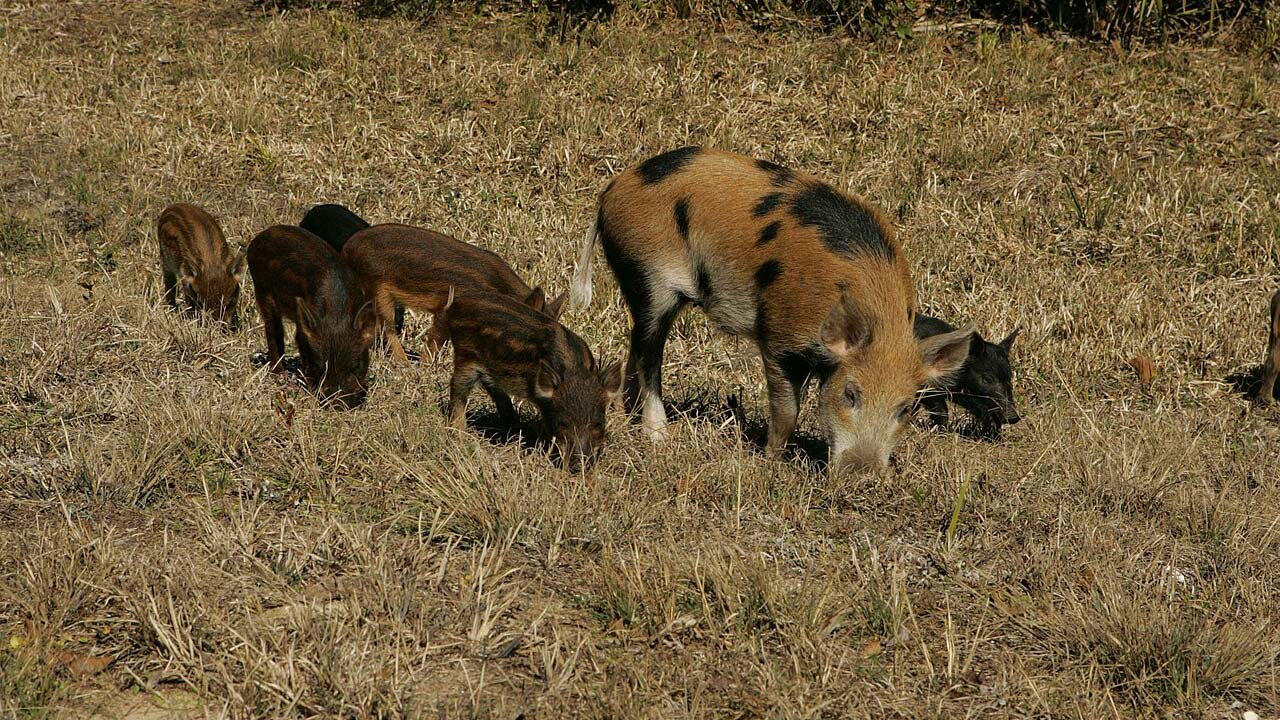
Arkansas shows hogs in 74 of 75 counties, with a high percentage of counties reporting pigs on the ground. Delta fields, Ozark hills, piney woods in the south—they use it all. You’ll see rooted-up levees, food plots, and openings in the timber from one end of the state to the other.
The state has tried to push coordinated trapping and discourage aimless night hunting that just educates pigs. But the fact that almost every county is involved tells you how far ahead the hogs already are. For deer and turkey hunters, hog sign is now a normal part of scouting, not something you only see on a handful of WMAs.
Louisiana

Louisiana’s hog situation is a swamp-and-river-bottom special. Data show hogs in 63 of 64 parishes, with nearly full coverage statewide and a heavy load of damage reports. They root in marsh edges, rice and sugarcane fields, pine plantations, and bottomland hardwoods, then vanish into cover that’s tough to reach on foot.
Because so much of Louisiana’s ground is wet, hog rooting hits levees, duck habitat, and fragile soils especially hard. Add crop damage and disease concerns for domestic pigs and cattle, and you can see why nearly every parish has a hog story. When the parish map is basically solid, you’re not talking about isolated outbreaks—you’re talking about a long-term resident.
Alabama

Alabama also reports hogs in all 67 counties, which lines up with what farmers and hunters have been saying for years. They work creekbottoms, pine stands, cattle pastures, and row crops from one end of the state to the other. Rooting damage in hayfields and food plots is a regular spring complaint, not a rare event.
Biologists have warned that hogs are now part of the predator and disturbance picture for deer, turkeys, and small game statewide. With every county on the map involved, most landowners who care about habitat end up running at least some trapping or shooting, even if they’re not “hog hunters” by choice. The alternative is watching fields and woods get beat up every year.
California

California’s hog problem is more concentrated along the coast and in parts of the interior, but county coverage is still huge. Recent reporting says pigs are present in 56 of 58 counties, and the EDDMapS-based ranking lists all 58 counties as having hog reports. They root up parks, ranches, vineyards, and oak hillsides, and they’re a growing issue around Bay Area open spaces and coastal preserves.
Steep country, private land mosaics, and mild winters let pigs work year-round. For deer and pig hunters, that means opportunity—but for land managers, it’s nonstop damage and erosion problems. When almost the entire state map is shaded, hogs aren’t a “Central Coast thing” anymore; they’re baked into wildlife management decisions from local parks to big ranches.
South Carolina

South Carolina has hogs reported in 100% of its 46 counties, and state and federal distribution maps back up that near-total coverage. Swamps, river floodplains, pine country, and ag fields all see rooting, wallows, and crop damage.
Because so much of the state is wet or low-lying, hogs can live in spots that are hard to trap or hunt consistently. They hit corn, peanuts, and small-grain fields, then hide in thick cover along creeks and cypress breaks. With every county involved, control work never really stops—it just shifts from one problem area to the next as sounders move.
Missouri

Missouri’s official stance is “no recreational hog hunting,” because the state wants them gone—not turned into a sport. Even with that approach, the data show hogs in 62 of 115 counties, mostly in the Ozarks and southern half of the state.
Forest and glade country give pigs room to stay out of sight, and they tear up glades, food plots, and private fields whenever they get a foothold. Missouri’s trapping crews have knocked numbers down in some areas, but the county count shows how widespread they already are. If more counties light up again, it’s a sign the hogs are still one step ahead of the control work.
Kentucky / Ohio band
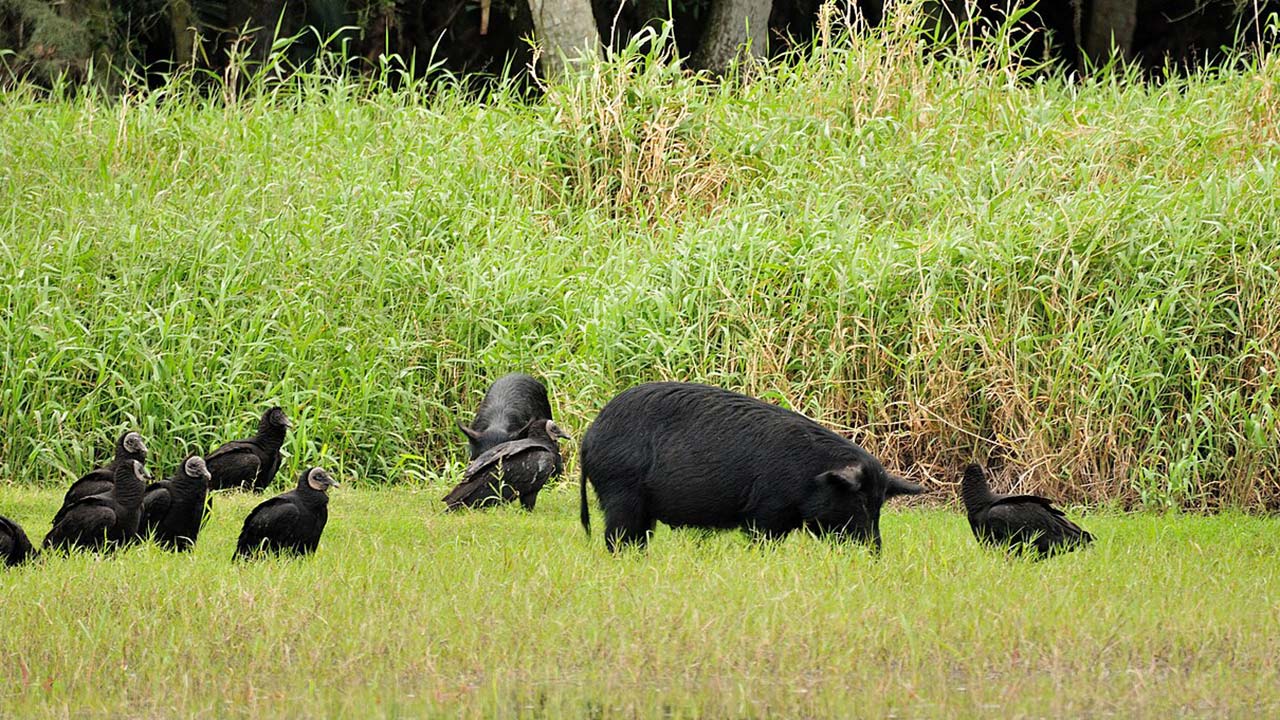
Rounding out the list are Kentucky (81 counties) and Ohio (21 counties) with documented hog presence. Kentucky’s problem is more advanced—two-thirds of its counties see hogs to some degree, especially in the south and east. Ohio’s numbers are smaller, but the fact that any counties are dealing with pigs that far north is a warning sign.
Together, they show how hogs don’t respect the old “Southern-only” line. Once populations take hold in border counties tied to river systems or big timber blocks, it’s easy for them to creep into neighboring states. Hunters and landowners in both places are being pushed to treat early sign seriously, because if the county map fills in the way it has farther south, the damage bill gets ugly in a hurry.
Like The Avid Outdoorsman’s content? Subscribe to our newsletter so you never miss an article.
Here’s more from us:


