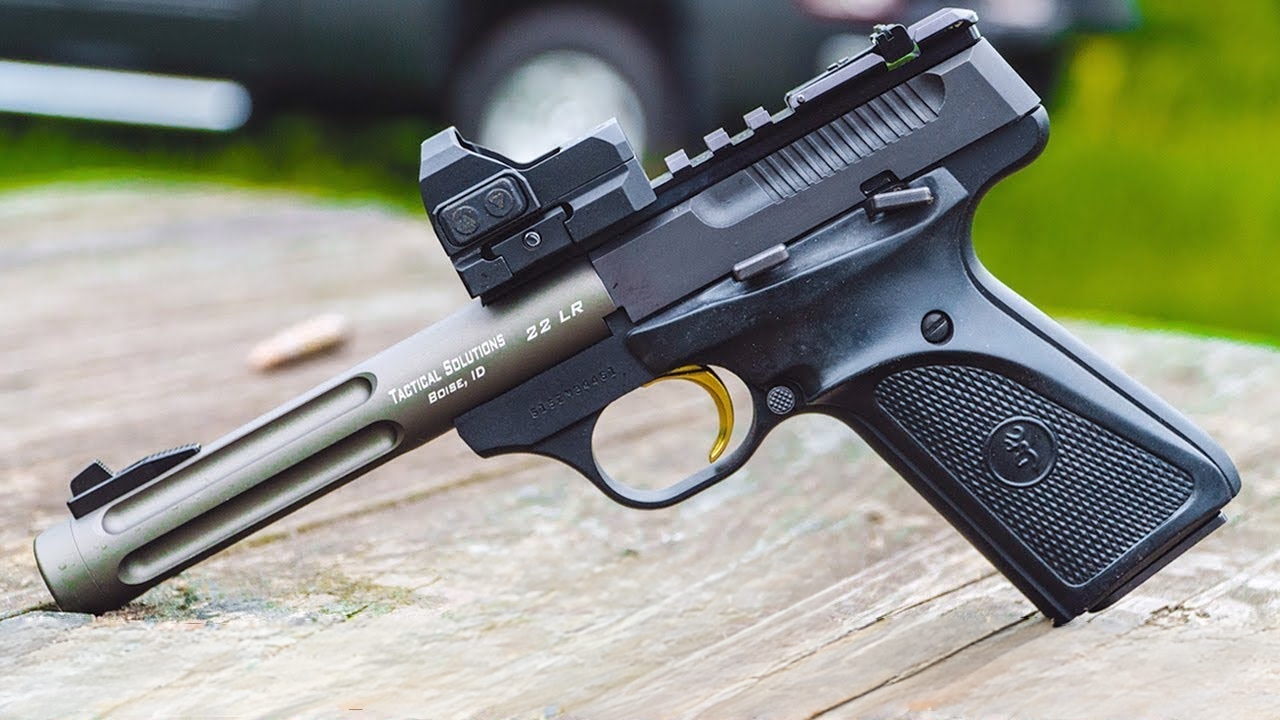
Photo credit: GUNS/YouTube
The Browning Buck Mark is one of those rimfire pistols that a lot of shooters know by feel more than by history. They know it as a good .22 for range time, plinking, small-game use, or just burning through cheap ammo with a pistol that feels more substantial than many other rimfires. What often gets missed is how long the Buck Mark has been around and how much of Browning’s modern rimfire-pistol identity it ended up carrying. Browning says the Buck Mark was introduced in 1985, is still made in the U.S.A., and remains a favorite among both plinkers and competitive shooters.
That matters because the Buck Mark did not just survive as one decent .22 pistol. It grew into a full family. Browning’s current Buck Mark pages show a broad lineup of models, while American Rifleman noted in 2018 that Browning was offering more than 20 variations with different barrel lengths, finishes, and stocks. That kind of staying power is a pretty good sign that this pistol ended up being much more important than a lot of casual shooters realize.
1. The Buck Mark has been around since 1985

A lot of people assume the Buck Mark is a newer rimfire pistol because it still feels current, but Browning’s own serial-history page says the Buck Mark .22 pistol was introduced in 1985 and remains in production today. American Rifleman says the same thing in its Buck Mark history and review coverage.
That is a longer run than plenty of shooters realize. The Buck Mark is not some trendy range gun that popped up recently. It has been around for decades, which helps explain why so many shooters either own one, learned on one, or have at least spent time behind one.
2. It replaced earlier Browning rimfire pistols
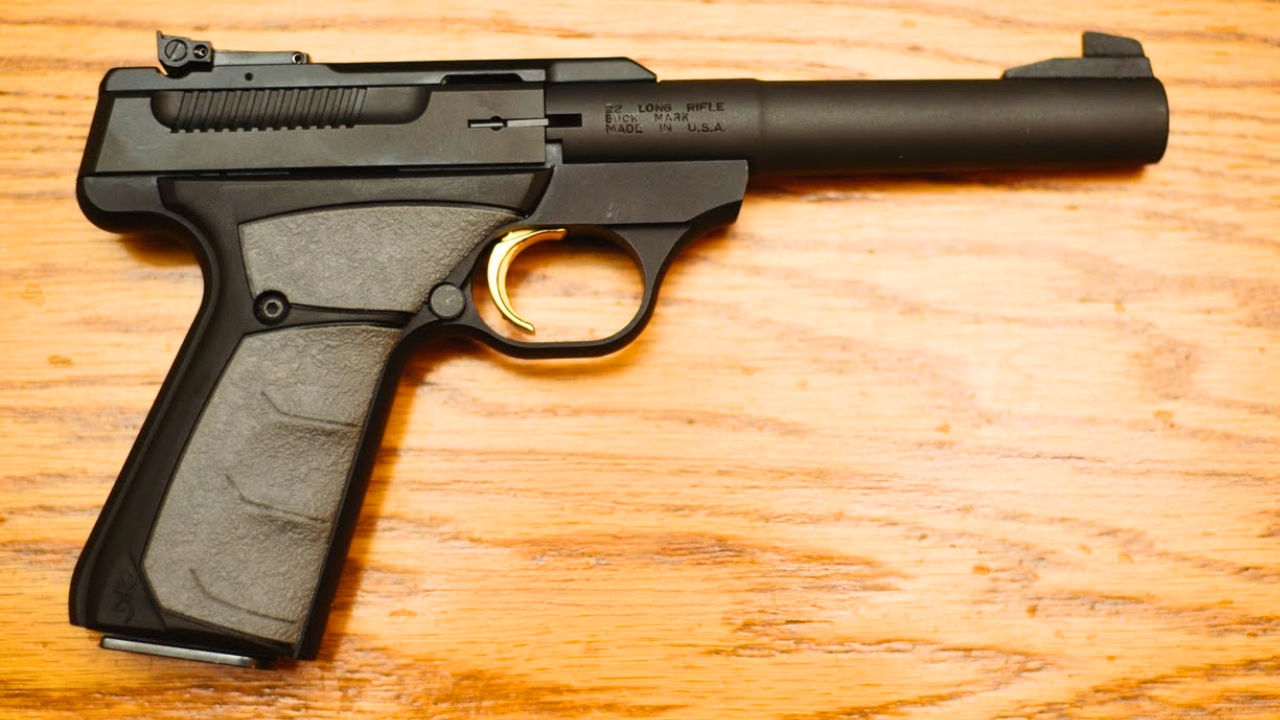
The Buck Mark did not appear out of nowhere. American Rifleman says Browning introduced it in 1985 to replace the company’s Challenger Series pistols, and the encyclopedia-style reference history says it replaced both the Challenger and International models.
That makes the Buck Mark more interesting because it was not just a random new product. It was Browning’s next major step in rimfire-pistol design, meant to carry the company forward instead of just filling a side slot in the catalog.
3. The Buckmark logo came before the pistol did

This is one of the weirder and cooler little details in the gun’s story. American Rifleman noted in 2022 that the Browning Buckmark logo itself was introduced in 1978, seven years before the Buck Mark pistol was unveiled.
That means the Buck Mark name and symbol were already floating around Browning’s identity before the pistol came along and ended up becoming the thing many shooters now associate with the Buckmark name first. It is a funny reversal, and it shows how thoroughly the pistol ended up taking over that brand space.
4. It is a straight blowback pistol

The Buck Mark is not a locked-breech centerfire-style design shrunk down for rimfire. Browning says the Buck Mark uses a single-action, blowback-operated autoloading design, and American Hunter similarly described it as a straight-blowback semi-auto built around simplicity and reliability.
That matters because the Buck Mark’s appeal has always been partly about keeping the formula simple. A good .22 pistol does not need to be complicated if it runs well, feels good, and shoots accurately. The Buck Mark leaned hard into that.
5. It is single-action only

A lot of newer shooters handle the Buck Mark and just think of it as “a semi-auto .22” without really thinking about the trigger system. Browning’s product materials make clear that Buck Marks use a single-action trigger, and American Rifleman has repeatedly highlighted that setup in Buck Mark coverage.
That is one reason the pistol has always felt so nice at the range. Buck Marks are built around a cleaner, more deliberate rimfire shooting experience rather than trying to mimic a duty-style DA/SA setup. That fits the gun’s whole identity.
6. Most Buck Marks use an alloy receiver, not all-steel construction

People sometimes assume the Buck Mark is a heavy all-steel .22 because it feels solid in the hand. Browning’s current Buck Mark Camper UFX page says the pistol uses an alloy receiver with a matte blued finish, and Browning’s European Buck Mark page says the receiver is made from a machined aluminum block.
That is a smart design choice for this kind of pistol. It helps keep weight reasonable while still giving the gun a sturdy feel. The Buck Mark feels substantial without being unnecessarily clunky.
7. The magazine capacity is 10 rounds

This one sounds basic, but it is part of the Buck Mark’s long-running formula. The standard reference history lists a 10-round box magazine, and current retailer listings for common Buck Mark models also show a 10-round capacity.
That capacity helped make the Buck Mark a practical, easygoing range pistol from the start. It offered enough rounds to stay fun without overcomplicating the design, and it fit neatly into the role Browning clearly had in mind for it.
8. Browning makes a lot more Buck Mark versions than most people realize

A lot of shooters think of the Buck Mark as one plain .22 pistol with maybe a few cosmetic changes. Browning’s current lineup page shows a broad family of Buck Mark pistols, and American Rifleman said Browning offered more than 20 variations back in 2018. In 2017, American Rifleman also noted Browning had added eight new models in one year alone.
That tells you the Buck Mark was never just a one-note plinker. Browning clearly saw enough long-term value in the platform to keep stretching it into different trims, barrel lengths, finishes, and use cases instead of leaving it as one static product.
9. Some Buck Marks are built with competitive shooters in mind

The Buck Mark is often treated like a casual range gun, but Browning’s product overview says it remains a favorite among competitive shooters, and American Rifleman’s Plus Vision coverage said that model carried features suited to both competitive use and weekend plinking.
That matters because the Buck Mark’s reputation is not built only on being fun. It also earned respect as a pistol that can shoot seriously well when set up the right way. Browning did not position this gun as a throwaway trainer.
10. The Buck Mark often has a bull barrel and a weight-forward feel
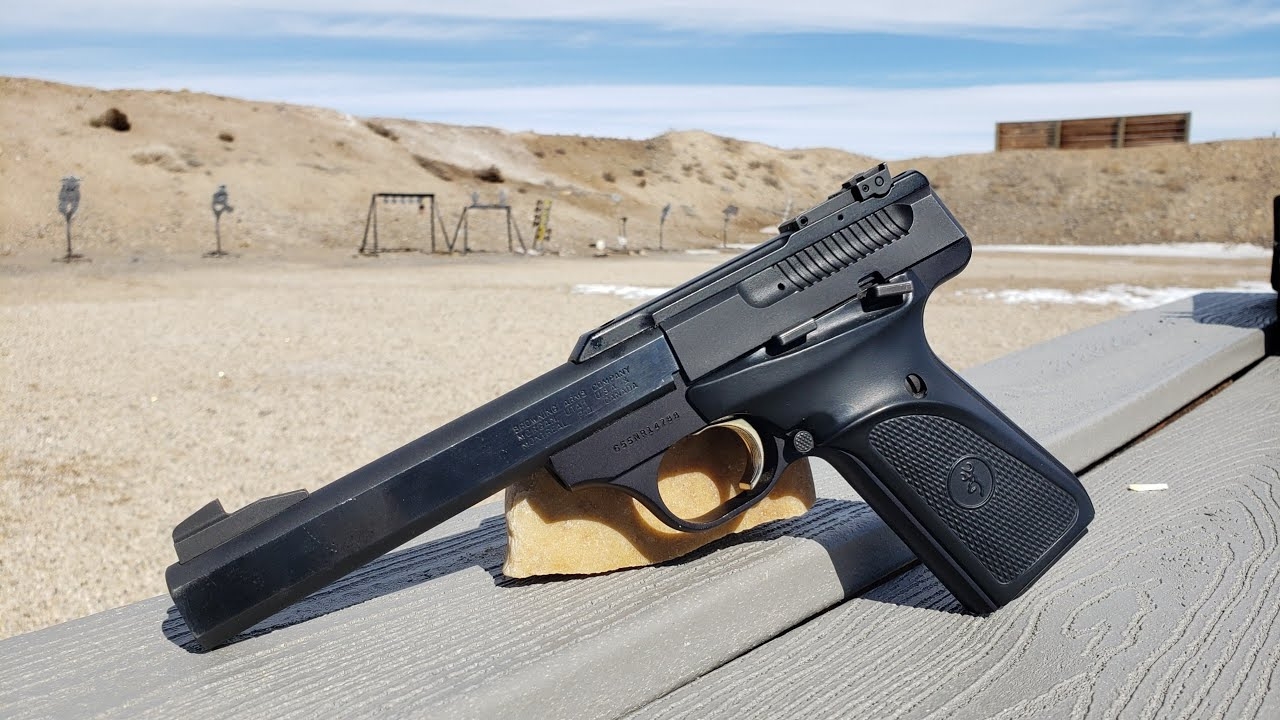
One of the practical reasons shooters tend to like Buck Marks is how they balance. Browning’s Camper UFX page highlights a tapered bull barrel, and American Hunter said the Buck Mark’s bull barrel gives it a notable weight-forward feel that helps shooters settle the pistol and hold steady on target.
That is a bigger deal than it sounds. Rimfire pistols live and die by how easy they are to shoot well, especially for newer shooters or people using them for long, relaxed range sessions. The Buck Mark’s balance has always been part of its charm.
11. It is made in the U.S.A.

For a lot of shooters, Browning feels like a broad historic brand rather than a “made here” rimfire-pistol story. But Browning’s own Buck Mark serial-history page says the Buck Mark pistol is made in the U.S.A., and American Rifleman’s 2017 coverage said the line’s 2017 models were all made in the USA on a machined aluminum frame.
That is worth knowing because the Buck Mark can feel like a very global-brand kind of product. In reality, the pistol’s production identity is more specifically American than a lot of casual buyers probably assume.
12. The Buck Mark action also ended up in Browning rifles
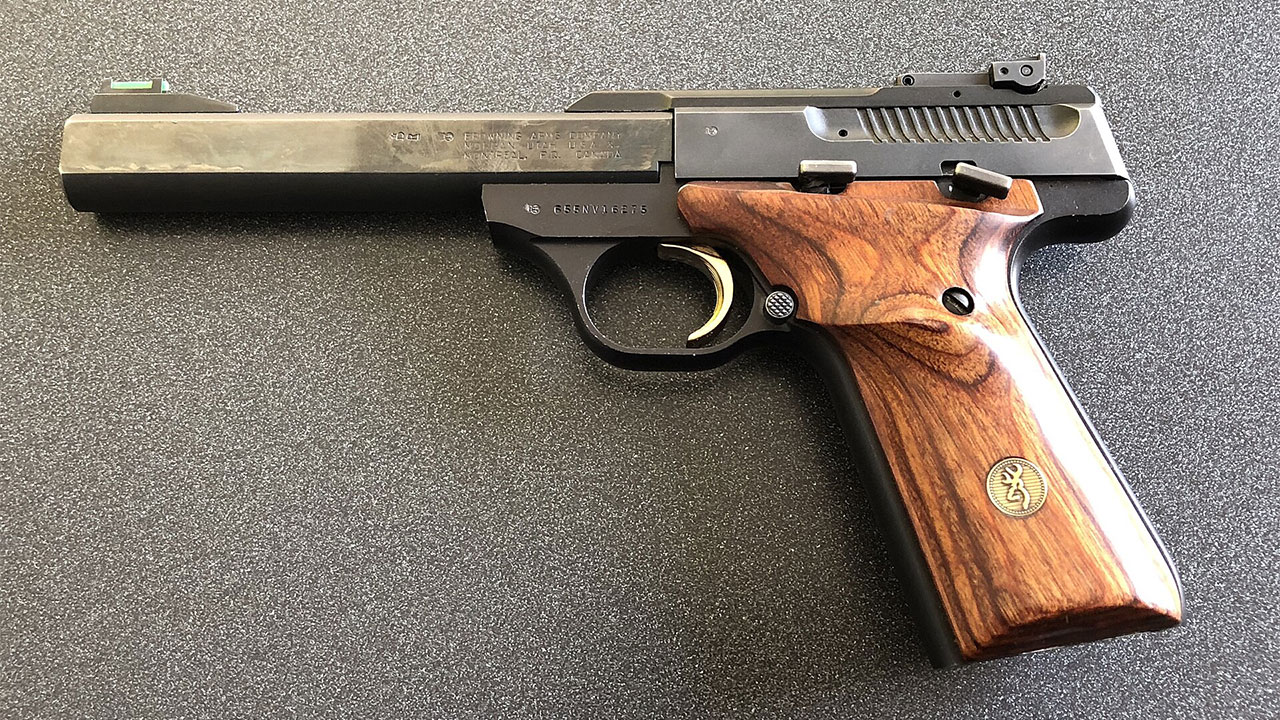
The Buck Mark name is tied most strongly to the pistol, but American Hunter’s 2018 SHOT coverage highlighted a Buck Mark .22 rifle built around the same general platform idea, and the reference history says the same action from the pistol is used in Buck Mark rifles.
That says a lot about Browning’s confidence in the design. The company did not just create a decent pistol and leave it there. It used the platform as the basis for a broader rimfire line.
13. It was designed to be affordable, not just accurate
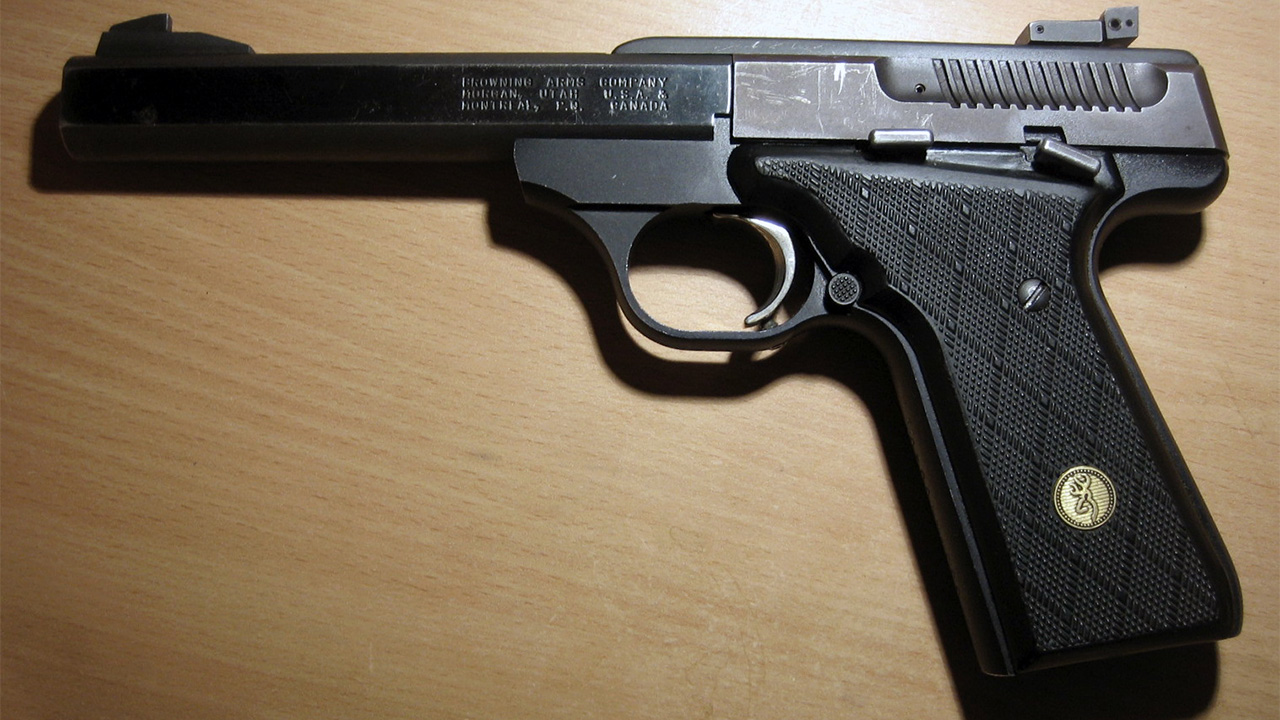
American Rifleman’s 2018 Field Target Suppressor Ready article says the Buck Mark line was engineered to provide sportsmen with an accurate and dependable rimfire pistol, and that it was also designed to be affordable.
That is one of the biggest reasons the Buck Mark stuck. Browning was not trying to make only a niche premium target gun. It was trying to build something regular shooters could actually buy, enjoy, and keep for a long time.
14. The Buck Mark survived because it does more than one job well

American Hunter described the Buck Mark Camper UFX as a pistol suited for hunting, plinking, camping, and training people to shoot. That kind of versatility is a big part of the Buck Mark story. It is not trapped in one tiny niche.
That broad usefulness is probably why it never faded. A rimfire pistol that is only good for one narrow purpose has a harder time sticking around for decades. The Buck Mark managed to stay relevant because it kept making sense in a bunch of different roles.
15. The biggest surprise is that it quietly became one of Browning’s most enduring modern pistols
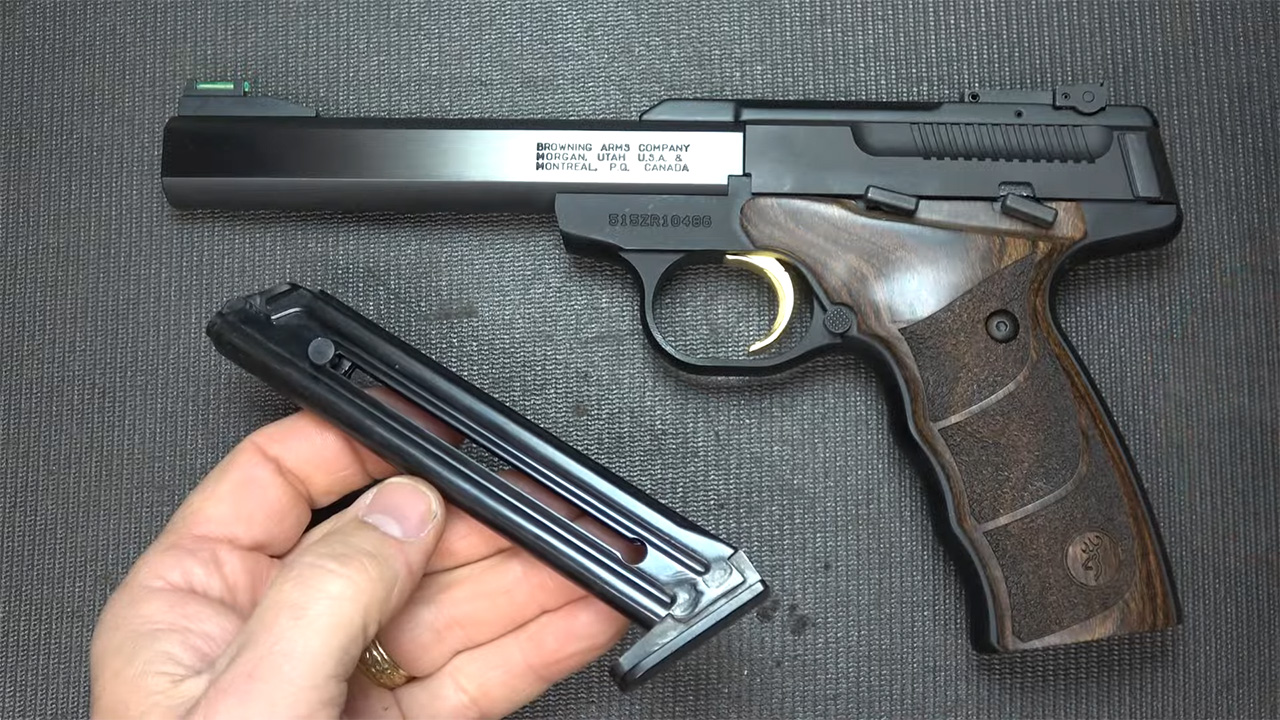
A lot of Browning handguns people talk about are older classics or highly recognizable historical models. The Buck Mark does not always get that same dramatic reputation, but Browning’s own materials make clear it has lasted since 1985, stayed in production continuously, and grown into a broad family that still matters to plinkers and competitive shooters alike.
That may be the most interesting thing about the Buck Mark. It never had to become flashy or controversial to stick around. It just kept being a really solid .22 pistol long enough that it turned into one of Browning’s most dependable long-running handgun platforms.
Like The Avid Outdoorsman’s content? Subscribe to our newsletter so you never miss an article.
Here’s more from us: