Photo credit: Banana Ballistics/YouTube
If you carry a handgun for protection, you’ve probably had the 9mm vs. 10mm conversation more than once—maybe with a buddy, a range officer, or even a stranger in a gun shop. Both calibers have serious street cred. One’s known for controllability and capacity, the other for raw power. But if your main concern is stopping a threat fast, you can’t just pick based on popularity or punch. You’ve got to consider what each round actually does when it matters most—when your life depends on it. The truth? There’s no easy answer, but once you’ve looked at recoil, capacity, wound channels, overpenetration, and real-world performance, a clearer picture starts to form.
Recoil and control matter more than paper ballistics
You can have all the muzzle energy in the world, but if you can’t control the gun, it won’t help much. The 10mm has serious recoil, especially in lighter platforms. That can slow follow-up shots and force shooters into bad habits. The 9mm, on the other hand, is easy to shoot well. It’s the reason so many professionals trust it—it stays on target. You’re more likely to get multiple accurate hits fast, and that matters more than one shot that hits like a hammer. In a real fight, being able to shoot quickly and stay accurate is a bigger asset than horsepower on paper.
Capacity is a real-world advantage

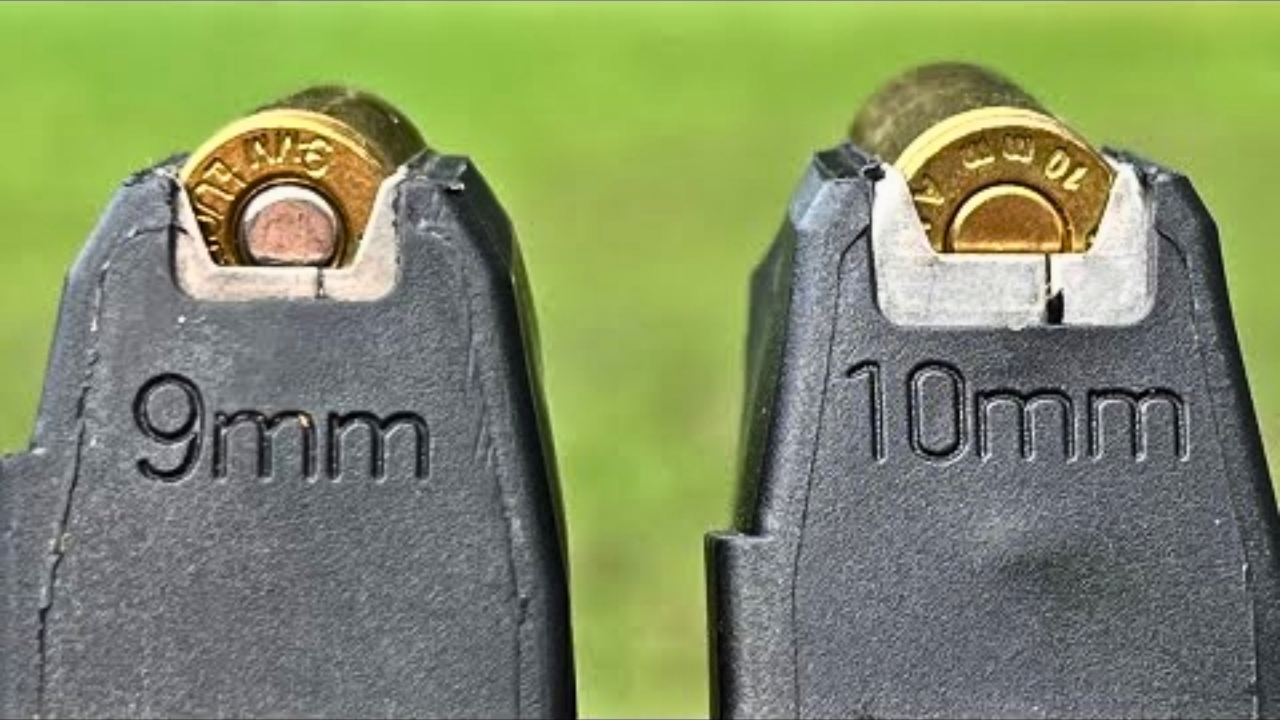
More rounds in the magazine can make all the difference when things go sideways. Most 9mm pistols carry 15 to 17 rounds, with some stretching into the 20s. That’s a lot of opportunity to stop a threat without reloading. The 10mm, because of its larger case size, usually limits you to 8 to 15 rounds depending on platform. That may be enough—until it isn’t. And when you’re under stress, reloading isn’t as smooth as it was on the range. Having a higher-capacity gun that’s easier to shoot means you’re stacking the odds in your favor, not relying on theoretical power.
The 10mm hits harder, no question
There’s no sugarcoating it—10mm hits like a freight train. It carries more energy, penetrates deeper, and creates a nastier wound channel when everything goes right. It was built to outperform the .357 Magnum in an autoloader, and it does. That extra power can help if you’re dealing with intermediate barriers or larger threats. It’s also why it’s a favorite in bear country. But that energy comes with trade-offs—recoil, cost, wear and tear on the gun—and you’ve got to decide if those trade-offs make sense for your use case.
Overpenetration is a legitimate concern

One of the biggest criticisms of 10mm for defensive use is that it can punch through the target—and then keep going. In a crowded environment, that’s a real problem. You don’t want a round that goes through drywall, the threat, and ends up hurting someone on the other side. 9mm defensive ammo is more predictable in this regard. Most premium 9mm hollow points are designed to expand and dump energy quickly, reducing the chance of pass-through. If you’re carrying in public or in the home, that extra power might be a liability more than a benefit.
Ammunition cost and availability still favor 9mm
If you shoot regularly—and you should—9mm is going to make a lot more sense. It’s cheaper, easier to find, and offers a wider variety of proven defensive loads. You can practice more without draining your wallet, and that matters. The 10mm has made a comeback in recent years, but it’s still not on shelves everywhere, and good defensive ammo can get pricey. If you’re serious about proficiency and want to stay sharp without budgeting every round, 9mm is easier to live with day in and day out.
Barrier penetration isn’t everything’

Some folks argue 10mm is better because it can punch through glass, car doors, and light cover. And sure, that has value in certain situations—law enforcement or wilderness defense, for example. But in most civilian self-defense encounters, you’re not shooting through barriers. You’re up close, maybe within arm’s reach. That’s where shot placement, speed, and composure win the day. If your carry gun is easier to draw, aim, and fire quickly, you’ll be better off. And more often than not, that favors a 9mm in a compact frame you actually carry every day.
You’ve got to match the caliber to the mission
This debate never dies because it’s not really about which one is better—it’s about which one’s better for you. If you’re deep in the woods or need a handgun for hogs or black bear, 10mm is the clear winner. If you’re carrying every day in town, working a security detail, or keeping a pistol by the bed, 9mm probably makes more sense. Either one can stop a fight, but only if you train with it, carry it consistently, and know what you’re doing. The best caliber is the one you’ll run well under stress, not the one with the flashiest stats.
Like The Avid Outdoorsman’s content? Be sure to follow us.
Here’s more from us:
The worst deer rifles money can buy
Sidearms That Belong in the Safe — Not Your Belt
*This article was developed with AI-powered tools and has been carefully reviewed by our editors.