A lot of wild animals would rather leave than fight. That is what gets people too comfortable. They start thinking every hiss, stomp, head fake, or stare-down is just theater. Then they get too close, cut off an escape route, or push one more step than they should. That is usually when things go bad.
Some animals bluff a little. Some posture first. And some skip most of that and go straight to business once they think they are trapped, protecting young, or defending food. Wildlife agencies repeat the same basic warning over and over for a reason: space matters, and a cornered animal does not think the way a relaxed animal does. Here are 15 animals that are more likely to make a bad situation worse in a hurry if you crowd them.
Bison

Bison fool people all the time because they stand there looking calm, heavy, and almost lazy. Then somebody gets too close for a photo, blocks the animal’s path, or forgets that a herd animal still has a breaking point. A bison does not need much room to turn a dumb decision into an ambulance ride. It is not trying to prove something. It is clearing a threat out of its space.
That matters because bison are not slow, and they are not mild. The National Park Service says they have injured more people in Yellowstone than any other animal there, and park officials keep warning visitors that they can run three times faster than humans. Once one decides you are the problem, your legs are not going to solve it.
Moose

People love to act like moose are just oversized deer, but that is a good way to learn something the hard way. A moose that feels pressured, especially a cow with calves or a bull during the rut, can go from still to violent fast. They do not need to roar, growl, or posture much for the message to be real. If they think you are too close, they may just come at you.
That is what makes them tricky. They often look awkward right up until they are not. National Park Service guidance warns that moose can charge unexpectedly, kick, and trample, and that cows protecting calves are especially hazardous. They are big, fast, and a lot meaner than their sleepy face suggests.
Feral hogs

Most feral hogs would still rather run if they have room, but that does not make them safe. The trouble starts when they are wounded, trapped, crowded, or when a sow has young nearby. Then you are dealing with speed, low center of gravity, bad attitude, and tusks that can open you up in a hurry. There is nothing dramatic about that kind of encounter. It just goes wrong fast.
Texas Parks and Wildlife says feral hogs have the potential to be dangerous, especially when wounded or cornered, and urges extreme caution around females with young. That fits what landowners and hunters already know. A hog does not need to stand there and put on a show. When one decides the way out is through you, it is already too late for wishful thinking.
Cottonmouths and other venomous snakes

A lot of snakes want nothing to do with people, and that includes plenty of venomous ones. But the mistake folks make is assuming the snake will always keep trying to leave no matter how boxed in it feels. That is not how it works. If a venomous snake loses its path to cover and feels like the threat is closing in, the whole tone changes.
Texas Parks and Wildlife says that while many snakes rely on escape, some venomous snakes will stand their ground and, if cornered without a chance to retreat, strike with speed and force. That is why trying to pin one, move one, or get one “just a little farther away” is such a dumb play. Back off and let the snake have the exit you should have left open in the first place.
Grizzly bears

People talk about bears like every charge is a bluff, and that is one of those half-true ideas that gets repeated until somebody trusts it too much. A defensive grizzly that is surprised, crowded, or protecting cubs or food may charge because it wants the threat gone right now. That is not theater. That is pressure being answered with force.
The National Park Service’s bear-safety guidance says defensive bears may charge or attack when they feel threatened, especially if they are surprised, protecting cubs, or guarding a food source. Around a grizzly, you never want to be the reason it feels trapped or forced into a decision. When one closes distance in a defensive encounter, that situation is already serious.
Black bears

Black bears usually want out more than they want a fight, and that is exactly why people get sloppy around them. They see a bear back off once or twice and start thinking they have it figured out. Then they push one near a porch, dumpster, cooler, or cubs and act shocked when it spins from nervous to aggressive. A cornered black bear is still a bear, and it still has plenty of ways to wreck you.
Grand Teton’s bear guidance warns that bears in crowded developed areas may suddenly act aggressively, and Denali’s bear-safety material notes that defensive bears may charge when they feel uncomfortable or threatened. The lesson is simple: do not count on repeated restraint. Give black bears a clean exit and a lot more room than you think they need.
Mountain lions

Mountain lions are usually ghosts. Most people never know one was around at all. But that quiet behavior makes folks underestimate how dangerous the animal becomes if it feels boxed in at close range, especially with kittens nearby or nowhere good to go. A lion does not need much motion to cover a short distance, and that is what makes any close encounter feel wrong in a hurry.
This is not one of those animals you crowd because it seemed calm. Big cats live on speed, control, and reaction. If one feels trapped against rock, brush, a structure, or a narrow trail, you are in bad shape. You are not dealing with bluff-and-noise behavior. You are dealing with an animal built to finish a decision fast, which is why giving it distance matters so much.
Alligators

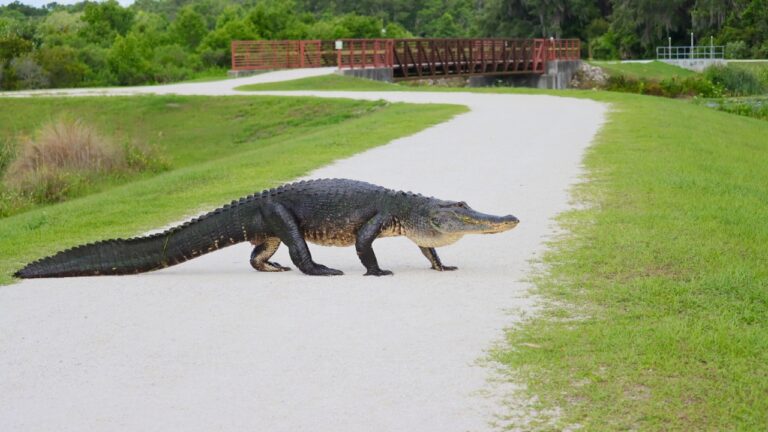
Alligators spend so much time lying still that people start reading them like logs with teeth. That works right up until somebody corners one near a bank, pen, dock, nest, or narrow water edge. Then the stillness disappears. An alligator does not need a long warning sequence to make its point. If it feels trapped, pressured, or protective, it has enough speed over short distance to make a mess before most people even understand what happened.
That is especially true around nests or young. Even park guidance in alligator habitat notes that adults defend nests and respond hard to threats. The big mistake is assuming the animal’s calm look means low risk. A cornered gator is not relaxed. It is deciding where the threat is and how fast it needs to end it.
Badgers

Badgers do not get enough respect because they are not huge, flashy, or commonly seen. That is a mistake. A badger has one of the worst tempers in the dirt world when it thinks it is trapped. They are built to dig, bite, claw, and fight at ground level where people make the dumb choice to lean in too close. Corner one around a culvert, hole, shed edge, or trap, and you can get a real ugly surprise.
The problem is not size. It is attitude and tools. A badger does not need to bluff much because it is already set up for close-quarters defense. If it cannot disappear underground and does not see a clean line out, it may turn into a ball of teeth and claws fast. That is an animal you leave alone and let sort out its own exit.
Elk

Elk do not always get included in these conversations because people focus more on bears and cats, but a cornered elk can absolutely hurt you. During the rut, bulls can get stupid-aggressive. Cows with calves can get just as serious for different reasons. And even outside those windows, a large hoofed animal that feels trapped can kick, charge, or bowl through whatever is in front of it.
National Park Service wildlife guidance groups elk with other large animals people are required to stay back from, and that is not some formality. These animals have size, speed, and sharp hooves. If an elk decides that brush line, fence gap, or trail opening is blocked by you, it may not waste time negotiating. It will solve the problem physically.
Coyotes

Coyotes are usually more bark than contact around people, but that can change around den sites, pets, or food conditioning. The average coyote is not out looking to fight a person. The trouble comes when it learns to hold ground near houses, feed piles, garbage, or outdoor pet routines, then gets pushed too close. A bold coyote that feels trapped may not put on much of a warning show before darting in or biting.
That risk climbs around dogs, denning season, and repeated human feeding. Once a coyote has lost enough fear, people start misreading confidence as harmlessness. That is backward. A coyote that hangs too close to people is already telling you something is off. A trapped or pressured one, especially in a yard or tight corner, can get ugly faster than people expect.
Raccoons

Raccoons get treated like backyard cartoons until one is under a deck, inside a shed, stuck in a trash enclosure, or cornered in a garage. Then people remember pretty quickly that a raccoon has teeth, claws, speed, and absolutely no reason to cooperate with your clean-up plan. They can be bold around homes because they are used to human spaces, and that familiarity makes people careless.
The real problem is how often folks try to handle the situation themselves. They grab a broom, trap one badly, or try to chase it out of a tight spot. A raccoon that sees no easy escape can turn nasty in a flash. It does not need to be a large predator to do damage. Around hands, ankles, and faces, a frantic raccoon is plenty dangerous.
River otters

Otters look playful, which causes way too much bad judgment. People see one on a bank or near camp and think it is some goofy water dog. That illusion breaks the second one feels trapped, cornered with pups, or harassed at close range. Otters are fast, athletic, and fully capable of biting hard when the situation turns defensive.
What gets people in trouble is assuming “cute” and “safe” are the same thing. They are not. A river otter is still a wild carnivore with sharp teeth and no interest in your attempt to get closer for a better look. If you squeeze one between water and land or get too close near a den area, you may learn very quickly that playful-looking animals can still go full fight mode.
Javelinas

Anybody who has spent time in the Southwest knows javelinas are not just funny little desert pigs. They can get aggressive when surprised, crowded, or protecting young, and they often show up around homes, feeders, pet food, and landscaping. The smell hits first, then the noise, and if people panic in the wrong direction they can get themselves into a bad spot fast.
A javelina does not need to be huge to be a problem. It has sharp teeth, quick bursts of speed, and a habit of moving in groups that can make a close encounter feel chaotic. Corner one in a yard, near a wall, or around a car and it may stop acting skittish and start acting defensive. That is not the time to test how brave you are.
Swans and geese

People laugh at aggressive waterfowl until they have one coming straight at their knees, face, or kid. A swan or big goose that feels trapped, or thinks you are too close to its nest or young, can be all business. They do not have to be predators to be dangerous. Wings, beaks, noise, and sheer commitment are enough to turn a calm walk into a mess.
The issue is how normal they look in human places. Parks, ponds, campgrounds, neighborhoods, and marinas make people think these birds are tame. They are not. Corner one against shore, fencing, or landscaping during nesting season and the bluff can end quickly. When they commit, they usually do it right in your space, and that is plenty to knock someone down or create a panic situation.
Like The Avid Outdoorsman’s content? Be sure to follow us.
Here’s more from us: