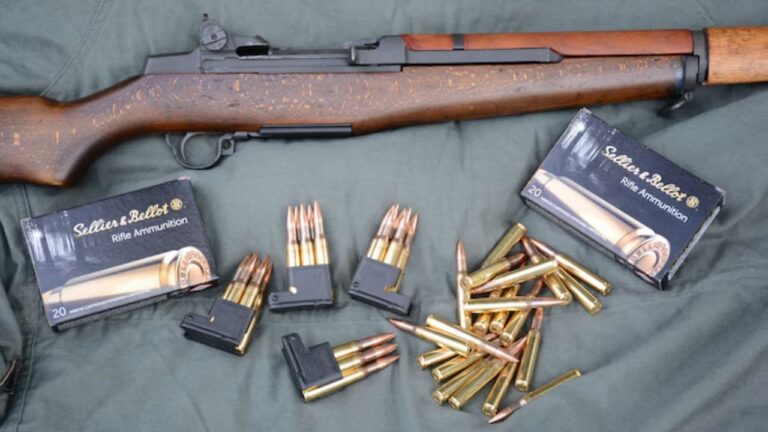
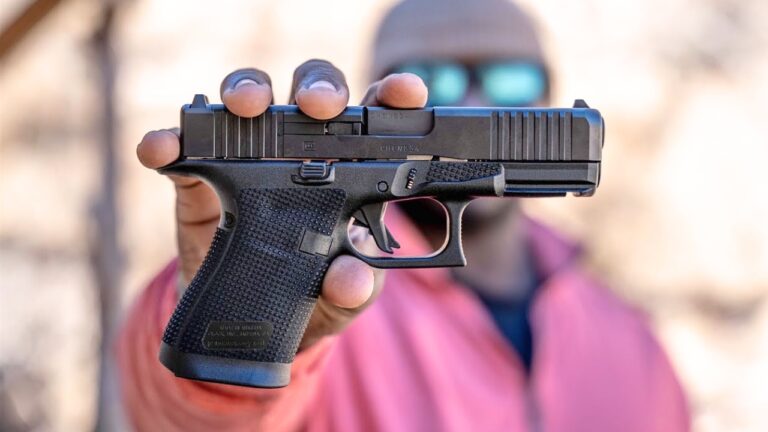
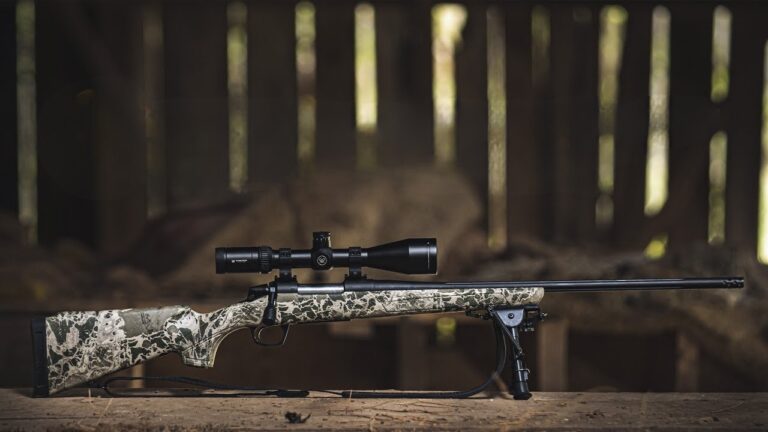
Photo credit: DavisWesleyJhon/GunBroker
Buying a spare barrel used to be one of the simplest transactions in California gun culture. As new rules take effect, that routine parts order now pulls you into the same regulatory orbit as a full firearm purchase, with dealer involvement, paperwork, and new penalties if you get it wrong. If you own rifles or pistols that rely on replaceable tubes of steel, you now have to think about how, where, and from whom you buy them.
The change is driven by a pair of overlapping laws that treat standalone barrels less like anonymous accessories and more like controlled components. You are now expected to route many barrel purchases through licensed intermediaries, verify your identity, and accept that “ship it to my porch” is no longer a safe default. Understanding the dealer requirement, and the few remaining workarounds, is the difference between staying compliant and stumbling into an avoidable violation.
1. How California quietly reclassified barrels as controlled parts
California lawmakers have spent years tightening rules on what counts as a regulated gun part, and barrels have finally moved from the gray zone into the spotlight. Under Assembly Bill 1263, often shortened to AB‑1263, the state folded barrels into a broader package of “New California Gun Laws” that are described in an Overview of the New California Gun Laws as taking effect on “1.1” and “Effective Jan 1, 2026.” In that overview, Californi regulators explicitly flag “the sale and shipment of firearm barrels in California” as a newly controlled activity, which is the legal hook that pulls your spare AR‑15 or bolt‑gun tube into the same compliance universe as a serialized receiver.
That shift matters because it changes who is allowed to touch the transaction. Where you once could buy a barrel directly from a machine shop or online vendor, AB‑1263 now expects a licensed intermediary to sit between you and the seller. The law is framed as part of a broader “Effective” package that also includes warning labels and age verification, but the practical effect is that barrels are no longer treated as generic metal. Once the state defines them as regulated components, every step in the chain, from the website checkout page to the shipping label, has to reflect that new status or risk falling afoul of the statute.
2. The dealer requirement: what “FFL only” really means for barrels
The most immediate change you feel is the requirement that many standalone barrels now move through a Federal Firearms Licensee rather than your front door. Enthusiasts on precision forums have already boiled it down to a blunt rule: “Barrels Must Go to FFL.” In that discussion, shooters warn that direct‑to‑consumer shipment of standalone barrels to a home address is now unlawful, and that instead, the package has to be addressed to a dealer who logs the part and transfers it to you. The same thread notes that vendors who ignore the rule and keep shipping barrels “Direct” to California customers can face civil penalties, which is why you are seeing more checkout pages refuse a Golden State ZIP code unless you provide dealer information.
From your perspective, “FFL only” means extra steps and extra cost. You have to identify a willing dealer, confirm that they will accept a barrel transfer, and often pay a fee that looks a lot like what you already pay for a firearm DROS. Some shops treat barrels as low‑margin headaches and decline to participate, which is why forum users describe hunting for an “FFL that will still touch parts” instead of assuming every gun counter will help. The new rule also complicates warranty work and custom builds, because a manufacturer that once shipped a replacement tube “Instead” of a full rifle now has to coordinate with your chosen licensee or risk violating California’s new standard.
3. AB‑1263 and SB 704: how two laws converged on the same problem
AB‑1263 did not arrive in a vacuum. It sits alongside Senate Bill 704, another Sacramento measure that tightens how key components move around the state. In a widely shared update, attorney and host Don Hammond walks viewers of his program, “California Gun Law,” through “Senate Bill” 704 and explains that this “704” package is a “new law” that changes how certain parts, including barrels, must be transferred. Hammond’s breakdown underscores that the legislature is not just targeting complete firearms, but also the pieces that can be swapped or upgraded to change performance, which is why barrels ended up in the crosshairs.
At the same time, AR‑15 owners are being told that “The Two New Laws” they need to track are AB‑1263 and its companion restrictions on accessories. A detailed guide aimed at rifle shooters describes “Assembly Bill” 1263 as “Signed” and effective at the start of 2026, and then walks through how it interacts with the other statute in practice. In that guide, the author notes that California has passed two major firearm laws that will change how residents purchase certain AR parts, including barrels, and that the combined effect is to push more of those transactions through vetted vendors and background checks. When you put the Hammond explanation of Senate Bill 704 next to the AR‑focused breakdown of AB‑1263, the pattern is clear: lawmakers used multiple vehicles to close what they saw as loopholes in the parts market.
4. What changes on January 1, 2026 for online barrel orders
If you are used to ordering a barrel from your phone and having it show up on your porch, the calendar flip to early 2026 is the line in the sand. One AR‑centric explainer spells it out plainly: beginning in 2026, if you live in California and want to buy certain AR‑15 accessories or barrels online, you will have to route that purchase through a vendor with a background check instead of a simple mail‑order. The author frames it under a section titled “What This Means for You,” and the message is that starting in 2026, your online cart is no longer the final step. Instead, the barrel ships to a cooperating dealer, you show up in person, and the state runs you through the same databases it uses for a firearm sale.
The same source drills down further on the shipping details, noting that “Beginning January 1, 2026, that” kind of parts order will require more than just a name and address. Under the new rules, you will have to “Provide a matching ID” and accept that the shipment will be handled like a controlled item, often “with an adult signature required” at the point of transfer. That language appears in a section that ties the date to the new compliance burden, and it is echoed in other coverage that warns California buyers to expect more friction at checkout. The days of casually sending a barrel to a friend’s house or a workplace without paperwork are over once the AB‑1263 clock starts.
5. Identity checks, age limits, and the new paperwork burden
Beyond the dealer handoff, AB‑1263 layers in identity and age verification that reach into the parts market in a way California shooters have not seen before. A compliance advisory on the law explains that retailers will have to “Provide a matching ID” from the buyer and confirm that the person ordering the part is old enough to possess it, as part of a broader package described as “California AB1263 Takes Effect in 2026: Online Parts Restrictions and Gun Shop Shortages Ahead.” That same advisory warns that the identity‑matching requirement applies to online orders as well as in‑store purchases, which means you cannot simply have a buddy click “buy” for you and pick up the barrel in your name later.
The age‑verification piece is part of a larger trend in California’s “Online Parts Restrictions and Gun Shop Shortages Ahead” narrative, where lawmakers are trying to prevent minors from accessing anything that could be used to assemble or modify a firearm. For you, that translates into more time at the counter while staff scan IDs, fill out forms, and reconcile your information with what the state expects to see. Shops are already warning that the extra steps will slow down service and may contribute to the “Gun Shop Shortages Ahead” described in the advisory, as smaller retailers decide the compliance risk is not worth the marginal revenue from parts sales.
6. How the new rules play out at the gun counter
On the ground, the dealer requirement is reshaping how California gun shops structure their day. A practical overview shared with the r/CAguns community under the heading “CA 2025 New Gun Law Practical Overview” devotes a section to “Firearm Barrels” and explains that dealers now have to treat them as tracked items. The author notes that “Further, AB‑1263 requires that” “Firearm Dealers” provide a notice with firearm law information with each relevant transaction, and that the California Department of Justice (CA DOJ) is expected to “write regulations” fleshing out how those notices and transfers must work. That means your barrel pickup may come with a stack of printed warnings and a signature line acknowledging you have been briefed on the rules.
For staff, the change is more than just extra paper. They have to decide how to log barrels in their inventory systems, whether to assign them internal control numbers, and how to segregate them from unregulated accessories like slings or cleaning kits. Some shops are experimenting with separate “parts transfer” intake forms to keep AB‑1263 transactions distinct from full firearm DROS files, while others are folding everything into a single workflow to avoid confusion. Either way, the Reddit overview makes clear that the state expects “Firearm Dealers” to be the compliance gatekeepers for barrels, and that CA DOJ will be watching how they implement the new rules.
7. Exemptions, edge cases, and how other states handle similar transfers
Like most firearm regulations, California’s barrel rules include carve‑outs for certain categories of users, and you can get a sense of the logic by looking at how other jurisdictions structure their exemptions. A policy brief on a “semiautomatic firearms bill introduced” in another state notes that “Sales or transfers to law enforcement, corrections officers, commercial armored truck operators, and members of the armed forces who need firearms to perform their duties would be exempt.” California’s approach to barrels follows the same pattern, carving out space for official users whose jobs require ready access to controlled parts while keeping the general public on a tighter leash.
Another state‑level bill, identified as “MO HB356,” shows how lawmakers elsewhere are thinking about dealer involvement in transfers that do not fit the classic retail sale. That measure explains that “The bill also includes provisions for transferring firearms through trusts or estates, requiring licensed dealer involvement. Exceptions are carved out for law enforcement, certain professionals, and transfers between certain close relatives.” While California’s barrel rules are not identical, they are built on the same idea that even noncommercial transfers, such as estate distributions or trust movements, should often pass through a licensee unless a specific exemption applies. If you are planning to leave a collection of custom barrels to a family member, you should expect the state to treat that as a regulated transfer rather than a casual handoff.
8. Can a C&R FFL or collector status help you?
One question that comes up quickly in California circles is whether a collector license can soften the impact of the new barrel rules. A primer on why “Every Shooter Should Get a C&R FFL” explains that “What is a C&R license? C&R FFL is short for Curio and Relics Federal Firearms License, also known as a Type 03 FFL. Thi license is designed for collectors of older guns rather than active dealers, and it allows you to receive qualifying firearms directly without going through a storefront. The same primer stresses that a Curio and Relics Federal Firearms License is limited in scope, and that a Type 03 holder is not supposed to use it to run a business.
California adds another layer on top of that federal framework. A detailed guide for in‑state collectors quotes state law to the effect that “(d) The person receiving the firearm has a current certificate of eligibility issued pursuant to Section 26710,” and that the firearm must qualify under the federal Curio and Relics list in the United States Code and the regulations issued thereto. In practice, that means a C&R FFL with a California certificate of eligibility can streamline some transfers of older guns, but it does not automatically exempt you from AB‑1263’s treatment of modern barrels. Unless the barrel itself is part of a qualifying Curio and Relics package, you should assume the dealer requirement still applies.
9. Practical steps to stay compliant when you buy your next barrel
Faced with this new landscape, your best defense is a simple checklist before you click “buy.” First, confirm whether the barrel you want is covered by the AB‑1263 framework that treats “the sale and shipment of firearm barrels in California” as a regulated act, as described in the “Overview of the New California Gun Laws” that take effect on “1.1” and “Effective Jan 1, 2026.” If it is, line up a cooperative dealer in advance, ask about their transfer fee, and make sure the online seller is willing to ship to that licensee rather than directly to you. When you place the order, be prepared to provide a “matching ID” and any other information the vendor needs to satisfy the “Online Parts Restrictions and Gun Shop Shortages Ahead” compliance guidance.
Once the barrel arrives at the shop, treat the pickup like a firearm transfer, even if the law does not require a full DROS in every case. Bring government‑issued identification, budget extra time for staff to process the part, and read any notices the dealer is required to provide under the “Further, AB‑1263 requires that Firearm Dealers provide a notice with firearm law information” language highlighted in the r/CAguns overview. If you hold a Curio and Relics Federal Firearms License or qualify for an exemption similar to the “Sales or transfers to law enforcement, corrections officers, commercial armored truck operators, and members of the armed forces” carve‑outs seen in other states, verify in writing how those statuses interact with California’s barrel rules before relying on them. The new regime is not friendly to improvisation, but with a bit of planning, you can still keep your rifles and pistols fed with the barrels they need without stepping outside the law.
Like The Avid Outdoorsman’s content? Be sure to follow us.
Here’s more from us: