Photo credit: cjbgunsllc/GunBroker
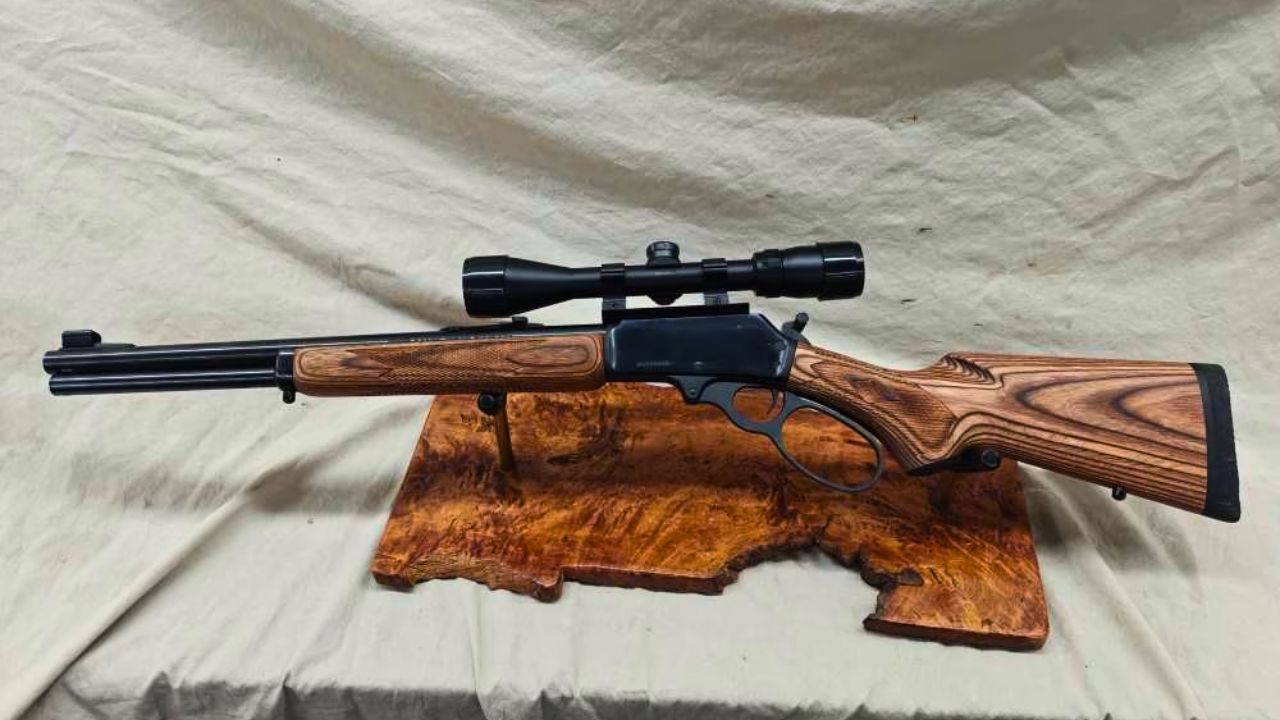
Some rifles ask to be babied. The Marlin 1895 never did. Mine’s been dropped in mud, hauled through cedar thickets, and leaned against enough tailgates to wear the bluing thin. I didn’t buy it to admire it. I bought it because I wanted a rifle that would handle the kind of weather and terrain that ruins nice things.
The first time I shouldered it, I knew it wasn’t going to be gentle. The 1895 isn’t light, and it kicks like it means it. But the more I carried it, the more I trusted it. There’s a steadiness in that lever throw, a rhythm you fall into after a few hundred rounds. Before long, the scratches and dings stop bothering you. They start to mean something.
The creek that baptized it
It was one of those early-season mornings when the fog sits low and every rock in the creek looks the same. I was halfway across when a boot slipped, and the rifle went under before I could catch it. When I pulled it out, it looked like something dug out of a rice paddy—mud packed into the action and water running off the barrel.
Most rifles would’ve been benched for the day, but not this one. I rinsed it off, cycled the lever, and it ran smooth. No grit, no hesitation. I hunted the rest of the day with a rifle that still smelled like river bottom. Back at camp, a strip-down and light oiling was all it needed. Since then, I’ve never worried about what that rifle can handle.
Recoil that earns your respect

The .45-70 doesn’t whisper—it thunders. The first time you touch off a heavy load through an 1895, you understand why old-timers call it a “workingman’s cartridge.” It moves your shoulder, but it also moves your target. There’s a satisfaction in that kind of authority you don’t get from lighter calibers.
Recoil teaches discipline. The 1895 demands that you plant your feet, lean in, and stay honest behind the trigger. Once you learn its cadence, it rewards you with the kind of confidence that only comes from experience. It’s not the rifle you loan to someone on their first hunt—it’s the rifle you grow into and eventually stop flinching with.
Trust forged in bad weather
I’ve carried that Marlin through rain that turned trails into rivers and cold that made breath sting your nose. It’s never failed me. The action feels the same in December as it does in September—solid, familiar, and ready. I’ve shot hogs at close range in thick brush and whitetails across open fields, and the rifle handled both without fuss.
There’s no secret to keeping it running. Wipe it down, keep the internals clean, and it’ll take care of you. The lever throw feels the same today as it did the year I bought it. That kind of consistency builds a quiet kind of trust. When a rifle proves itself in bad conditions, you stop thinking about it. You shoulder it, aim, and know it’ll fire.
A rifle that feels like an old friend
The 1895 isn’t a safe queen. It’s the rifle that rides in the truck, leans against fence posts, and smells faintly of gun oil and pine sap. It’s not the lightest gun in the safe, but it’s the one that always goes when the hunt matters. I’ve tried newer rifles—slicker, lighter, with better triggers—but I keep coming back to the Marlin.
There’s something reassuring about a gun that tells its story through wear and miles instead of specs and coatings. Every scar on that stock has a story tied to it—one that starts with bad weather, long walks, and the sound of that lever cycling closed. After years of hard use, I can’t think of a better definition of trust.
Like The Avid Outdoorsman’s content? Be sure to follow us.
Here’s more from us:
The worst deer rifles money can buy
Sidearms That Belong in the Safe — Not Your Belt
*This article was developed with AI-powered tools and has been carefully reviewed by our editors.