Photo credit: WHO_TEE_WHO/YouTube
Some hunting calibers look great on paper. They promise flat trajectories, hard hits, or featherweight rifles that carry like a dream. But then you run a box through one, take it on a hunt, or spend an afternoon trying to make it group—and suddenly the charm wears off. These are the calibers that leave you wondering why they’re still around. You might shoot one once to see what the fuss is about, but you’re not reaching for it again next season. Whether it’s punishing recoil, poor accuracy, ammo you can’t find, or performance that never quite lines up with reality—some rounds just don’t earn a second chance in the field.
.17 Remington
You probably heard it screamed like a laser and hit like a needle. And sure, the velocity is impressive, but it comes at a cost. The .17 Remington burns barrels fast, fouls quickly, and doesn’t forgive anything less than a perfect hit. If you’re hunting coyotes in calm weather, you might get away with it. But a breeze across the field and that tiny bullet starts walking sideways. Cleaning sessions feel like surgery, and your accuracy starts fading before the barrel hits 500 rounds. Most hunters give it a shot, then go back to something that isn’t so finicky.
.220 Swift

The name alone makes it tempting. You think you’re stepping into something elite. But the first time you hunt with it, the drawbacks start adding up. The Swift is notoriously hard on barrels and hotter than it needs to be for most varmints. It’s loud, it recoils more than you’d expect, and factory ammo isn’t exactly lining the shelves. Handloaders might keep it alive, but most folks who test one decide it’s not worth the upkeep. You can get nearly the same performance out of more manageable cartridges without torching your throat or chasing brass that costs a dollar a piece.
.375 Ruger
It sounds like a practical alternative to the .375 H&H—and it kind of is, until you realize it kicks harder, barks louder, and doesn’t buy you much unless you’re going to Alaska. Hunters who try the .375 Ruger usually walk away with a sore shoulder and a rifle they can’t resell. It’s not that it doesn’t work. It absolutely will stop a big bear. But for most folks in the Lower 48, it’s way more than they’ll ever need. You shoot it once, admire the power, and then let it gather dust while your .30-06 keeps doing the real work.
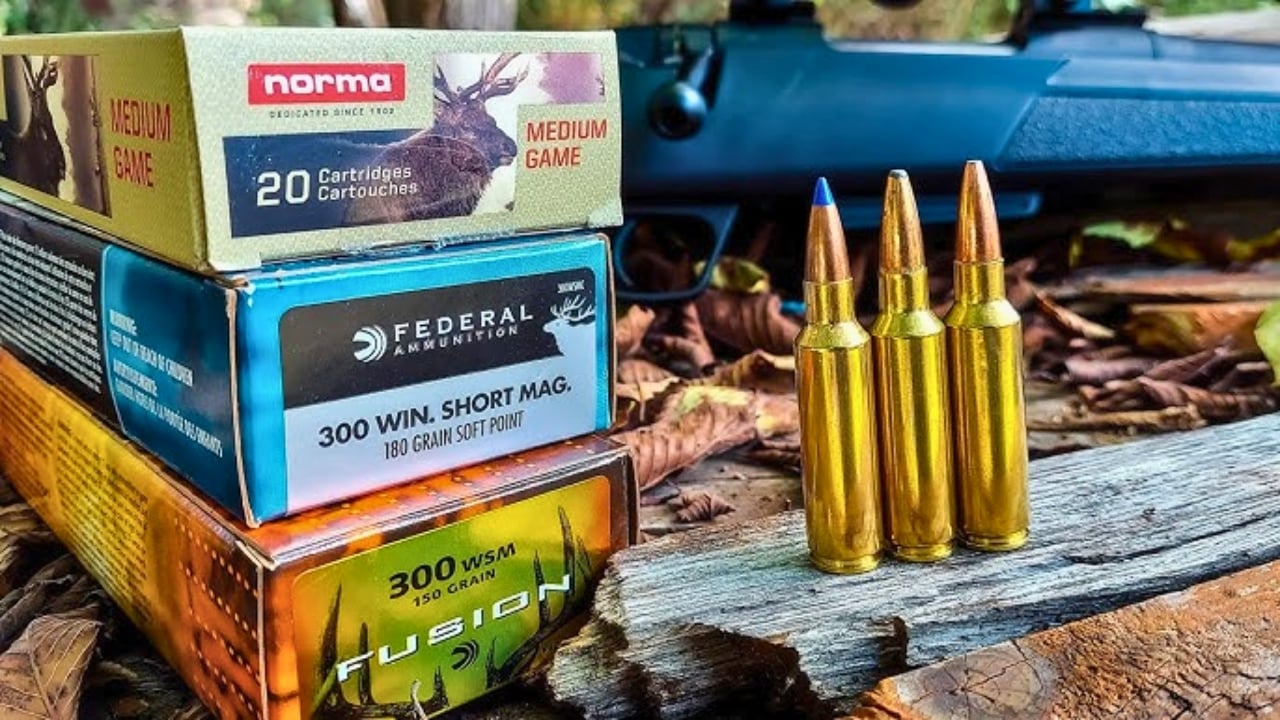
.300 WSM

It was marketed as a compact powerhouse that could match a .300 Win Mag in a shorter action. The problem is, that promise never quite held up. The .300 WSM kicks hard, feeds rough, and doesn’t offer any real-world advantage unless you’re chasing marginal ounces. Many rifles chambered for it don’t cycle as reliably as their long-action cousins. And the recoil impulse tends to be sharper than what most people expect. Hunters who try it often end up regretting the tradeoff. They move back to a tried-and-true .30-caliber that runs smoother, hits just as hard, and doesn’t beat up the shoulder or the bolt face.
6.5 PRC
You might shoot the 6.5 PRC and think, “Now this is how 6.5 Creedmoor should’ve been.” That is, until you start hauling it around. It’s loud, burns powder like it’s free, and eats barrels faster than you think. The recoil is manageable but more than most folks want from a 6.5. And unless you reload, good luck finding ammo that doesn’t cost an arm and a leg. You get more velocity, sure—but not enough to outweigh the hassle for most hunting distances. Plenty of guys try the PRC once, then settle back into their Creedmoor or .270 and don’t look back.
.338-06 A-Square

The idea behind the .338-06 was solid: big bullet, moderate case, reasonable recoil. But in practice, it never caught on. Factory ammo is rare. Handloading can be fussy. And the rifles that came chambered for it didn’t always shoot it well. You’re left with a round that’s neither fish nor fowl—too much for deer, not quite enough for big bear, and hard to feed. A few hunters tried it hoping for that perfect middle ground between .30-06 and .338 Win Mag. What they usually found was disappointment at the bench and a box of ammo they couldn’t give away.
.45-70 +P in lightweight rifles
The .45-70 has its place, no doubt. But when you cram +P Buffalo Bore loads into a modern lever gun that weighs six pounds, it stops being fun fast. Some folks try it once thinking they’ve unlocked bear-level stopping power in a trail gun. What they get instead is a bruised collarbone and a flinch that takes a month to shake. The heavy recoil is brutal, especially with metal buttplates or synthetic stocks. Unless you’re hunting something that bites back, it’s overkill in every sense. Most hunters test those hot loads once, then stash the rest for emergencies only.
Like The Avid Outdoorsman’s content? Be sure to follow us.
Here’s more from us:
The worst deer rifles money can buy
Sidearms That Belong in the Safe — Not Your Belt
*This article was developed with AI-powered tools and has been carefully reviewed by our editors.