Photo credit: Banana Ballistics/YouTube
Some calibers hit like a freight train—on your shoulder, that is. But for all that recoil and noise, they don’t always deliver the kind of accuracy or terminal performance you’d expect. Whether it’s poor ballistics, slow follow-up shots, or just plain overkill for the task, some rounds make you wonder why you’re punishing yourself. If you’re chasing real-world results instead of bragging rights, you might want to think twice before hauling these to the range or the field.
.300 Remington Ultra Magnum

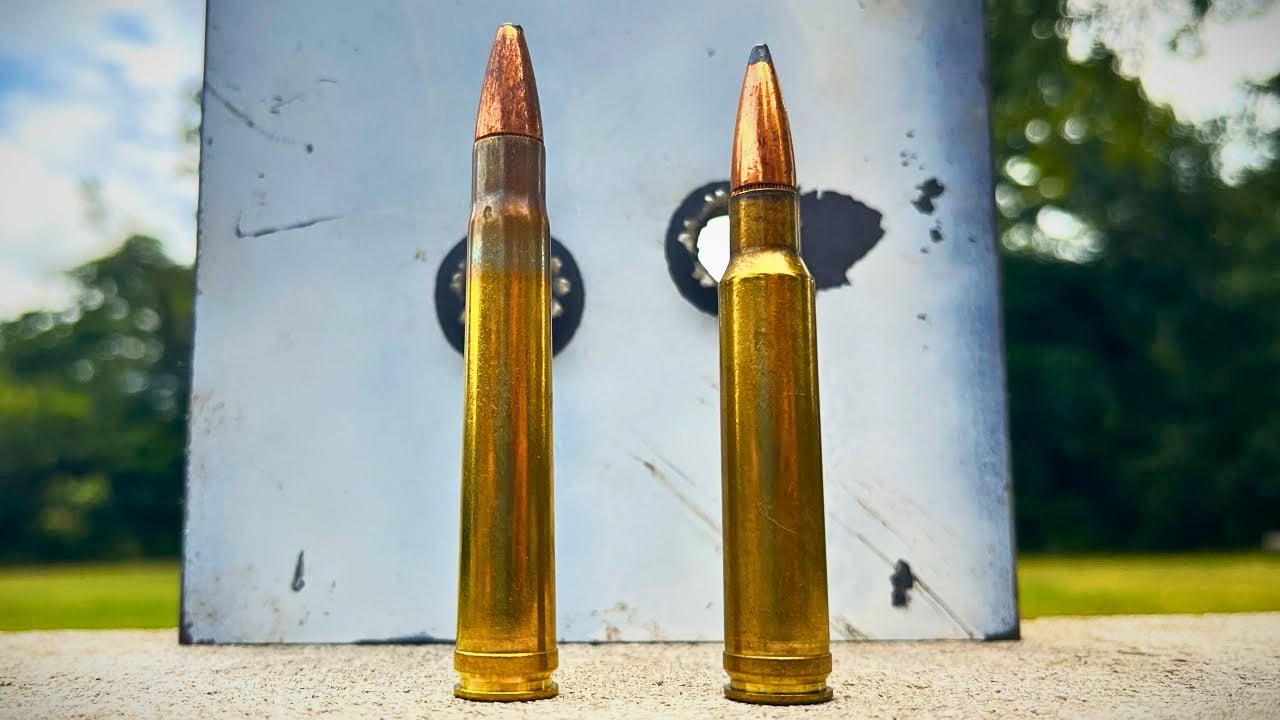
The .300 RUM brings serious kick and serious speed, but it’s more than most shooters need. It burns a ton of powder, punishes your shoulder, and doesn’t always translate that energy into better hits.
Unless you’re reaching out to extreme distances or hunting something truly big, you’re wasting a lot of recoil for little gain. It’s not inherently inaccurate, but the recoil can make you flinch enough to throw shots off.
.338 Lapua Magnum

This one looks great on paper and has a cool factor that’s hard to deny. But the truth is, most folks don’t shoot far enough to justify it. The recoil is no joke.
It’s heavy, expensive, and brutal off the bench. Sure, it’s capable—but only in the hands of a shooter who can handle it and has a long enough range to make it worth it. Otherwise, it’s just abuse for the sake of bragging rights.
.45-70 Government (Hot Loads)

The .45-70 has history and character, but modern hot loads will smack your shoulder hard. And for all that recoil, accuracy tends to drop off past 150 yards.
It’ll wallop anything at close range, but once you stretch it, the trajectory starts to suffer. If you’re just plinking or hunting at moderate distances, lighter loads make a lot more sense—and won’t leave you sore.
.450 Marlin

The .450 Marlin was designed to hit hard, and it does. The problem is that it doesn’t hit any harder than modern .45-70 loads, but it comes with extra recoil and fewer ammo choices.
It’s a bruiser for sure, but the payoff just isn’t there. Unless you’re deep in bear country and need that extra thump up close, there are more balanced options out there.
.300 Weatherby Magnum

The .300 Weatherby Magnum has a long reputation for being a powerhouse, but it also comes with serious recoil and muzzle blast. Accuracy is possible, but not easy.
The recoil can make even experienced shooters start flinching. And with today’s better bullets in more manageable calibers, there’s just not much reason to beat yourself up over it.
.458 Winchester Magnum

This round was made to drop elephants, and it shows. It hits like a wrecking ball, but it’s complete overkill for anything short of dangerous game.
Trying to wrangle this at the range or on mid-size game is asking for bruises without much gain. It’s more recoil therapy than practical solution for most shooters.
.375 H&H Magnum

The .375 H&H has history and charm, but it’s still a thumper. And for North American hunting, it’s often way more than you need.
You’ll feel every shot, and unless you’re hunting something big and tough like Cape buffalo or brown bear, it’s probably too much gun. You don’t need to get beat up to get the job done.
7mm STW (Shooting Times Westerner)

The 7mm STW throws bullets fast—very fast. But it eats barrels and kicks harder than most folks expect from a 7mm.
You get flat trajectories, but the recoil can make it tough to stay on target for follow-up shots. There are friendlier 7mm cartridges that shoot just as flat without all the drama.
.444 Marlin
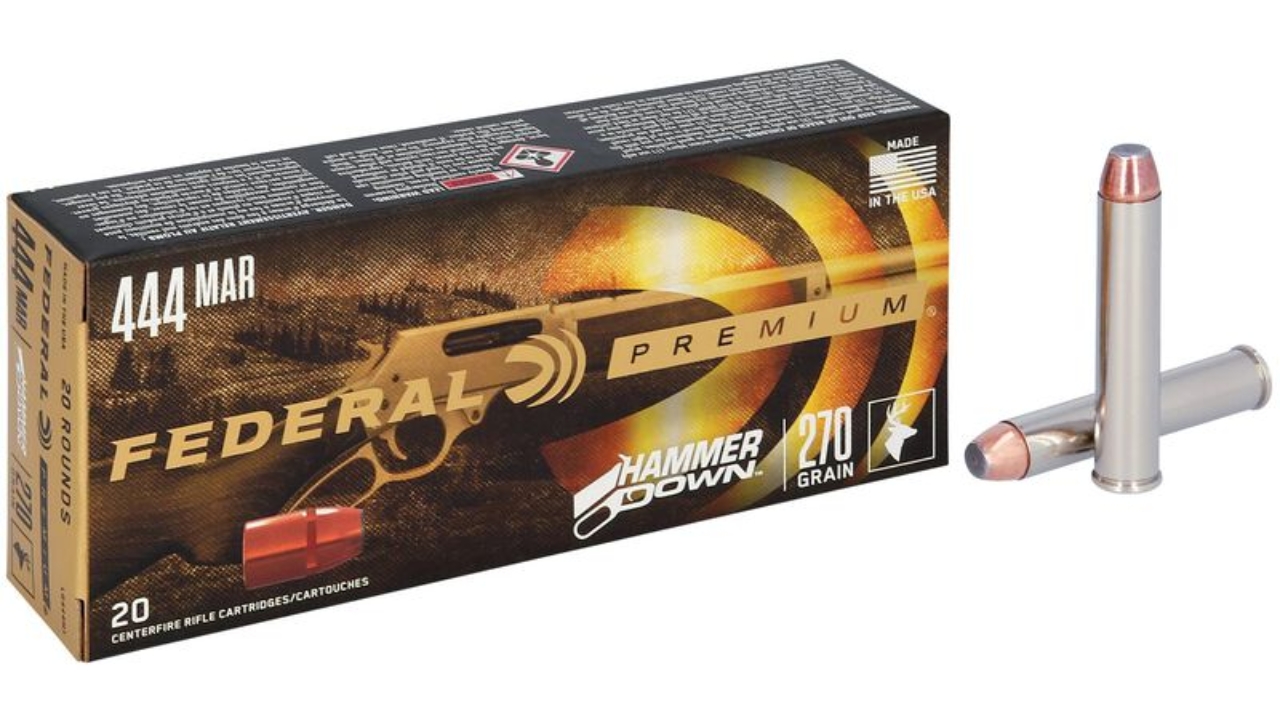
The .444 Marlin sits in a weird spot—more recoil than the .45-70 with less flexibility. It slaps hard but doesn’t really outperform anything by much.
Accuracy is hit-or-miss, especially with heavier bullets. It sounds good on paper but doesn’t deliver enough to justify the shoulder pain or ammo cost.
.340 Weatherby Magnum
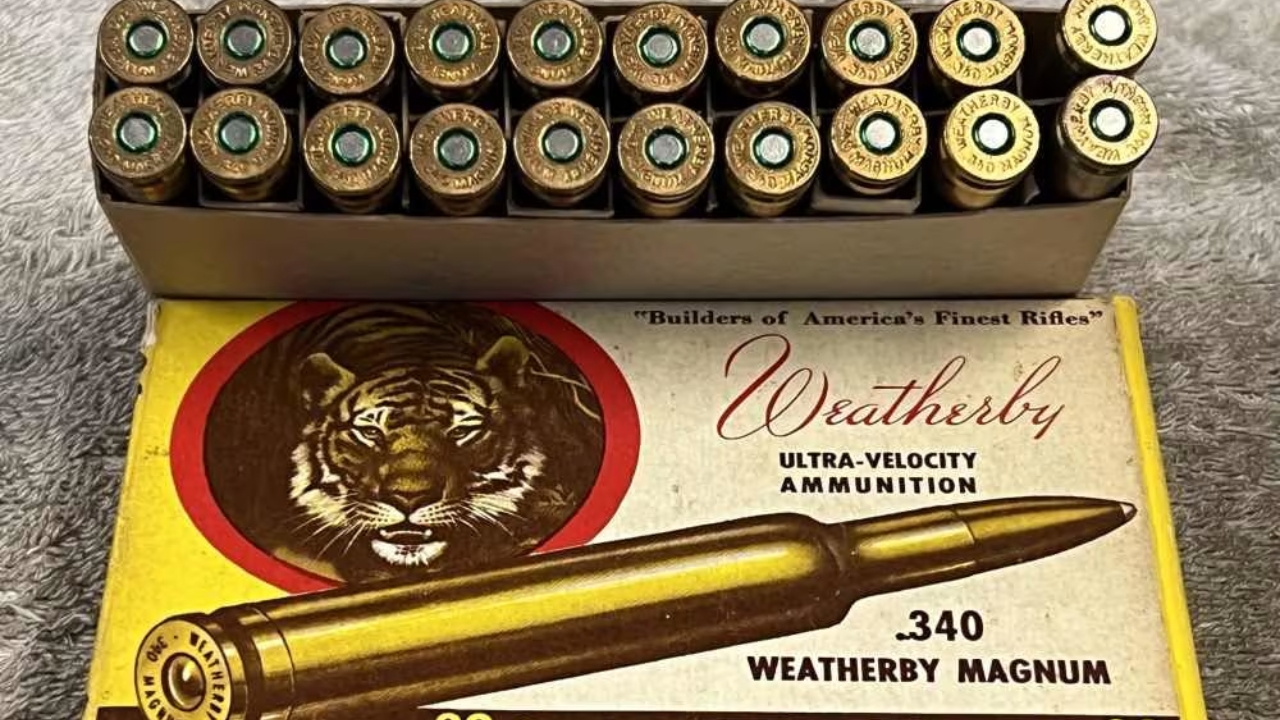
Here’s another Weatherby beast that hits hard—on both ends. It’s got impressive velocity and energy, but managing that recoil is a whole different story.
It’s tough to shoot well unless you’ve got a heavy rifle and a lot of experience. For most folks, it just turns into wasted energy and sore shoulders.
*This article was developed with AI-powered tools and has been carefully reviewed by our editors.