Photo credit: The Avid Outdoorsman
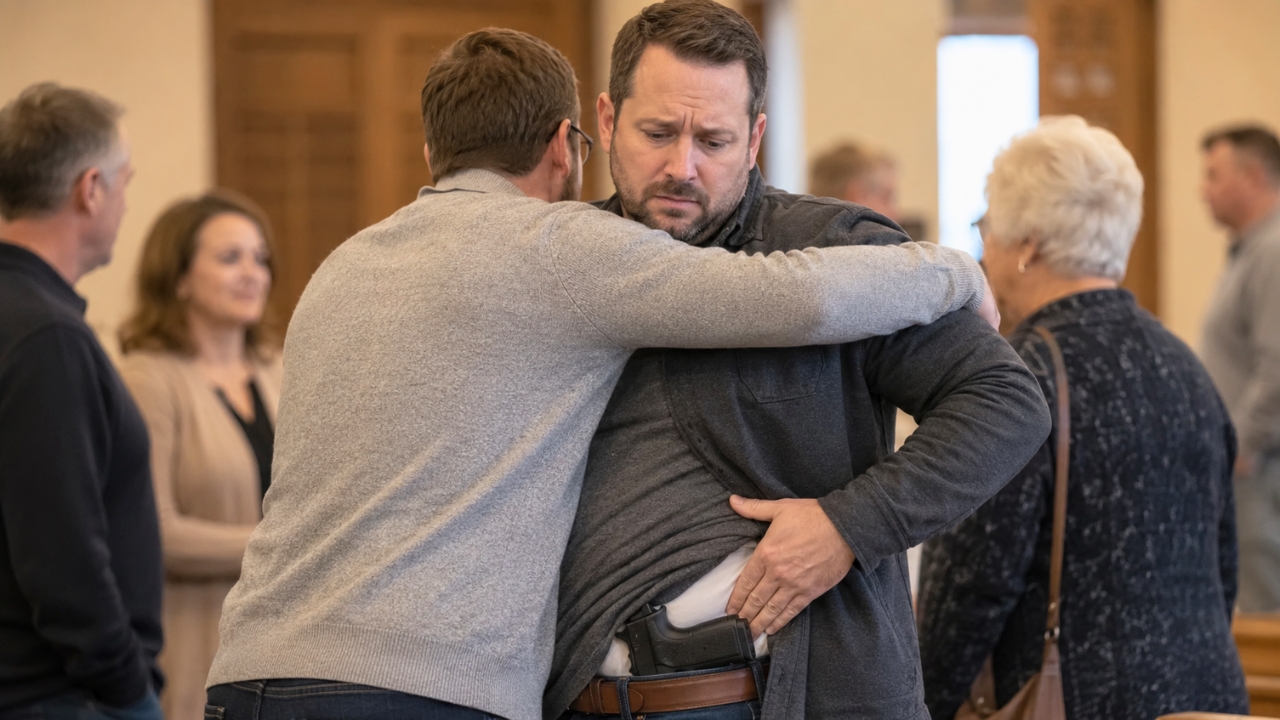
A concealed carrier in Reddit’s r/CCW described a problem that sounds small until you realize how often it can happen in ordinary life. He said he was new to carrying and already felt awkward enough about it when a female client wanted to hug him. He was carrying inside the waistband on his right side and tried to maneuver in a way that would keep her from touching the gun, but afterward he could not shake the feeling that she may have felt it anyway. He said he looked at her face as they pulled away and thought he saw a strange expression, even though she never mentioned anything.
You can read the original Reddit thread here: https://www.reddit.com/r/CCW/comments/2bkkjl/people_wanting_to_hug_you_when_you_are_carrying/
What makes the story work is not that anything exploded into a scene. Nothing did. No one called police. No manager got involved. The woman did not start asking questions. The discomfort was entirely in the carrier’s head afterward, which is exactly why it feels so relatable for anyone new to concealed carry. He was not trying to figure out how to survive a crisis. He was trying to figure out how to get through a normal human interaction without accidentally making someone else aware of the gun on his waist.
That is a very different kind of carry stress than the usual public-drop or police-call stories. It is quieter and more social. The carrier was not worried about a criminal threat. He was worried about a hug. That sounds almost funny at first, but it is the kind of thing new carriers often do obsess over. Once the gun becomes part of your daily clothing, you start noticing all the little body positions that suddenly feel loaded with extra consequences. Sitting. Reaching. Bending. Getting bumped in a line. And yes, hugging.
The original poster actually came back later in the thread and clarified that he had messed up the description at first because he was so new to carrying. He said he was carrying IWB on his right hip, not appendix the way he first described it. He also admitted openly that he was probably being paranoid, but that the moment still panicked him because he was new and could not stop thinking through all the “what if this happens” scenarios that come with carrying for the first time. That honesty is what gave the whole thread its shape. He was not pretending he had some deep tactical problem. He was asking a basic human question about how people handle normal social contact once a gun is on their body.
A lot of the replies were more reassuring than dramatic. Several experienced carriers told him that most people either do not notice at all or do not interpret what they feel as a gun. One commenter said he had been hugged plenty of times while carrying and nobody ever seemed to notice, or at least nobody said anything. Another wrote that average people do not spend their day mentally identifying gun shapes on other people’s bodies, and that carriers often overestimate how much others are paying attention. That line of advice came up again and again: if you are new, you are probably much more fixated on the gun than anyone around you is.
At the same time, the thread got very practical. Multiple commenters started describing how they physically handle hugs depending on where they carry. People carrying on the hip said they subtly keep the strong-side elbow low and close to the body so the other person’s arm rides higher. Others said they go “high” with one arm and “low” with the other to naturally steer the embrace away from the gun side. A funeral director chimed in and said he gets hugged constantly after services and uses exactly that kind of body positioning to keep people’s hands away from the firearm without making the hug look strange.
That practical advice is what turned the thread from a nervous new-carrier post into something more useful. It stopped being about fear and started being about movement. The replies made clear that a lot of this is not solved by never letting people near you. It is solved by learning how to subtly guide normal human contact so it does not land right on the gun. That is part of what experienced carriers often seem to know instinctively: concealed carry is not just about what holster you wear, but how you move your body in a room full of people who have no idea you are armed.
There was also a big divide in how people framed the risk itself. Some said hugs simply are not a problem and that the poster was suffering from what one reply called “new-CCWer paranoia.” Others were more sympathetic and acknowledged that social awkwardness is real when you are first learning to carry and still figuring out what part of your normal life now feels different. That second camp probably understood the poster best. The problem was not really the woman’s hug. The problem was the way carrying had made him hyper-aware of every possible point of contact, and he had not yet learned which ones truly mattered and which ones would fade with experience.
A few replies brought in humor, because that is inevitable in a thread about hugs and carry positions. Some people joked that if someone feels something while hugging, they might not assume it is a gun at all. Others made crude jokes about “leading with your cock” or that people would just think you are happy to see them. The jokes were very Reddit, but underneath them was the same point the more serious replies were making: brief body contact does not automatically translate into someone identifying a firearm. Carriers often imagine the gun feels much more obvious than it really does.
The original poster’s own follow-up is maybe the most useful part of the whole thread. He said he still felt weird carrying, but less weird all the time, and that he was constantly running through possible scenarios in his mind. That is probably the most recognizable part of the story. The gun changes how new carriers think before it changes much of anything around them. A hug becomes a problem. A shirt tug becomes a problem. A chair arm becomes a problem. Over time, people in the thread suggested, that anxious mental rehearsal gets replaced by habit and better body mechanics.
That is where the story lands. A man new to concealed carry got hugged by a client and spent the rest of the moment wondering if she had felt the gun on his hip. She never said a word. The real conflict was not out in the open at all. It was the one going on in his own head as he tried to figure out how carrying a gun changes even the most ordinary kind of social contact. The replies did not tell him to stop hugging people. They told him what more experienced carriers eventually learn: most people do not notice nearly as much as you think, and the rest can often be handled by how you move before they ever know what they touched.
Like The Avid Outdoorsman’s content? Subscribe to our newsletter so you never miss an article.
Here’s more from us: