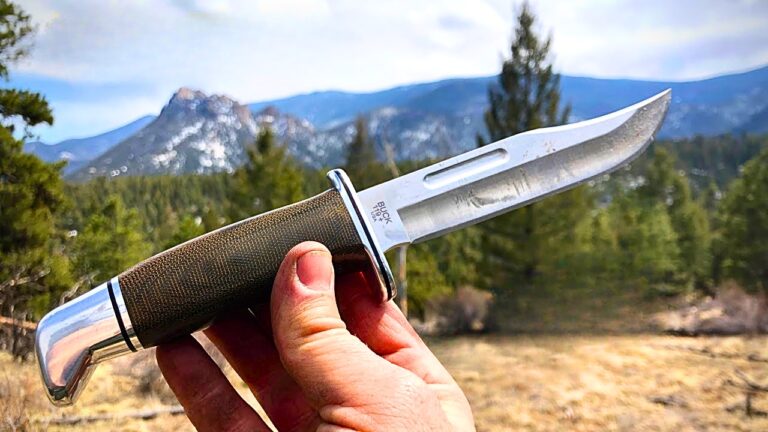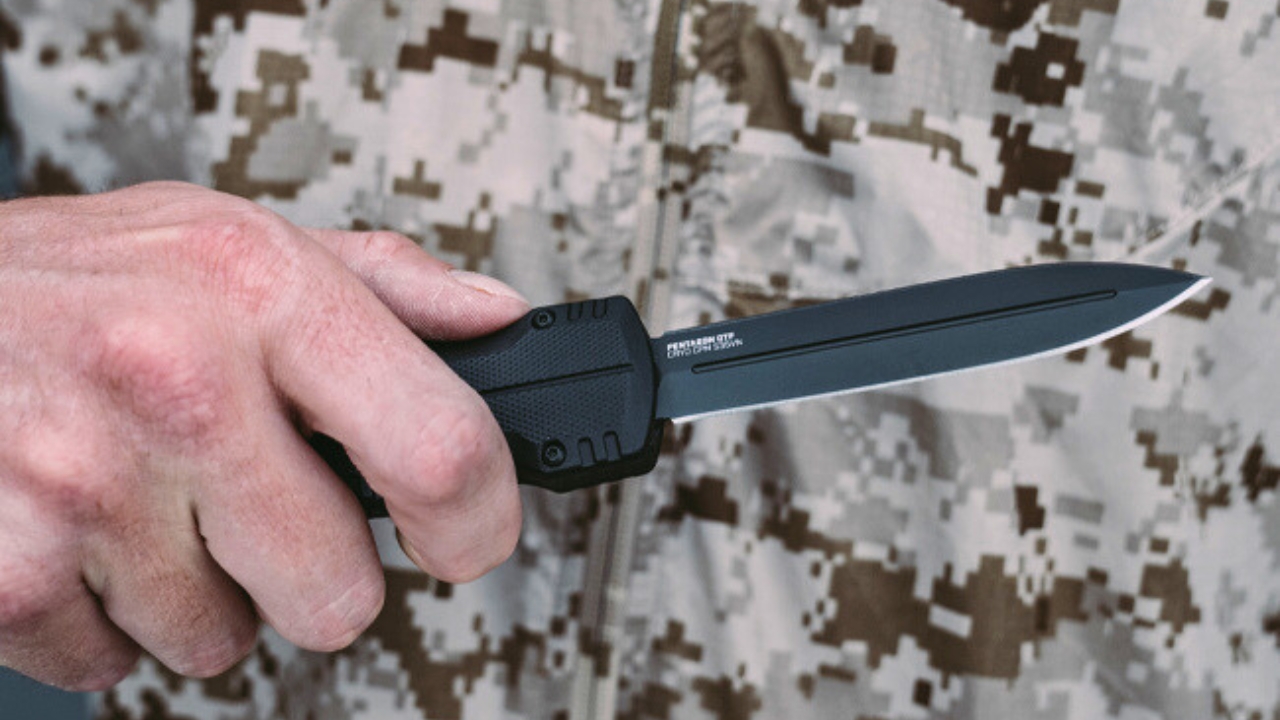
Photo credit: SOG Knives
The Department of Justice is pressing ahead with a full defense of the Federal Switchblade Act, and you are watching a familiar Second Amendment fault line reopen in a new place. Instead of rifles or magazines, the fight now centers on pocket knives, automatic blades, and whether the government can treat them as contraband outside the core of your constitutional rights. Knife advocacy groups see the move as a direct betrayal by an administration that brands itself pro–Second Amendment, and they are mobilizing to make this low‑profile statute the next major test of how far Bruen really goes.
How a mid‑century knife law became a 2020s constitutional flashpoint
If you carry a pocket knife, you are bumping into a law written for a very different era. The Federal Switchblade Act was drafted in the late 1950s, when lawmakers were reacting to sensational stories about youth gangs and automatic blades, and it still restricts the interstate commerce and importation of what it defines as “switchblade” knives. For decades, the statute sat mostly in the background of federal weapons policy, overshadowed by debates over handguns, AR‑15 style rifles, and large‑capacity magazines, even as courts refined the meaning of the Second Amendment in cases like Heller and later Bruen.
That quiet ended once you started to see knives treated as “arms” in the same analytical frame as firearms. Advocacy groups such as Knife Rights began arguing that the Federal Switchblade Act, often shortened to the FSA, cannot survive the history‑and‑tradition test that now governs modern gun cases. Their position is that if ordinary semiautomatic rifles are protected, then common folding and automatic knives used for work, self‑defense, and everyday carry should be treated the same way, which is why they have pressed courts to ask, as one trade group framed it, “Does Bruen invalidate the Federal Switchblade Act (FSA)” and to walk through that question in greater detail.
Knife Rights’ long campaign to topple the Federal Switchblade Act
You cannot understand the current backlash without tracing how persistent Knife Rights has been in trying to dismantle the FSA. The group has repeatedly gone to federal court, filing suits that argue the statute violates the Second Amendment and exceeds Congress’s authority when it criminalizes the interstate shipment of common automatic knives. In one of its recent complaints, the organization emphasized that, despite the Government’s claim of no recent enforcement of the Act, the Feds staged a violent raid as recently as 2020 over alleged violations involving automatic (“switchblade”) knives, a detail it highlighted in a filing that asked judges to treat the law as a live threat rather than a dead letter and that is laid out in Despite the Government.
At the same time, Knife Rights has worked Congress from the other direction, urging lawmakers to replace the FSA with a more permissive national standard. In testimony prepared for a House hearing on the Knife Owners’ Protection Act of 2025 (H.R. 6045), the group’s chairman, Doug Ritter, laid out how you, as a law‑abiding owner, can be turned into a felon simply by crossing state lines with a knife that is legal at home but restricted elsewhere, and he framed the Knife Owners’ Protection Act as a way to harmonize those rules while undercutting the federal switchblade ban, a case he spelled out in the Testimony of Doug Ritter, Chairman, Knife Rights.
Why the DOJ is still backing the switchblade ban
Against that backdrop, the Department of Justice has chosen to defend the FSA almost without modification, even after Bruen. In its latest filings, the department argues that the statute fits comfortably within a tradition of regulating especially dangerous or easily concealed weapons, and it insists that automatic knives fall outside the core of what the Second Amendment protects. That stance has not softened despite political pressure, and it has led the department to tell federal judges that the law is constitutional even if you use a switchblade as your primary tool or means of self‑defense.
The department’s reasoning came into sharp focus in a brief that compared the Federal Switchblade Act to long‑standing bans on concealed carry of certain weapons, including Bow style knives, and that insisted the FSA “mirrors” those historical restrictions in all relevant respects. In that filing, government lawyers argued that the Second Amendment does not extend to pocket knives in the way it does to firearms, a position that surfaced in a case captioned Knife Rights v. Bondi and that was summarized under the line “Trump Administration Argues Second Amendment Doesn’t Protect Pocket Knives,” which you see reflected in the government’s description of how in all relevant respects, the Federal Switchblade Act mirrors the prohibitions on concealed carry of weapons like Bow.
The Trump DOJ’s split view: AR‑15s yes, switchblades no
What has really inflamed knife owners is not just that the DOJ is defending the FSA, but how differently it treats other weapons at the same time. In one high‑profile gun case, the department has effectively accepted that AR‑15 style rifles are in common use and therefore fall within the Second Amendment’s protection, a position that aligns with many gun rights advocates. Yet in the knife litigation, the same department insists that automatic pocket knives are categorically different, and that Congress can ban their interstate trade without implicating your constitutional rights at all.
An in‑depth analysis of the department’s filings described this as a split approach, noting that in one context the government was willing to say “yes” to AR‑15s while in another it said “no” to Switchblades and treated them as unprotected. That analysis walked through how the DOJ’s research methods tried to distinguish knives from firearms, and it highlighted the internal tension in a strategy that blesses rifles while defending a knife ban, a contrast captured in a piece titled Analysis, Trump DOJ Says Yes, Switchblades, Member Exclusive.
Inside the DOJ’s legal theory that knives are different
To make that distinction stick, the DOJ has leaned heavily on a particular reading of Bruen and Heller that treats knives as peripheral. In its switchblade brief, the department argued that both switchblades themselves and the Federal Switchblade Act are outside the Second Amendment’s scope because automatic knives are not central to self‑defense in the way handguns are. You are meant to see them instead as specialized tools that can be singled out for regulation, much like historical bans on certain clubs or concealed daggers, even if you personally carry one every day.
One detailed breakdown of the filings noted that, by contrast with its firearm briefs, the department in the knife case went out of its way to argue that switchblades are “dangerous and unusual” and that the FSA is therefore valid even under Bruen’s history‑and‑tradition test. That same analysis, written by Jake Fogleman, underscored how the DOJ’s research tried to show that automatic knives lack the widespread lawful use that would bring them under the Second Amendment, a move he described in a member‑only piece labeled Analysis, Trump DOJ Says Yes, and he later highlighted how, in its switchblade brief, the department made the case that both switchblades themselves and the federal law are unprotected by the Second Amendment, a point he revisited when he wrote that, by contrast, in its switchblade filing the department pressed that argument in detail, as summarized in By contrast, in its switchblade.
Why knife advocates call the DOJ’s stance “anti‑2A”
From the perspective of knife owners, that legal theory is not just wrong, it is a political betrayal. Knife Rights has accused the department of talking like a supporter of the Second Amendment while acting like an opponent when it comes to your ability to carry a blade. In a sharply worded update, the group said the DOJ had dropped “coal” into its stocking for Christmas by doubling down on the FSA, and it framed the move as part of a broader pattern in which the administration claims to back your rights while defending laws that criminalize ordinary tools, a criticism it leveled in a post titled Anti-2A DOJ Drops Coal in Knife Rights’ Stocking for Christmas.
The anger is not limited to advocacy groups’ press releases. In the same dispute, Plaintiff’s attorney John Dillon said it is “genuinely absurd” for the current administration to claim it supports the Second Amendment while arguing in court that the Federal Switchblade Act is constitutional, and he warned that the government’s position threatens a Free and Safe Future for all Americans, language that appeared in a detailed update on the case and that underscored how personal this feels if you rely on a knife for work or self‑defense, as reflected in the passage where Plaintiff, John Dillon is quoted.
Allies line up: NRA, trade groups, and the broader 2A bar
You are also seeing heavyweight allies step into the fight, which signals that this is no longer a niche issue. The NRA has filed an amicus brief in a Fifth Circuit Case Challenging the Federal Switchblade Act, telling the court that the government’s arguments about knives, if accepted, could bleed into other areas of Second Amendment law. That brief urges judges not to let the DOJ distract from the proper constitutional inquiry, and it frames the FSA as an overreach that treats common tools as contraband, a position spelled out when the NRA Files Amicus Brief.
Industry and trade groups are reinforcing that message. The American Knife & Tool Institute has walked its members through the litigation and explained how Bruen’s test might apply to knives, while Knife Rights continues to publish legislative updates that track every filing and hearing. In one such update, the group bundled the switchblade case with other state and federal fights and urged you to stay engaged through the end of the year, even tying its fundraising pitch to the fact that donations made by December 31st would count toward your 2025 deduction, a detail it highlighted in a broader roundup labeled Dec, Anti, DOJ, Drops Coal, Knife Rights, Stocking for Christmas.
What the courts and scholars are really debating after Bruen
Behind the rhetoric, your rights will ultimately turn on how courts apply Bruen’s history‑and‑tradition test to knives. In the switchblade cases, judges are being asked to decide whether automatic knives are “arms” in common use for lawful purposes and whether there is a historical analogue for banning their interstate trade. One detailed account of the litigation explained how Knife Rights framed the question directly as whether Bruen invalidates the FSA, and it walked through the procedural twists that followed, giving you a sense of how complex these challenges can become once they hit the appellate level, as outlined in the discussion titled Does Bruen.
Legal scholars are watching closely because the outcome could reshape Second Amendment doctrine beyond knives. One influential law review article argued that, after Heller (Heller I), the debates over the constitutionality of assault weapon and large‑capacity magazine bans exposed flaws in the old two‑step scrutiny framework, and it suggested that Five circuits had drifted away from a faithful reading of the Supreme Court’s guidance. That piece called for a new test that would better align with Bruen and hinted that the Ninth Circuit may reverse the trend, a scholarly push that could affect how your knife, your rifle, and your magazines are all evaluated in future cases, as laid out in the article titled Heller, Five.
What this fight means for your everyday carry
For you as a practical matter, the stakes are not abstract. If the DOJ’s view prevails, Congress will retain broad power to criminalize the interstate shipment and importation of automatic knives, even if your state has legalized them and even if you use them as tools on a job site or as part of your personal defense plan. Knife Rights has warned that this creates a patchwork where you can lawfully buy and carry a knife at home but risk federal charges if you order a similar model online or travel with it across state lines, a concern it raised when it reminded supporters that, in Knife Rights’ Second Amendment lawsuit against the Federal Switchblade Act, it had hoped the Trump administration would take a different view of your rights, a hope it described in an update titled In Knife Rights, Second Amendment, Federal Switchblade Act, Trump.
The litigation record also shows how fragile your protections can be when the government insists a law is dormant. In one report on the DOJ’s response to the latest Knife Rights lawsuit, observers noted that the department’s brief did not look a whole lot different than its earlier filings, even after Plaintiffs addressed all the issues raised by the court, and they argued that the government’s reasoning “goes off the rails” by downplaying real‑world enforcement while still defending the statute on principle, a critique captured in a commentary that summarized how Plaintiffs had tried to narrow the dispute.
Like The Avid Outdoorsman’s content? Be sure to follow us.
Here’s more from us: