Photo credit: Svetliy/Shutterstock.com
A lot of bad decisions start with the phrase “I’m only going to be gone a minute.” That line has talked plenty of hunters, ranchers, and everyday gun owners into leaving a rifle sitting in the cab while they run inside a gas station, grab feed, pay for diesel, step into a diner, or make what feels like a harmless stop on the way to somewhere else. The logic seems solid in the moment. The truck is locked. The stop is short. The parking lot is busy. The rifle is tucked where nobody should notice it, or at least that is what the owner tells himself. But a vehicle cab is not secure storage, and a “quick stop” is not some magic shield against theft, damage, attention, or a misunderstanding that gets ugly in a hurry. In fact, quick stops are often exactly when trouble shows up because your routine gets sloppy, your eyes are off the truck, and the people around you have a whole lot more time to notice what you are doing than you think. The rifle may feel normal to you because it is part of your day, part of your season, and part of how you move through rural life. To somebody else, it is an opportunity, a liability, or a reason to start making calls and asking questions you never planned on dealing with.
The truck cab feels safer than it really is
A lot of people trust the cab because it feels close, familiar, and private. You sit there every day. Your gear is there. Your smell is there. The rifle may ride behind the seat or across a rack so often that it starts to feel like part of the truck itself. That familiarity is exactly what makes people careless. A cab is still just a box with glass all around it, predictable access points, and very little standing between your firearm and anybody willing to move fast. Locks slow down honest people. They do not stop a thief who already knows what he is looking for. And a quick stop is the kind of moment thieves love because the owner is distracted, on a timeline, and usually far more confident than he ought to be. He walks inside thinking he will be back before anything could happen, while somebody else only needs a few seconds to test a door, break glass, reach through, or follow the truck until it lands in a softer spot. That is the problem with trusting the cab. It feels like control because the rifle is still nearby, but nearby and secure are not the same thing at all.
Visible rifles draw more attention than most owners want to admit
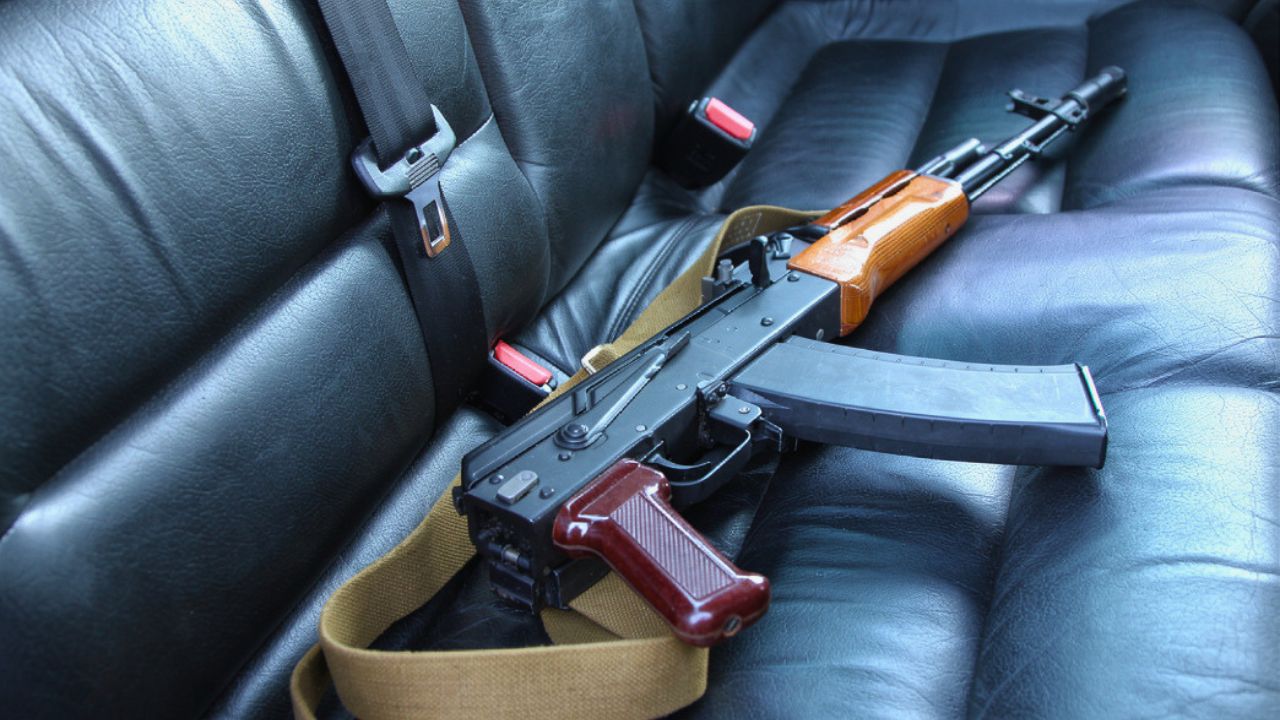
Plenty of people still believe a rifle on a rear window rack, laying across the back seat, or partially tucked behind a console is something folks barely notice anymore in rural areas. That belief is a little too comfortable. People notice guns in vehicles a whole lot more than owners think they do. Some notice because they are gun people too. Some notice because they are nervous around firearms. Some notice because they steal. And some notice because they have no context at all and only know they just saw a rifle sitting in a truck that is now parked outside a store, school event, restaurant, hotel, or public lot. Once that attention lands on the vehicle, you have lost control of the situation in a way that is hard to measure. Maybe nothing happens. Maybe somebody breaks in. Maybe a nervous passerby calls it in. Maybe an employee sees the rifle through the glass and suddenly your quick stop turns into an awkward conversation in the parking lot while you explain something that could have been avoided by thinking harder before you left the seat. The owner usually sees the rifle as ordinary. The public does not always see it that way, and neither do the wrong kind of people cruising lots for easy targets.
Short stops are exactly when people get lazy with security
What makes the “quick stop” so risky is not only the stop itself. It is the mindset that comes with it. When people expect to be in and out fast, they stop doing the little things they might do if they were leaving the vehicle longer. They do not cover the case fully. They do not tuck the rifle out of sight as carefully. They may leave a door unlocked in a familiar place. They leave ammo visible. They leave the truck running with a family member stepping out for just a second. They skip the mental check that would have told them the parking spot is terrible, the angle of the sun makes the rifle easier to see, or the lot is busier and less predictable than they first assumed. Quick stops breed casual thinking, and casual thinking is exactly what firearm security does not tolerate well. A lot of gun owners picture theft as something that happens after a truck has been sitting unattended for hours in a lonely lot. In reality, plenty of problems show up during the kind of stop people hardly count as leaving the gun behind at all. Fast does not mean safe. Sometimes fast only means you made a sloppy call with less preparation than usual.
Theft is only one of the problems that can start there
People tend to focus on theft because it is the most obvious risk, and it is a big one. But a rifle left in the cab during a quick stop can go bad in more ways than getting stolen. A firearm can get damaged by heat, sunlight, rough movement, or an unstable placement that sends it sliding when the truck is shut hard or bumped. A rifle left carelessly can attract the wrong kind of attention from a child, a curious passenger, or someone else riding along who was never supposed to have access to it. It can lead to a call to law enforcement if somebody sees it and believes there is a threat, especially in places where a truck gun that feels normal in one town reads very differently in another. It can also create serious trouble if you make a stop at a location with its own rules, its own security posture, or a crowd that is already tense about anything weapon-related. Even when no law is broken, the whole experience can become a headache you did not need. Too many people think only in terms of “Will it still be there when I get back?” They should also be asking, “What else have I just invited by leaving it there at all?”
The routine truck gun mindset can blur good judgment
There is also a cultural side to this that matters. In a lot of places, keeping a rifle in the truck has long been treated like no big deal. For some folks it is tied to ranch work, predator control, checking stock, heading to the lease, or moving straight from work to the woods. I understand that. There are still lives where a rifle in the vehicle is part of a real practical routine, not some fantasy about always being ready. But routine can blur judgment when people stop noticing the difference between a working setup and a lazy habit. A rifle that rides in the truck through a day of legitimate use is one thing. Leaving that same rifle in plain sight while making casual stops, running errands, grabbing lunch, or bouncing through public places because “that’s just how I always do it” is something else. The first can still require careful handling. The second is where complacency starts doing the thinking for you. And complacency is expensive around firearms. A habit that made sense in one setting can become irresponsible in another without the owner ever feeling the moment when that shift happened. That is why truck-gun culture needs more judgment than some people give it. Familiar is not the same as wise.
Real secure storage takes more effort than most quick stops get
If a rifle truly has to stay in the vehicle for some reason, then secure storage should actually mean something. Not a soft case on the seat. Not a rack in the rear window. Not behind the seat where every thief on earth already knows to look. It means the gun is out of sight, unloaded where appropriate, inaccessible to a casual smash-and-grab, and stored in a way that makes quick theft a whole lot harder than breaking glass and reaching in. Even then, a vehicle is still a compromise, not ideal storage. That is worth saying plainly because a lot of people talk themselves into believing that a hidden rifle is a secure rifle. Those are not the same thing. A quick stop is exactly when most people are least likely to use the higher-effort storage solution because it feels annoying for just a minute or two. That is backward thinking. The stop that feels too short to bother securing the rifle properly is often the stop where proper security matters most, because it is the stop you are least mentally prepared to defend against going wrong. Safe storage is not supposed to be convenient enough to encourage sloppy habits. It is supposed to interrupt them.
Most regrets start with the owner knowing better
What makes these situations so frustrating is that most people who end up dealing with the fallout are not clueless. They usually knew, at least somewhere in the back of their mind, that leaving the rifle in the cab was not the best move. They just convinced themselves this one time would be fine. That is how trouble works. It shows up inside the little exception you made for yourself because the stop was short, the town was familiar, the lot was busy, or the truck was only out of sight for a moment. Then the glass is broken, the rifle is gone, a deputy is asking questions, or a simple errand has turned into a long miserable afternoon because something everybody assumed would be quick went sideways. Leaving a rifle in the cab during a quick stop can go bad fast because there is almost no cushion once the decision is made. You are relying on timing, luck, and the hope that everybody around your vehicle is either honest, calm, and uninterested or too distracted to notice. That is not much of a plan. A rifle deserves more thought than that, and so does the mess that follows when a man talks himself into treating “just a minute” like a safety strategy instead of what it really is — a shortcut that only feels harmless right up until it isn’t.
Like The Avid Outdoorsman’s content? Subscribe to our newsletter so you never miss an article.
Here’s more from us: